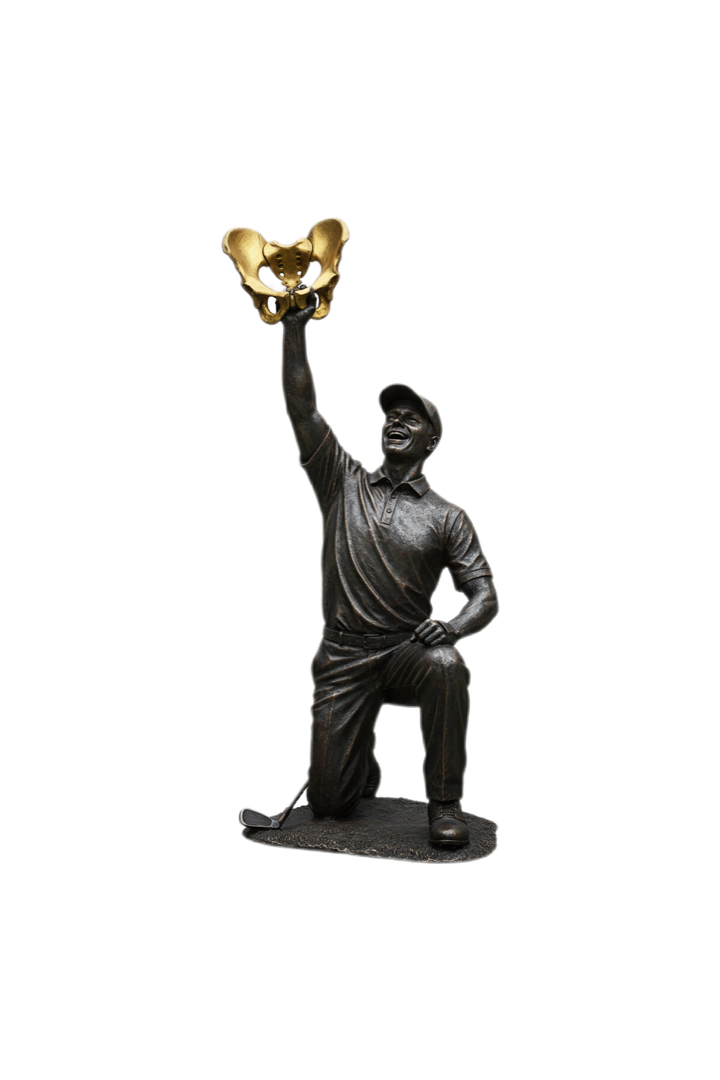
PART 8
ELITE IGNITION
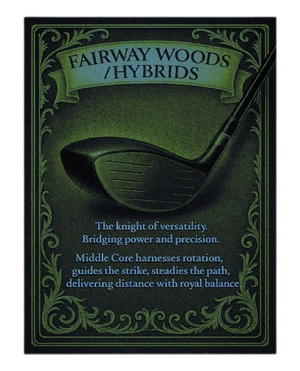
▸▸▸ ENTERING PART 8
You have built stability, protected your spine, and learned how the core controls the engine under pressure. Now you enter the phase reserved for golfers who want more than competence. This is where precision meets power, and where the smallest adjustments create the biggest differences.
Part 8 is the elite tier of ignition.
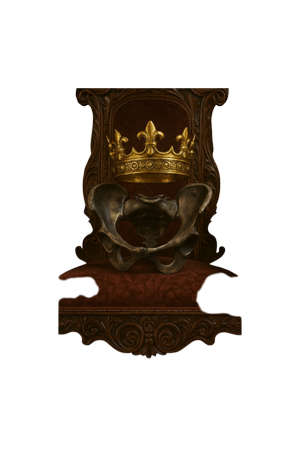
This is where the pelvis becomes the king of the swing, where the glutes fire with purpose, and where the core locks the entire structure into a single unified motion. It is also where flaws reveal themselves faster, where pressure exposes instability, and where the body must respond with control instead of panic.
Elite ignition is not about swinging harder. It is about swinging with authority.
You learn how to identify deformities in motion, how to correct them before they spread, and how to understand the natural advantages and limitations of different body types. You learn how to breathe under pressure, how to hold the middle when it matters, and how to strike with feel when the moment demands it.
This is the part of the doctrine that separates the prepared from the reactive.
▸▸ STATUS
If you can feel your core stabilizing your spine, if your pelvis responds when you accelerate, and if your structure holds under speed, you are ready for this phase. If pressure causes your body to tighten, drift, or collapse, Part 8 will show you how to regain control.
This phase requires discipline. It requires awareness. It requires the willingness to refine what already works.
In Chapter 17, you learn why the pelvis is the king and how the glutes and core create elite stability. In Chapter 18, you learn to spot deformities before they cost you your swing. In Chapter 19, you understand how different bodies move so you can master your own. In Chapter 20, you learn to breathe and strike under pressure. In Chapter 21, you learn to tame the king and fire with control. In Chapter 22, you learn to ignite the cannon with intent.
This is where precision becomes power. This is where pressure becomes opportunity. This is where Part 8 begins.
|
PART 8: THE ELITE IGNITION
Advanced Control and Pressure |
|
| Chapter | Title |
 17
17
|
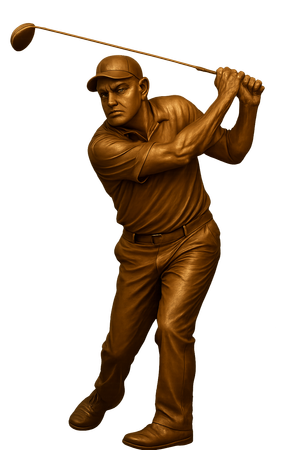
The Pelvis Is the King
Fire the Glutes and Lock the Core
|
 18
18
|
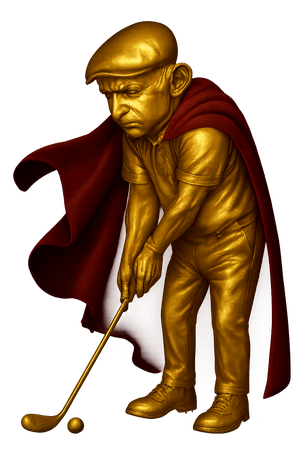
Swing Deformities
Spot the Flaws and Fix Them Fast
|
 19
19
|
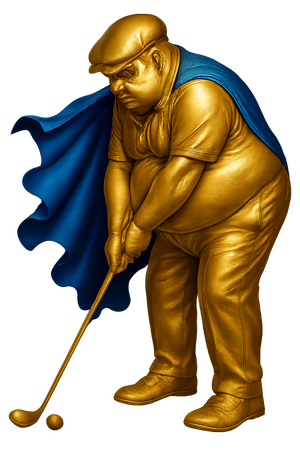
Big or Small
Understand How Different Bodies Move
|
 20
20
|
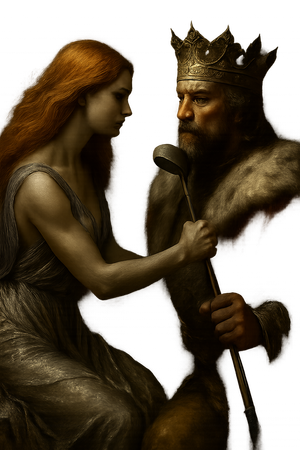
The "EGO" Put To Test
Breathe, Hold the Middle, and Strike with Feel
|
 21
21
|
Tame the Core
Stay Firm and Fire with Control
|
“Bodies can change but laws of motion is fixed”
CHAPTER 17
THE PELVIS IS THE KING
Fire the Glutes and Lock the Core
The pelvis is the command center of your swing. When it works, your glutes stabilize your base, your core locks into place, and your upper body has a rock-solid foundation to rotate around. When the pelvis drifts or stays quiet, the swing falls apart. This chapter shows you how to let the pelvis lead so your motion becomes powerful and repeatable without the struggle.
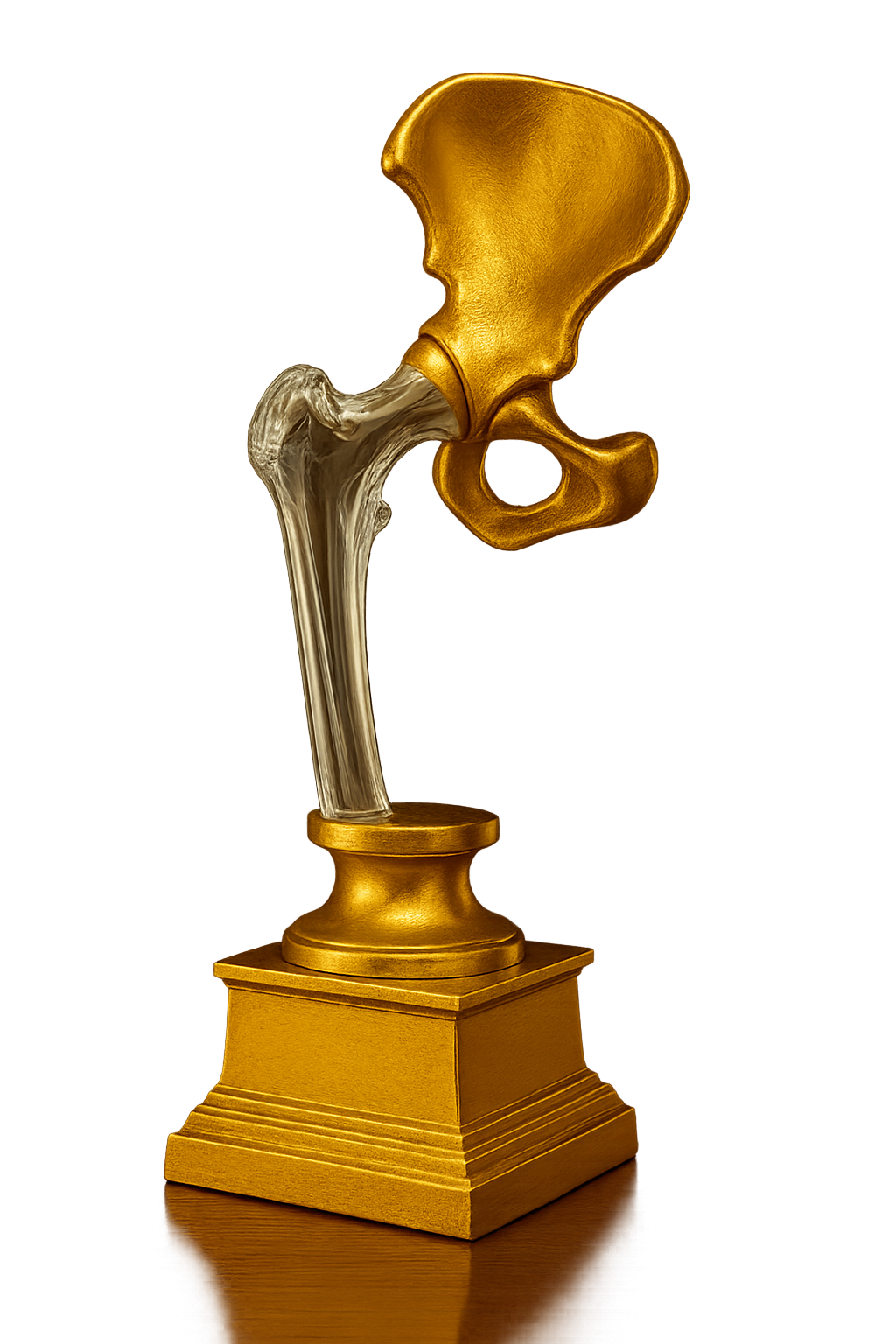
I. GOLFERS ARE ADDICTED TO BLAMING THE HIPS
Golfers are addicted to blaming their hips for every bad shot. When they slice, they say, "My hips were too slow." When they hook, they say, "My hips cleared too fast." They treat the hips like a disobedient child, but the truth is far more clinical: The hips are innocent.
The Symptom: You see the "hips humping the ball" or stalling at impact.
The Source: The hips are merely joints; they go where the pelvis sends them. If the pelvis is drifting or quiet, the hips have no choice but to fail.
The Fix: You don't "fix" hip movement by trying to move your legs harder. You fix it by commanding the King (the Pelvis).
II. CORE IGNITION
Many golfers struggle because they try to turn their hips using their lower back or their thigh muscles. This leads to a weak, arched back and early extension; the common deformity where the hips hump toward the ball and destroy your space.
MECHANICS SECRET: Think of your midsection as an internal Cylindrical Corset wrapping 360 degrees around your middle. When you cinch this cylinder, you fuse the spine to the pelvis, creating a single, unbreakable unit of power.
IGNITION SEQUENCE
The Exhale: Take your setup and exhale slightly to settle your ribcage.
The Frontal Cinch: Pull your navel sharply toward your spine. Feel the front of your cylinder flatten and tighten.
The Lock: Maintain this internal pressure. You should feel your pelvis tuck into a neutral, athletic position before the club moves.
II. THE REAL ANCHOR IS YOUR GLUTES AND YOUR CORE
If the core is the corset, the buttocks are the structural anchors. You must wake them up in a specific order to stop your power from leaking out during the transition.
MECHANICS SECRET: Most golfers wait until the downswing to fire their muscles. By then, the King (the pelvis) has already drifted off his throne. You must pre-load the glutes at address to create a “Power Box” that resists swaying.
BUTTOCKS SEQUENCE
The Stance: Once your corset is cinched, feel your weight in the center of your feet.
The Tear: Imagine you are standing on a large piece of paper and trying to tear it in half with your feet.
The Engagement: That outward pressure wakes up the buttock muscles immediately. This anchors the King to the ground.
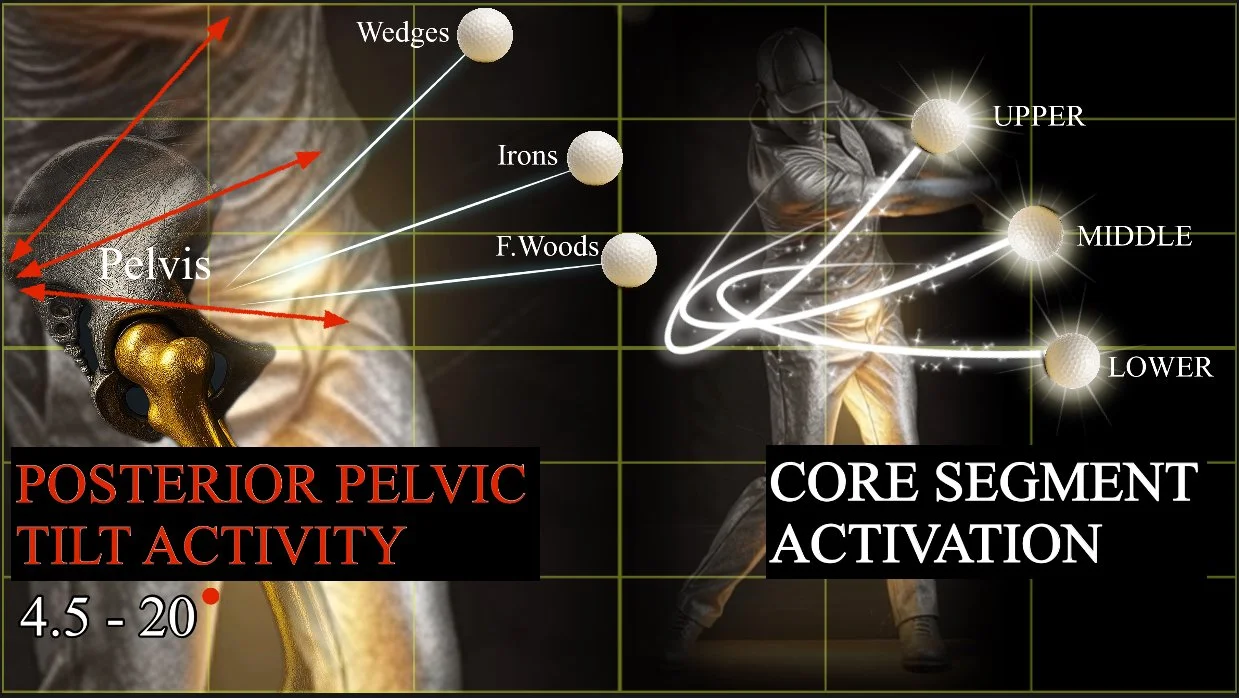
III. THE PELVIC ELEVATOR
The pelvis is not just a rotational driver; it is a vertical elevator. It channels force from the ground into the core to help you rise through impact and finish tall.
MECHANICS SECRET: Without vertical lift, the swing stays "stuck" in the dirt. The pelvis captures Ground Reaction Force (GRF) and converts it into upward velocity. This is how you "pick" the ball clean with massive compression.
PELVIS LIFT SEQUENCE
The Ground Load: As you turn back and sit into your trailing buttock, feel your feet heavy in the turf. Cinch the corset to keep the energy in your hips.
The Vertical Push: Push the ground away with your lead foot. Imagine you are trying to jump, but keep your head steady.
The Ascent: As you rotate, let the pelvis rise. The rising pelvis pulls your torso upward, shallowing the club path and compressing the ball.
IV. THE ELITE IGNITION SEQUENCE
CORE SECRET: Execute the Elite Ignition Sequence.
Cinch: At address, pull your navel to your spine to tighten the front of your Cylindrical Corset.
Ignite: Issue the Buttocks Command (tear the paper) to stabilize your base.
Sit: Rotate back and feel your trailing buttock muscle “sit” into the throne without swaying.
Rise: Push the ground away and let the compressed core lift you to a tall, balanced finish.
⚖️ The Verdict: The Judgment on the King
The Evidence: The “Hip Hijack” was found guilty of dethroning the King. By firing the pelvis without the Glute‑Core Lock, the golfer was forced to hump at the ball, causing disconnection and injury.
The Sentence: The pelvis is forbidden from moving until the Deadbolts (glutes) are fired and the Cylindrical Corset is cinched.
The Ruling: The Pelvis is the King, but only when it is anchored. By mastering the Pelvic Elevator, you have turned a chaotic thrust into a precision rotational strike.
CASE CLOSED.
🔗 Research
Verified, peer-reviewed studies on core activation, stabilizers, and rotational strength improving clubhead speed, swing sequencing, and lumbar protection.
- McGill et al.: Deep core stabilizers such as TVA and multifidus enhance rotational control and reduce compensatory movements in the golf swing.
- Oka et al.: Hip-dominant patterns destabilize pelvic control, increasing lumbar torque and compensatory strain during swings.
- Hellström et al.: Hip-dominant golfers experience up to triple lumbar strain; poor pelvic sequencing reduces clubhead speed and performance.
- Sells et al.: Higher core-power scores correlate with increased driving distance; rotational strength drives long-game performance.
- Olivier et al.: Structured core training improves rotational sequencing and clubhead velocity.
- Quinn et al.: Core stability improves precision and reduces compensatory lumbar loading during swings.
- McGill et al.: Core activation reduces lumbar shear forces and enhances rotational efficiency.
- Tinmark et al.: Consistent core training improves accuracy, increases distance, and reduces injury risk.
“The body doesn't make mistakes; it makes compensations.”
CHAPTER 18
SWING DEFORMITIES
Spot the Flaws and Fix Them Fast
Every swing flaw has a fingerprint. A sway, a slide, a lift, a stall. None of these happen by accident. They are the body’s attempt to survive a deeper mechanical problem. When you learn to read these deformities you stop guessing and start diagnosing. This chapter shows you how to identify the most common swing flaws, trace them back to their source, and correct them with simple, fast adjustments that restore balance, sequence, and power.
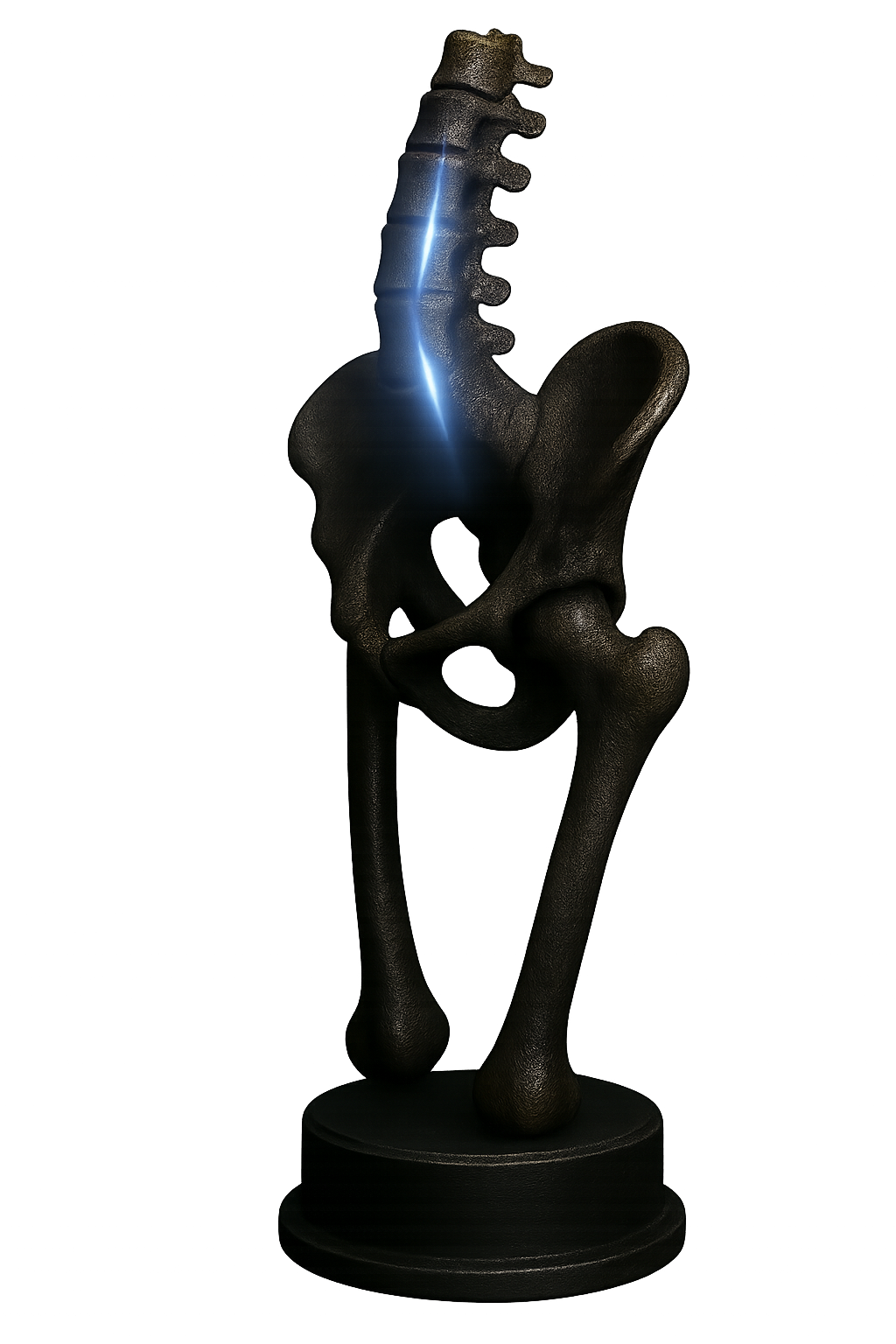
Take care of your back! The Low Back Curvature is a close chain that can grind your disc if you rotate with it.
I. POWER VS. CHAOS: THE TALE OF TWO SWINGS
You’re standing over the ball with the shot already clear in your mind. You’ve trained it, rehearsed it, almost mastered it. You know exactly what you want to do. But then the course gets inside your head: the wind shifts, the lie feels awkward, or the pressure of people watching creeps in. Confidence wavers. This table shows how Core Ignition vs No Core Ignition flips the swing: power, accuracy, injury risk, and cue response.
III. CORE VS. BACK: MECHANICAL CONTROL
The table below makes it easy to see the difference between using your core muscles and relying on your back muscles during a golf swing. When the core is active, the body stays balanced, rotation is smooth, power builds naturally, and impact is solid. When the back takes over, the spine arches, timing slips, energy leaks, and contact breaks down. It’s a simple side‑by‑side view of why the core is the safer and stronger choice. Think of your body as a team. You have the Stabilizers (Core Group), the heroes, and the Compensators (Back Group), the villains. One builds a game that lasts; the other burns out.
IV. CORE VS. BACK: PERFORMANCE AND RISK
Core led swings don’t just look cleaner. They survive the stress of competition. They adapt, they protect, and they deliver. Back led swings collapse when the body is asked to do too much from the wrong place. In this second part of the Core vs Back Control Grid, we look at what really happens when the swing is tested under pressure. Ball flight, cue response, and injury risk tell the story. A core led swing keeps the launch predictable, listens to coaching, and protects your spine. A back led swing fights for control but often breaks down when the torque builds.
V. DEFORMITY MAPPING: PHYSICAL DEFORMITIES
Mechanical deformities are the visible breakdowns in the golf swing. They ruin posture, wreck rotation, and collapse impact. Every one of them comes from losing core control. This table shows how to spot each deformity and how to correct it by redirecting the swing back to the pelvis and deep core.
VI. DEFORMITY MAPPING: FUNDAMENTALS AND SKILLS
When the basics fail, the Master Ignition is the only way to restore the standard.
VII. FUNDAMENTALS LOCKED IN: PERFORMANCE DOMAINS
Fundamentals and skills are the basics every golfer struggles with posture, rhythm, timing, and balance. When the core floats, these collapse. When the core dominates, the swing feels natural, repeatable, and safe. This table shows you how to spot them with their core-driven solutions. Performance breakdowns are structural. When the core dominates, the results lock in.
VIII. THE THREE-STEP RESET: FIX IT FAST
The practice tee is easy; the course is hard because of pressure. The moment the wind shifts or the stakes rise, your body defaults to chaos. Use this three-step reset to restore Core Dominance instantly:
-
Cinch the Frontal Wall:
Take your stance and exhale. Pull your navel sharply toward your spine. This Cylindrical Corset cinch flattens the lower back and fuses your spine to your pelvis.
The Result: You eliminate Early Extension and Reverse Spine Angle before the club moves. -
Issue the Buttocks Command:
If you feel your hips drifting side to side, your anchors are loose. Apply outward “paper‑tearing” pressure with your feet. This wakes up the buttocks and creates a solid Power Box.
The Result: You eliminate Sway, Slide, and Address Instability. -
Trigger the Elevator:
If you are scooping or casting, you have lost your vertical height. Instead of “hitting” with your hands, push the ground away with your lead foot and let the Pelvic Elevator lift your core toward the sky.
The Result: You eliminate Casting and the Chicken Wing by letting the core’s rotation pull the arms through the slot.
⚖️ The Verdict: Quiet Command
The Evidence: Swing flaws and performance failures were found to be non‑random symptoms of a sleeping core. Gravity and the Compensators take over only when the internal anchor is quiet.
The Sentence: You are sentenced to stop fixing your hands and start firing your center.
The Ruling: Diagnosis precedes the cure. By identifying the deformity and applying the mapping solution, you have moved from guessing to Quiet Command.
CASE CLOSED.
🔗 Research
Verified research on how body type interacts with tilt and core activation to influence golf swing performance. Swing quality is determined by mechanics, not frame size.
- McGill et al.: Balance, strength, and muscular power are important, but body type alone does not predict swing quality.
- Sells et al.: Elite players exist across all body types; compact builds rely on rhythm and stability, lean builds on precision and endurance, larger builds on torque.
- Oka et al.: Efficient pelvis-to-torso sequencing and ground force use determine power; tilt mechanics and core engagement, not size, drive performance.
- Hart et al.: Movement quality, trunk stability, and tilt activation predict clubhead speed and control across all body types.
"Bodies can change but physics is absolute."
CHAPTER 19
BIG OR SMALL
Understand How Different Bodies Move
Every golfer brings a different body to the swing. Some are tall and flexible, others compact and powerful, others somewhere in between. But while bodies vary, the principles of motion do not. When you understand how different structures create leverage, rotation, and stability, you stop forcing one model onto every athlete and start matching the motion to the mover. This chapter shows you how to read body types, identify natural strengths, and build a swing that works with the athlete instead of against them.
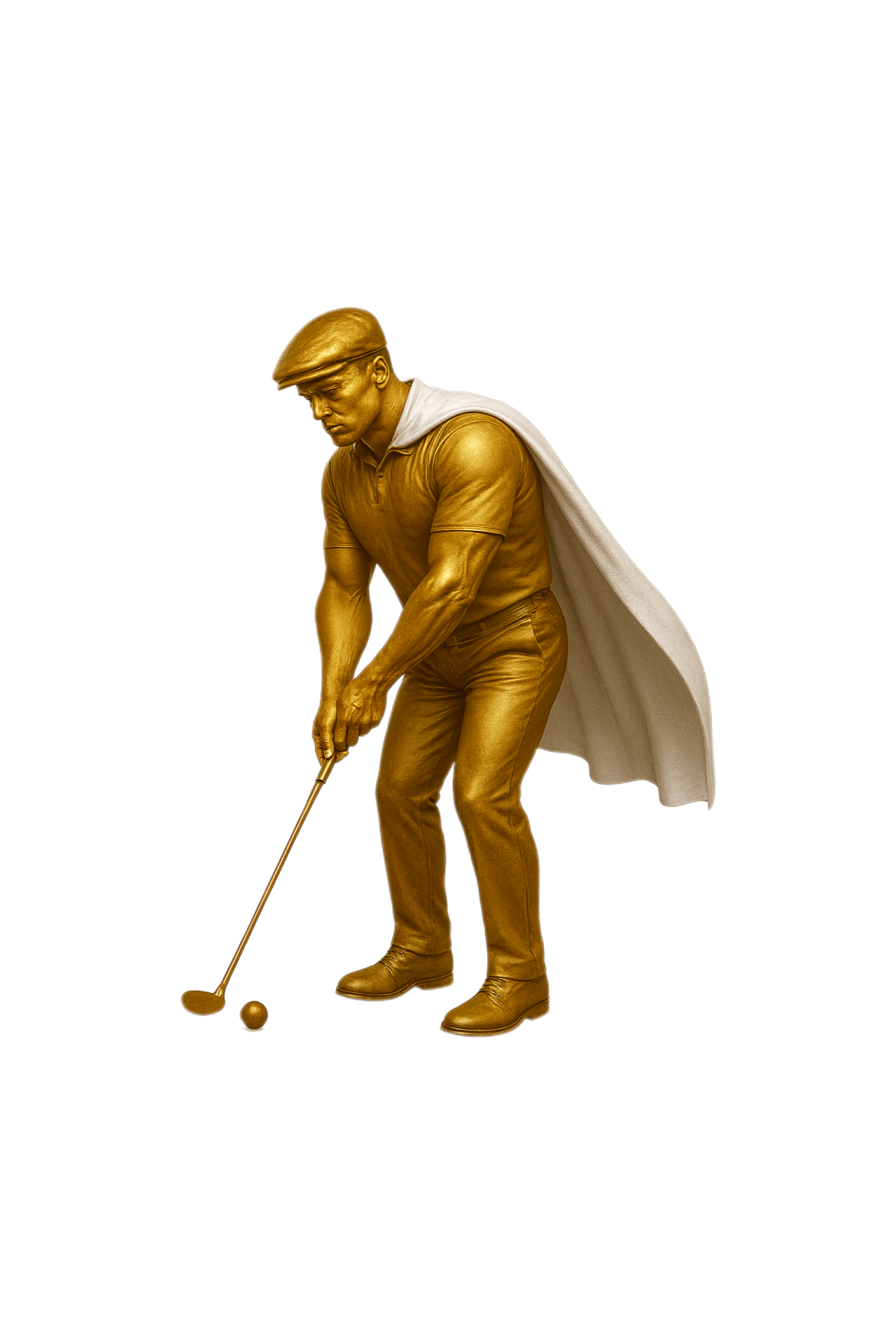
I. GOLFING LEGENDS IDENTITY SWING
Body type is the chassis, but core ignition is the driver. These legends prove that core optimization is not about one specific "look," but a personal identity shaped by how you brace the King (the pelvis).
THE CLASSIC POWERHOUSES
- Ben Hogan: The master of the "Core Cinch." His compact, muscular frame relied on an unbreakable abdominal connection that allowed him to rotate with surgical precision.
- Raymond Floyd: Optimized his core by blending stability with rhythm. His compact build supported a motion that kept his pelvis braced through decades of play.
- John Daly: Harnesses raw power by letting his larger frame and powerful legs absorb and release massive torque through a free-flowing core.
THE MODERN ELITE
- Scottie Scheffler: A master of footwork and ground pressure. His core handles the massive "shuffle" of his feet, keeping the pelvis as the stable axis even during explosive movement.
- Rory McIlroy: The ultimate example of "Torque Management." His lean but powerful frame uses an incredible core-to-hip speed ratio to launch the ball.
- Bryson DeChambeau: Built for maximum mass and leverage. He uses a massive "Cylindrical Corset" to stabilize his high-speed, single-plane motion.
- Xander Schauffele: Balanced and efficient. His athletic build relies on a perfectly timed buttocks-clear to maintain his world-class consistency.
THE PRECISION SPECIALISTS
- Jim Furyk: Turned a lean, wiry frame into a model of efficiency. He proves that an unconventional path works perfectly if the core handles the timing.
- Tommy Fleetwood: A rhythmic master who uses his core to maintain a rock-solid spine angle through impact, regardless of the wind or pressure.
- Russell Henley: One of the game's most consistent strikers. He relies on address stability and a locked midsection to keep his ball flight on a "sniper" line.
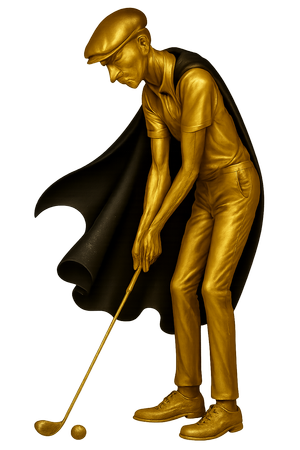
II. THE ELITE POWER MATRIX: THE DATA DOESN'T LIE
The secret to longevity and power is not found in arm strength. It is found in how much energy is routed through the core and legs versus the arms. This matrix proves that elite golfers consistently rely on their center as the primary engine.
III. HOW TO: READ THE POWER MAP
Use this simple guide to find your own blueprint within the data and apply the Core Secret for maximum efficiency.
Core Dominance is Universal: Notice that every player's core is their dominant power source (45% or more). This proves the Mechanics Secret is universal.
Find Your Secondary Source: Identify which column has a higher secondary percentage for a player similar to your build. If you have a larger frame like Daly or Scheffler, your Leg Drive is your secondary engine. If you are built like DeChambeau, your Arm Leverage is your secondary asset.
Optimize: Use the Cylindrical Corset to stabilize your core first. Once the “Anchor” is set, you are cleared to maximize your secondary source to create elite speed.
IV. HOW TO: MASTER THE CORE FOR YOUR BUILD
Once you identify your blueprint, use these specific commands to lock in your motion.
For the Tall and Lean Golfer (The Lever): Focus on Stability. Cinch your core extra tight at the top of your backswing. This prevents your long spine from swaying and collapsing under the weight of your long arms.
For the Short and Stocky Golfer (The Mass): Create Space. Use the Buttocks Command (imagine “tearing paper” with your feet) with extra pressure. This makes room for your arms to swing through your powerful chest.
For the Stiff Golfer: Trigger the Elevator. Since you cannot turn very far, push the ground away hard with your feet. This vertical lift creates the speed you need without forcing your back to twist.
For the Flexible Golfer: Use the Brake. Do not rotate as far as you can. Rotate only as far as your cinched core allows to avoid becoming a “Wet Noodle” that loses all energy at impact.
⚖️ The Verdict: The Universal Blueprint
The Evidence: Copy‑paste instruction was found guilty of forcing athletes into motions their skeletons cannot support. The Elite Power Matrix proved that the Core Secret is the universal law among all champions.
The Sentence: You are sentenced to stop imitating others and start commanding your own blueprint.
The Ruling: Universal laws govern every body. By matching your Ignition to your frame, you have moved from imitation to True Authority.
CASE CLOSED.
🔗 Research
This block presents verified research on how body type interacts with tilt and core activation to influence golf swing performance. Swing quality is determined by mechanics, not frame size.
- McGill et al.: Balance, strength, and muscular power are important, but body type alone does not predict swing quality.
- Sells et al.: Elite players exist across all body types; compact builds rely on rhythm and stability, lean builds on precision and endurance, larger builds on torque.
- Oka et al.: Efficient pelvis-to-torso sequencing and ground force use determine power; tilt mechanics and core engagement, not size, drive performance.
- Hart et al.: Movement quality, trunk stability, and tilt activation predict clubhead speed and control across all body types.
"The best don’t guess. They calibrate the pressure of their core."
CHAPTER 20
MECHANICAL EGO PUT TO THE TEST: IAP
"Breathe, Hold the Middle, and Strike with Feel."
The final hole brings a unique pressure that tightens the chest and speeds the mind. When the moment grows loud, the golfer must grow quiet. This is your flight path. Do you stall the plane and say "oops," or do you calibrate pressure and land smooth? This is the chapter where you safely posture your most beloved ego to the test. Don't forget not to embarass yourself when you go wrong. Remember: "Breathe, Hold the Middle, and Strike with Feel."
I. CALIBRATION SECRETS
The 18th hole bunker is a storm cloud. To navigate it, you need cabin pressure. This is the physical calibration of your fuselage (the core). As you line up the clubface (your steering nose) with the runway lights, your body must respond. Millimeter alignment triggers the brace. The diaphragm presses down, the abs push out, and the spine locks. Hands and core move together as the pressure rises.
II. CALIBRATION TOUCH APPLIED
Core abdominal compression in the golf swing can be divided into six distinct zones, each aligned with the six phases of the swing: Address, Backswing, Transition, Downswing, Impact, and Follow‑Through. Every zone carries a specific percentage of activity, showing how much the abdominal wall is engaged, a defined biomechanical role that explains why compression is needed at that moment, and a practical Activation Cue that tells the athlete how to execute the brace in simple terms.
The intensity builds progressively from light tension at Address (30%) to maximal bracing at Impact (100%), then eases into controlled release at Follow‑Through (40%). Together, these zones form a complete compression cycle: posture set, energy stored, spine stabilized, force delivered, and posture maintained.
Intensity is not a guessing game. Use this table to calibrate your abdominal wall activity throughout the flight cycle.
III. DON'T UNDERESTIMATE YOUR POWER
This is the section where you put your ego to the test. How far you can thwack your power into the distance. The intra-abdominal Pressure (IAP) is the secret force that protects the spine. Golfers belong to the same lineage as world-class lifters and throwers who rely on IAP as their hidden engine of performance.
Here in the table, golfers can compare their own phases with the bracing strategies of lifters, hitters, and throwers, and see how their swing belongs to the same lineage of athletes who rely on IAP as their hidden engine of performance.
IV. BRACE FOR IMPACT EVEN IF YOUR LANDING SAFELY
The follow-through is your landing cycle. If you overshoot the runway, you grind the spine. Finishing tall means the body holds its frame after the strike.
V. LAND YOUR FUSELAGE WITH A TOUCH
Use this simple 5-step checklist to land your flight smoothly when the pressure is at its peak:
Calibrate the Nose: Align the clubface with millimeter precision. Feel your Cabin Pressure rise to Zone 1 (30%).
Spool the Engines: Breathe in and hold that breath into your core. Reach Zone 2 (50%) as you coil.
The Approach: On the downswing, throttle up to Zone 4 (85%). Trust your core and strongly brace for impact.
The Touch and Go: At impact, hit Zone 5 (100%). Maintain the momentum of your core inward after the shot. This is a seamless rhythm where the clubface stays aligned and the hips continue to drive.
The Landing: Settle into Zone 6 (40%). Stand tall and let the ribs float. Do not let your belly out or you will grind the spine.
⚖️ The Verdict: Cabin Pressure
The Evidence: The “Crash” was found to be the result of leaking pressure at the moment of truth. The Six Zones of Compression and the IAP Comparison proved that stability is a calibrated ascent, not a random spasm of effort.
The Sentence: You are sentenced to maintain Cabin Pressure until the wheels stop rolling. The “Belly Out” landing is hereby evicted from the machine.
The Ruling: Control is the product of pressure. By mastering the IAP Hidden Engine, you have moved from “surviving the 18th” to “flying the flag.”
CASE CLOSED.
🔗 Research
Verified research showing how intra-abdominal pressure and core activation protect the spine while enhancing rotational power in sports including golf.
- Guo et al., 2021 : Increased intra-abdominal pressure significantly reduces spinal compressive load, demonstrating IAP as a primary safeguard against lumbar collapse during heavy lifting.
- Stuart McGill, 2010 : Core bracing combined with abdominal pressure improves trunk stability and reduces lumbar injury risk in rotational and lifting tasks.
- Hodges & Gandevia, 2000 : Deep core muscles increase intra-abdominal pressure and provide protective spinal stiffness during dynamic loads.
- Wells et al., Golf Swing EMG Review : Trunk muscles, including erector spinae and obliques, show strong activation during acceleration and follow-through phases of the golf swing, supporting the role of core engagement in force transfer and spinal protection.
“Stability is the bedrock of control; without it, command vanishes under pressure.”
CHAPTER 21
TAME THE CORE

Stay Firm and Fire with Control
The pelvis is the king of the swing, but a king without discipline creates chaos. At impact; when the core moves faster than the glutes the sequence breaks. When it moves too soft the power leaks. The golfer must learn to hold firmness in the middle while directing the fire with intention. This chapter shows you how to control the core, keep the center steady, and release the swing with a blend of strength, precision, and calm athletic command.
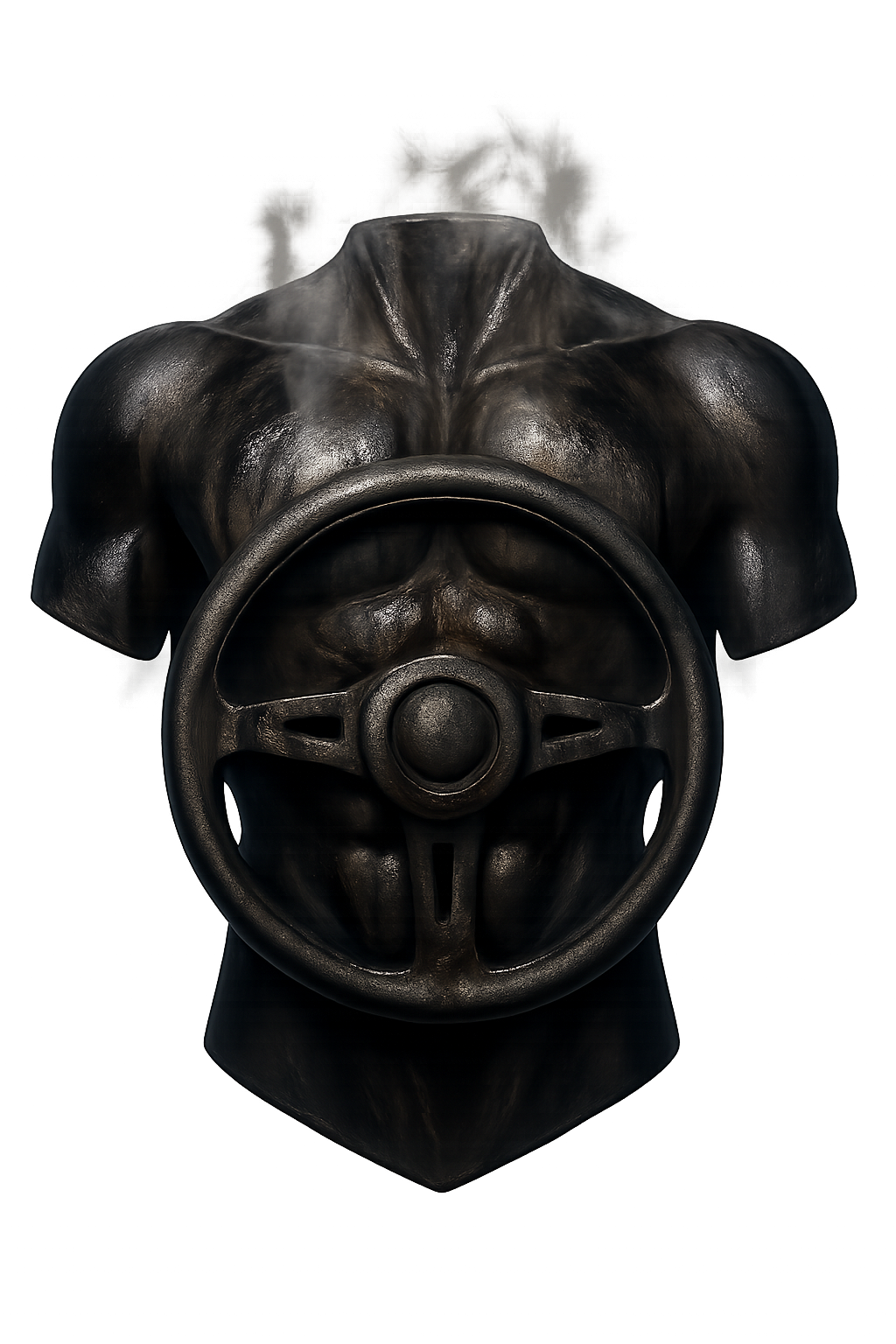
I. THE STEERING SYSTEM OF THE TORSO
The Pelvis governs rotation, balance, and energy transfer, acting as a powerful engine. However, an engine without a steering system leads to a crash. In this system, we define the steering components as follows:
The Torso and Spine (The Steering Wheel): They direct the Pelvis’s energy, controlling separation and release.
The Core Muscles (The Steering Column): The Obliques and stabilizers calibrate the timing and prevent the “sway” or “slide.”
The Arms and Club (The Wheels): They are the final responders, delivering the strike only when the steering input is precise.
II. KING'S LAW OF MOTION
Across different sports, the same laws keep showing up. They are the fingerprints of human motion. When the pelvis and torso move in harmony, power flows smoothly. When they fight, energy is lost.
-
LAW 1: LEAD THEN FOLLOW, NOT SPIN AND HOPE
- Golf Scenario: You fire your hips too early and your chest stays behind. The club arrives late and the ball floats weakly to the right.
- Core Solution: Let the pelvis initiate and let the torso chase it. Think sequence, not raw speed.
-
LAW 2: ARMS STAY PATIENT
- Golf Scenario: Your arms jump first and the club races past your body, causing thin and weak strikes.
- Core Solution: Start the downswing from the ground up. Let the torso pull the arms, not the other way around.
-
LAW 3: MATCH RHYTHM TO SPEED
- Golf Scenario: Your hips spin open too early and the club gets trapped behind you, causing blocks and hooks.
- Core Solution: Match the speed of your pelvis to the rhythm of your torso. Smooth beats fast.
-
LAW 4: THE TORSO CHASE
- Golf Scenario: You fire your hips aggressively while your chest stays closed, sending the club too far inside.
- Core Solution: Initiate with the pelvis, then let the torso accelerate. Release the arms only when the torso unwinds.
-
LAW 5: SPREAD THE LOAD
- Golf Scenario: You yank the club with your arms and your lower back tightens from absorbing the load.
- Core Solution: Rotate with the pelvis and torso together. Spread the force across the chain instead of dumping it into the spine.
III. THE CALIBRATION MAP
Speed multiplication occurs when each segment peaks and then passes the torch to the next. Use this map to keep the King in line through every segment of the swing.
IV. THE GOVERNOR’S PROTOCOL: DRILLS FOR DISCIPLINE
To move the Calibration Map from the page into your muscles, you must apply the Governor’s Protocol. These drills “cage” the Saboteur and force the King to follow the laws of physics.
The Step Drill (The Initiation Trigger): Take a narrow stance. As you reach the top of your backswing, take a small step toward the target with your lead foot before you swing down. This forces the Pelvis to lead and prevents the arms from jumping the gun.
The Pause Drill (The Patience Filter): Swing to the top and stop for a full three-count. This kills “momentum cheating” and forces the Pelvis to restart the engine from a dead stop, ensuring the arms stay patient.
Intensity Testing (The Speed Governor): Hit three balls at 25%, 50%, and 100% intensity. Find the “sweet spot” where your speed and control merge. If your sequence breaks at 100%, your “Steering Column” is failing.
V. THE WOLF PACK
The ultimate secret of Taming the King is Synchronicity. When the Pelvis initiates and the Torso “chases” it, you create a “Whip Effect.” If the Pelvis spins alone, the whip is broken. If the Torso pulls alone, the whip is weak. By maintaining the Cylindrical Corset, you fuse the engine to the steering wheel, allowing the energy to release through the clubhead like a lightning strike.
⚖️ The Verdict: The Speed Trap
The Evidence: The “Speed Trap” was found guilty of breaking the kinetic chain. Evidence shows that raw hip speed without torso synchronization leads to “Stuck” arms and leaked power. The Calibration Map proved that controlled sequencing is the true source of speed multiplication.
The Sentence: You are sentenced to Match Rhythm to Speed. The “Spin and Hope” method is hereby evicted from your motion. You must maintain the Cylindrical Corset to ensure the King’s fire is directed toward the target.
The Ruling: Control is the product of discipline. By mastering the Steering System, you have moved from a “Wild King” to a “Master Pilot.”
CASE CLOSED.
🔗 Research
- Chu et al., 2011: EMG analysis confirms proximal-to-distal sequencing; pelvis rotation leads torso and arms in skilled golf swings.
- Gonzalez et al., 2023: Coordinated pelvis-torso sequencing correlates with higher clubhead speed and ball velocity.
- McLean et al., 2007: Greater torso-pelvis separation (X-factor) stores elastic energy, improving power at impact.
- Horan et al., 2010: Abdominal and core activation during downswing stores rotational energy efficiently.
- Escamilla et al., 2012: Peak pelvis rotation alone does not guarantee ball speed; torso and arm follow-through timing is critical.
- Frontiers in Sports and Active Living, 2022 : Timing and coordination outweigh raw rotation speed in professional golfers.
- Fleisig et al., 2013: Controlled pelvis deceleration enables torso acceleration, amplifying clubhead speed without overloading the spine.
- Sato et al., 2019: Core stability and controlled deceleration improve consistency and reduce low back stress.
- Annals of Sports Medicine, 2022 : Proper sequencing reduces lumbar shear and injury risk.
- Prieske et al., 2019: Structured core training enhances pelvis stability and trunk endurance, minimizing compensatory movements.