PART 3
GOLF MADE EASY

▸▸▸ ENTERING PART 3
You have exposed the gaps. Now you close them.
Part 2 proved that power without support is just strain. Part 3 turns your body into a reliable machine. This is where your base becomes steady and your swing stops drifting off-line.
Stability is not a luxury. It is the anchor that allows power to exist.
You are moving from a leaking engine to a Zero Wobble Foundation.
▸▸ STATUS
Ready: Your setup feels supported and your balance is quiet.
Not Ready: Your stance feels uncertain or your weight drifts under pressure.
Mission Objective: Zero wobble. Zero drift. Zero collapse.
In Chapter 6, you see why putting exposes your stability. In Chapter 7, you learn that without a brace, there is no ignition.
This is where your foundation becomes unshakable.
You may now proceed to Chapter 6.

"Stability is the anchor that holds when the pressure tries to pull you under."
CHAPTER 6
WHY GRANDPA PUTTS BETTER
The Secret Postural Stability
Have you ever wondered why the senior golfer at your club, with his limited range of motion and "slow" swing, consistently finds the fairway and drains every putt? It is the Grandpa Paradox. While the young athlete "muscles" the club with raw tension, the veteran has accidentally discovered the secret of postural stability. This chapter introduces the Stability Anchor and the physics required to stop your swing from improvising.
Grandpa Is Steady as a Kitchen Table
You are on the green, eight feet out. You line it up, take a breath, and miss. Low, off-center, classic. Then Grandpa steps up, squints at the ball like it owes him money, and drains it dead center. No celebration, just perfect.
Grandpa’s driver barely reaches your 7-iron, but his body carries a built-in cheat code. Putting with a young, restless body is like trying to write your name on a moving bus. Grandpa is writing on a kitchen table with both elbows down. Same hands, but far better odds.
As we age, falling backward becomes dangerous, so the body adapts: a slight forward lean, abs quietly switched on, hips tucked. Not locked, just ready. It is like hovering a hand over a railing while climbing stairs: core engaged, pelvis steady, trunk quiet. He didn't plan this; his body learned it. Stability first, motion second.
>FUNDAMENTALS FIRST
Before we proceed on how to ignite and swing with the core. In each phase of the golf swing, it is vital to master the fundamentals so you won’t get lost. Imagine practicing medicine on a patient while merely guessing at the diagnosis. That is exactly what happens when you skip the mental learning.
It is the same when you fly a plane; you don’t take shortcuts. You have to study the theory so you can connect the dots in your head before you put them into practice.
If you take shortcuts here, you will only hurt yourself and potentially hurt others. You will crash your flight into inconsistency and injury.
The cockpit is prepped, the coordinates are set, and the engine is primed.
I. THE PHYSICS OF THE BRACE
Instability in the core disrupts the entire kinetic chain. Just as loose bolts weaken a high‑performance engine, poor bracing shifts mechanical stress into smaller, vulnerable joints. This triggers a domino effect of compensations where the scaffolding of your posture collapses under the speed of the swing.
Without a locked center, the rest of the swing improvises. If the first link in the chain, the Stability Anchor, weakens, every other link bends under pressure.
The Engine Analogy: A loose bolt at 100mph is a catastrophe. A loose core at 100mph clubhead speed is a slice, a hook, or a blown disc.
The Chain Reaction: When the core fails to brace, the brain sends a panic signal to the hands and wrists to save the shot. This is where Dead Aim is lost.
II. THE BIOMECHANICAL SHIELD: IAP DIAGNOSTICS
The truth is simple: No Brace, No Base. In this system, Intra‑Abdominal Pressure (IAP) functions as the structural shield that stabilizes the spine and anchors the pelvis. With a functional brace, the shield is raised, the base is secured, and every strike carries both maximum power and total protection. Without it, the body collapses, the swing breaks down, and performance fades.
THE STABILITY MAP: CORE ON VS. CORE OFF (TABLE 1)
WHY THIS DIAGNOSTIC MATTERS
IAP is the body’s internal shock‑absorber and stabilizing engine. When activated, it locks the pelvis, shields the lumbar spine, and creates a unified structure capable of producing controlled, repeatable power. When absent, the chain collapses and the swing becomes unstable, inconsistent, and physically costly.
THE CORE SECRET TRUTH
A functional brace is the difference between a body that absorbs force and a body that suffers from it. When the core is on, the entire system becomes a shield. When it is off, the system becomes exposed.
III. TRACING THE COLLAPSE
To master the Stability Anchor, you must recognize when the stakes of your Epicenter are pulling out of the ground. When the trunk stops doing its job, every other link in the chain starts compensating under pressure.
These four Diagnostic Traces give you a field-ready checklist. Each one exposes a specific collapse pattern and gives you a concrete switch to restore the brace. Read them once. Then use them on the course as a quiet scan before you pull the trigger.
IV. THE MISSION OF PRECISION: PUTTING STILLNESS
Grandpa putts better because his Epicenter is Dead. In the short game, any movement in the core is magnified at the clubhead.
The Mechanic: A stable core prevents Trunk Drift.
The Action: Lightly brace the core before the stroke. Stillness is the hidden engine of elite accuracy.
V. LOOSING THE CORE BRACE
Every joint has a job: mobility or stability. The moment you lose the brace, the system fails. This table maps the collapse, from head to foot.
Each row in this table tells the story of how the body reacts when the engine shuts down: the head lifts because balance is lost, the neck tightens because rotation has no anchor, the lower back strains because the pelvis drifts. Every breakdown begins with the core.
Now picture the opposite: the brace holds, the spine stacks, the pelvis anchors. The head stays quiet, the upper back rotates freely, and the shoulders glide around a stable base. This is the difference you feel when ignition is on. Core in, joints aligned, swing alive.
THE FIX MATRIX
VI. HYDRAULIC SYSTEM OF A GOLFER
WHAT IS IT?
Intra Abdominal Pressure (IAP) is the hidden hydraulic system of the human body. Imagine a soda can: when sealed and pressurized, you can stand on it and it won’t buckle. That is a body with IAP. Pop the tab, and the can crushes. That is a golfer with a “Core Off” setup.
WHY DO WE NEED IT?
The golf swing is a high velocity collision. Without IAP, your spine is the only support against rotational force. IAP stabilizes vertebrae from the inside out, acting as a biological weight lifting belt that:
Redirects Force: Moves the swing “hit” away from bones into your pressurized core.
Stops the Wobble: Secures the Tent Stake, keeping your center of gravity stable.
Prevents the Octopus: Gives the brain the “Safety Signal” to let the arms swing at max speed.
HOW TO USE IT:
Do not just “suck in the gut.” Create 360° internal expansion.
The Cinch: Pull navel gently toward spine to activate deep stabilizers.
The Fill: Breathe “down” into pelvis, filling behind the belt buckle with air.
The Lock: Maintain pressure while exhaling. Feel wide and solid like a cylinder.
THE STABILITY MAP: CORE ON VS. CORE OFF
No Brace, No Base. With IAP, the shield is raised, base secured, every strike carries power and protection.
THE PRESSURE LEAKS
We no longer guess why a shot went sideways. If experiencing Body Strain or Erratic Flight, your IAP has leaked—“popped the tab” on stability.
The Check: If follow-through feels unstable, IAP was “Off.”
The Fix: Reset the cylinder. Cinch, Fill, Lock.
⚓ THE VERDICT: GRANDPA’S CASE
The Evidence: Stability is the hidden superpower behind consistency. IAP Diagnostics prove that an unbraced core is a Tent Stake Failure that forces the hands to rescue a collapsing frame.
The Sentence: You are sentenced to Anchor Principle Activation. You are forbidden from “muscling” the club until the base is secured.
The Ruling: When the core steadies the base, the shoulders stop guessing and the kinetic chain regains order. Precision has replaced chance.
In Chapter 7, we apply this to every phase. Without a brace, you have no base. Without a base, you have no power.
CASE CLOSED
🔗 Chapter 6 Research: Postural Control
- Vickers & Williams: Evidence that gaze control and "Quiet Eye" duration are critical for performing under pressure.
- Furuya & Kinoshita: Data on how kinesthetic information from practice strokes improves putting accuracy.
- Paillard et al.: Analysis of optimal methods for improving postural balance and gestural adaptations.
- Sherman & Ranganathan: Proven gains in sport-related activities and postural control through targeted balance training.
"Without a brace there is no base and without a base there is no swing."
CHAPTER 7
NO BRACE NO BASE
Ignition in Every Phase
Every powerful swing begins with a stable base, but stability is not something you create at address and hope to maintain. It must be renewed in every phase of the motion. When the body loses its brace, the swing loses its structure and the club begins to wander. This chapter shows you how to build a dependable base that stays engaged from takeaway to finish, giving your swing the consistency and control it has been missing.
I. PHASES OF IGNITION MECHANICS
Understanding the mechanics of a golf swing is not just about aesthetics; it is about performance and injury prevention. To build a repeatable swing, you must understand the five primary phases of the motion and how your core protects you during each one.
PHASES OF THE GOLF SWING
FOCUS ON CORE ENGAGEMENT
Engaging the core muscles throughout the swing is the secret to stability and power. The core acts as the hydraulic fluid that connects the upper and lower body, allowing for a more efficient transfer of energy from the ground up.
IMPORTANCE OF PROPER MECHANICS
Understanding and practicing proper golf swing mechanics can help improve consistency, increase clubhead speed, and reduce the risk of strain or injury. Proper form can decrease 50-80% of the stress on the spine with every swing. Research indicates that nearly half (46.2%) of reported golf injuries occur during the swing, with 23.7% happening at the point of impact.
Researcher Insights: The Scientific Proof
The Impact Truth: Studies confirm that the downswing and follow-through are responsible for the majority of golf injuries due to the high release of energy and subsequent deceleration.
Core Stability: Experts prove that a stable core acts as the transfer point for lower-body power into upper-body acceleration, preventing energy leaks and smoothing swing rhythm.
Injury Prevention: Biomechanical adjustments can boost clubhead speed by up to 15% while simultaneously reducing injury risk.
THE CORE SECRET TRUTH
Core engagement can be described as connecting the upper and lower body, potentially allowing for a more efficient transfer of energy.
II. BEYOND THE SWING: THE SCIENCE OF UNBREAKABLE PERFORMANCE
What is this about?
This is a high precision biomechanical audit of the golf swing. It is a transition from seeing the swing as a “path for the club” to seeing it as a sequential management of internal pressure and spinal safety. It identifies 11 critical transition points from Setup to Recovery where your body either maintains its structural integrity or collapses into injury-prone compensations.
Why is this important for a golfer who already knows how to play?
Even if you play well, you likely suffer from hidden power leaks and micro trauma. Most golfers chase “swing feels” that are actually just patches for a collapsing core. You need to know this because:
It Solves the “Why” of Your Bad Days: When your timing is off, it is usually because your core disengaged at the Backswing Apex or Transition Prep. Understanding these phases allows you to diagnose yourself in real time on the course.
It Ends the War with Your Spine: Golf is a high torque sport. In 2026, the leading cause of “golf retirement” is lumbar degeneration. These phases teach you how to use Posterior Pelvic Tilt and Internal Compression as a biological shield, ensuring the force goes into the ball rather than your L4/L5 discs.
It Automates Power: By mastering the Ignition Phase and Transition Initiation, you stop “trying” to hit it hard with your arms. You learn to launch the swing from a braced engine, which produces “heavy” impact and effortless distance that remains resilient under pressure.
It Builds Durability: Most golfers “collapse” the moment they hit the ball. The Post-Impact Recovery phases (Phases 8–11) are what differentiate the elite athlete from the amateur. This is how you ensure that today’s round does not prevent you from playing tomorrow.
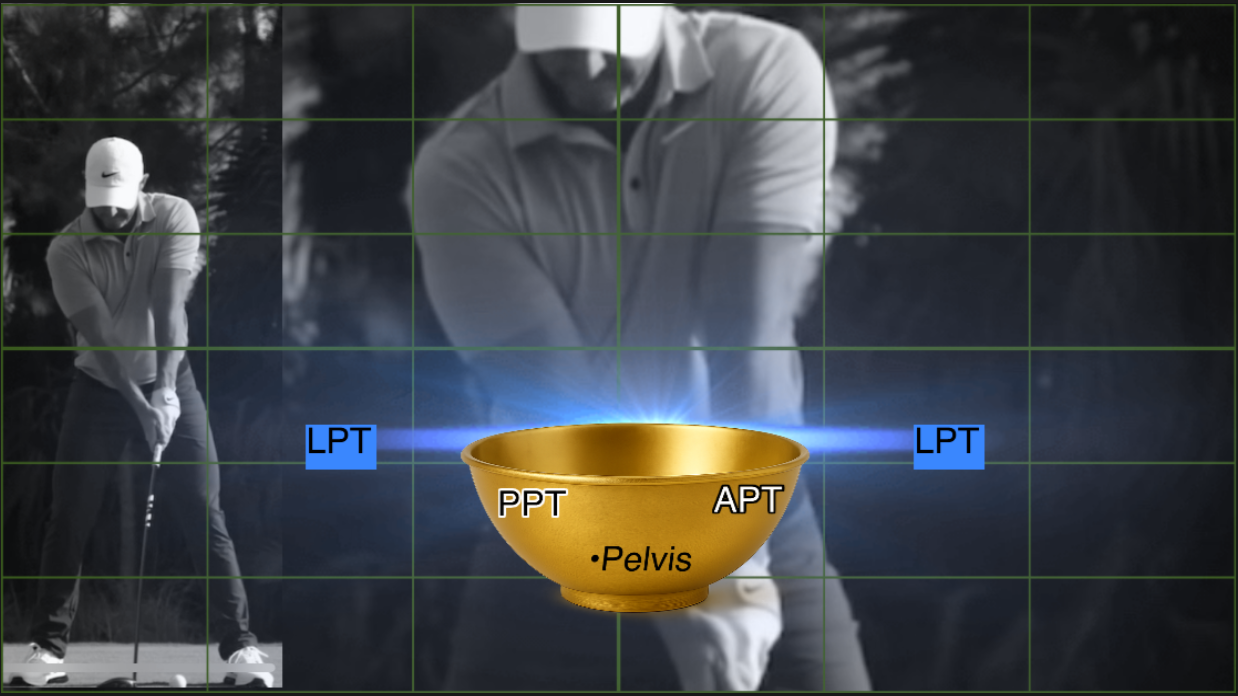
• SETUP: Core Anchoring Begins
What it is about: The Setup is the “pre-ignition” phase where you decide if the core or the hip flexors will lead the swing. It is about establishing a Proximal Foundation before the club moves. By tucking the pelvis slightly backward (Posterior Pelvic Tilt) and stacking the ribs over the hips, you switch the core “on,” flatten the lumbar spine, and prevent tension leakage.
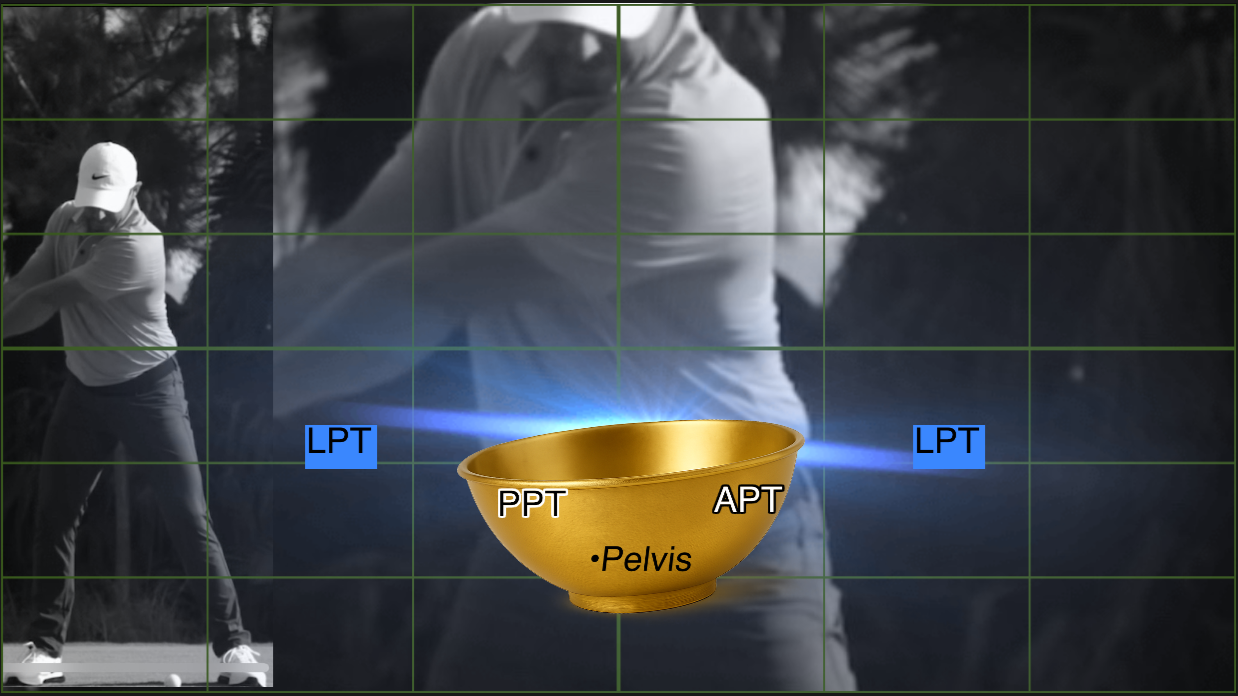
• THE TAKEAWAY
The Takeaway is the first test of your balance and stability. It is the moment the club starts to move, and your body must resist the urge to twist too early. This phase is about staying firm and protecting your spine’s position as the swing begins.
This phase shows how well you can keep your lower body still while the club moves back. There are two ways to move through it:
Core ON: Your muscles are braced and resisting the turn. Your hips stay level and your spine stays straight, preventing your body from drifting forward or arching too soon.
Core OFF: Your core is loose or “passive.” This causes your pelvis to slide and your spine to curve, ruining your balance before the swing even gets started.
The Goal: Learn to feel the difference between a braced, resistant start and a loose, drifting takeaway.
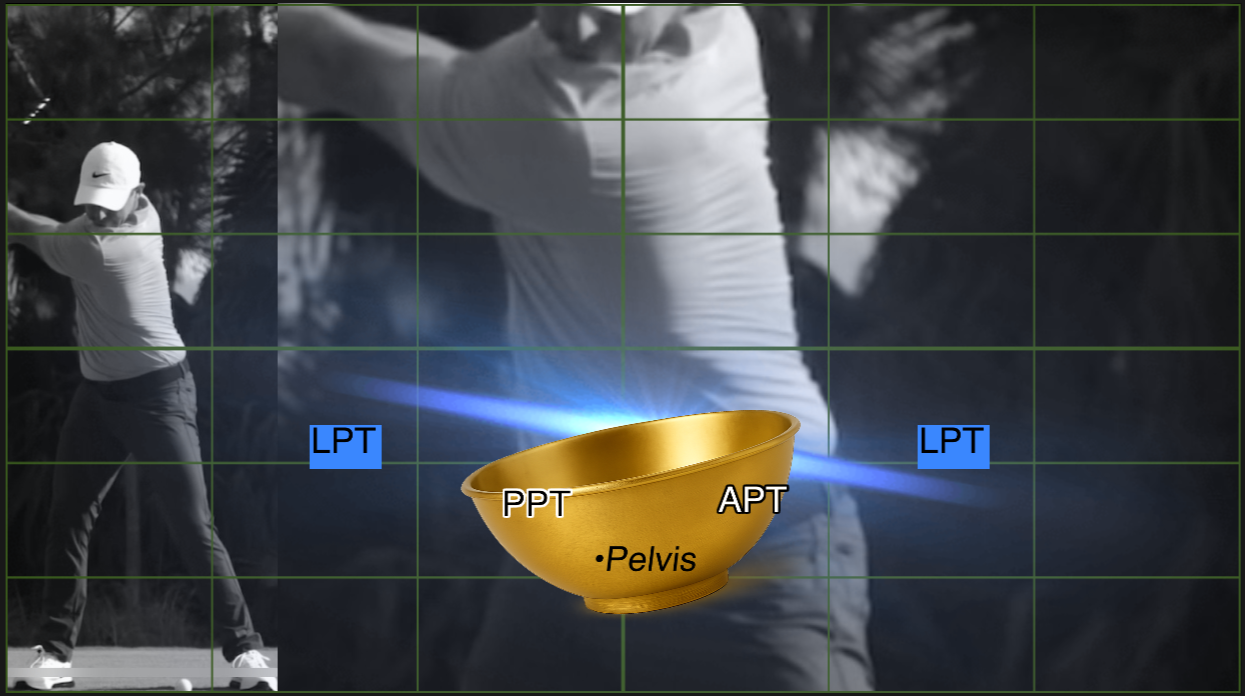
• THE BACKSWING
The Backswing is where you build your power. It is the moment your upper body coils while your spine stays locked in place. Your body must rotate around a stable center to keep the swing on track.
This phase shows how well you can separate your shoulder turn from your lower back. There are two ways to move through it:
Core ON: Your deep muscles are braced and in charge. Your spine stays steady like an anchor, allowing for a huge, powerful rotation without losing your posture.
Core OFF: Your core is loose. This causes your lower back to arch or “drift,” making your swing shaky and causing you to lose control of the club.
The Goal: Learn to feel the difference between a controlled, braced rotation and a loose, drifting turn.
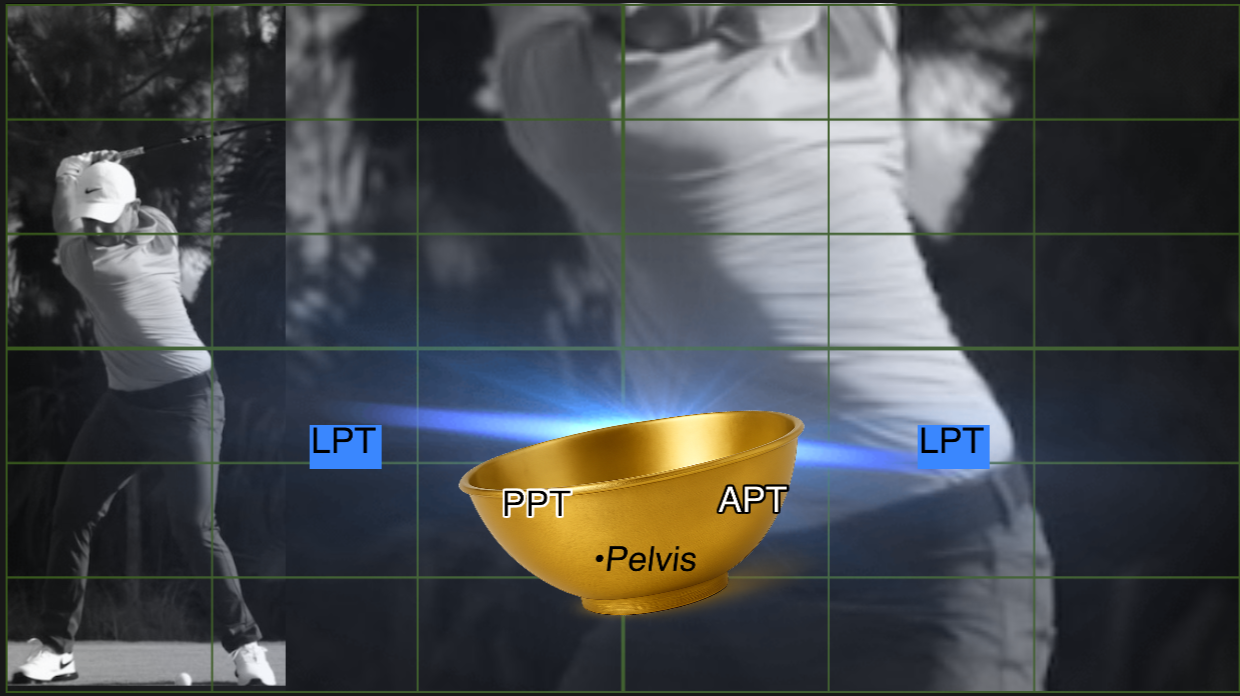
• THE TOP OF THE BACKSWING (APEX)
The Top of the Backswing is the peak moment of tension and the biggest test of your core strength. You have turned your body as far as it can go, and the swing is about to change direction. Your body must hold its shape against maximum force right before the downswing starts.
This phase shows how well you can brace your core under pressure. There are two ways to move through it:
Core ON: Your deep muscles are fully braced, keeping your lower back flat and strong. You hold your posture perfectly and are instantly ready to launch the club down with power.
Core OFF: Your core is loose or “passive.” This causes your posture to collapse or “stand up” at the top of the swing, which ruins your angle and makes a powerful downswing impossible.
The Goal: Learn to feel the difference between a strong, loaded position at the top of the swing and a weak, collapsed position.
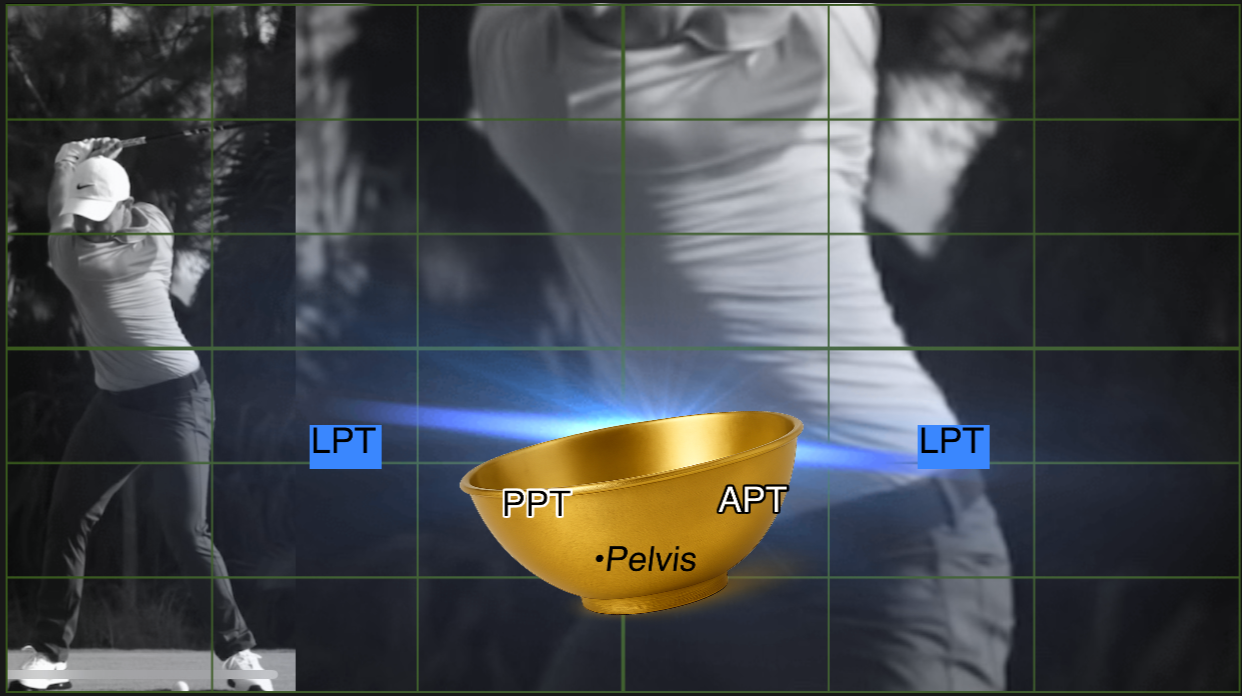
• TRANSITION INITIATION
The Transition is the “Tipping Point” of your swing. It is the split second where your backswing ends and your downswing begins. This is where your core must act as an anchor to protect your spine and hold your power together before you release it.
This phase is a war between staying stable and falling apart. There are two ways to move through it:
Core ON: Your central brace is locked in. Your spine stays protected and “anchored,” allowing your body to start the downswing as one powerful unit.
Core OFF: Your core relaxes and your pelvis tips forward. This causes your body to collapse, forcing you to use only your arms to hit the ball, leading to “Compensatory Chaos” and missed shots.
The Goal: Learn to feel the difference between a stable, anchored transition and a weak, arm‑driven collapse.
• TRANSITION PREP
Transition Prep is your Biomechanical Launchpad. It is the final moment before the downswing starts where your core must be completely “Locked In.” This phase is your last safety check to ensure your body is set up to deliver maximum power without falling apart.
This phase shows if you are ready to launch or destined to struggle. There are two ways to move through it:
Core ON: Your ribs are tucked and your pelvis is anchored. You have created a rock‑solid foundation, making the upcoming rotation safe, fast, and incredibly powerful.
Core OFF: Your core is loose, causing your ribs to flare and your posture to break. Instead of a powerful strike, your swing becomes strained and chaotic as you try to recover mid‑air.
The Goal: Learn to feel the difference between being “Locked In” and ready to launch versus being loose and out of position.
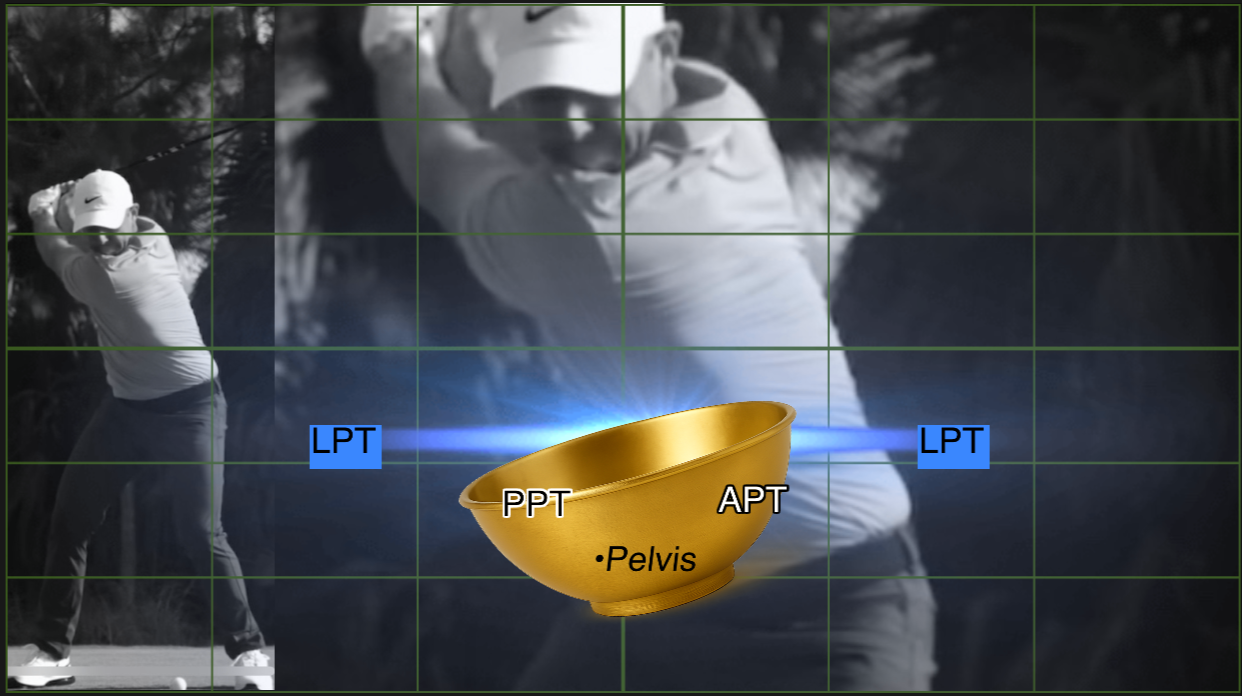
• THE IGNITION PHASE
The Ignition Phase is your Point of No Return. It is a lightning‑fast, millisecond contraction where your body creates the internal pressure needed to drive the swing. Instead of “chasing” the ball with your arms, you use your core and glutes to anchor your base and fire the club.
This phase is “brutally honest” about your technique. There are two ways to move through it:
Core ON: Your pelvic floor lifts and your glutes lock in tight. This creates massive internal power, allowing you to strike the ball with pure, effortless compression from the inside out.
Core OFF: You rely on “arm‑driven motion.” Without a braced core, you are forced to swing with your upper body only, leading to weak slices, poor contact, and physical strain.
The Goal: Learn to feel the difference between an explosive, core‑driven ignition and a weak, arm‑driven struggle.
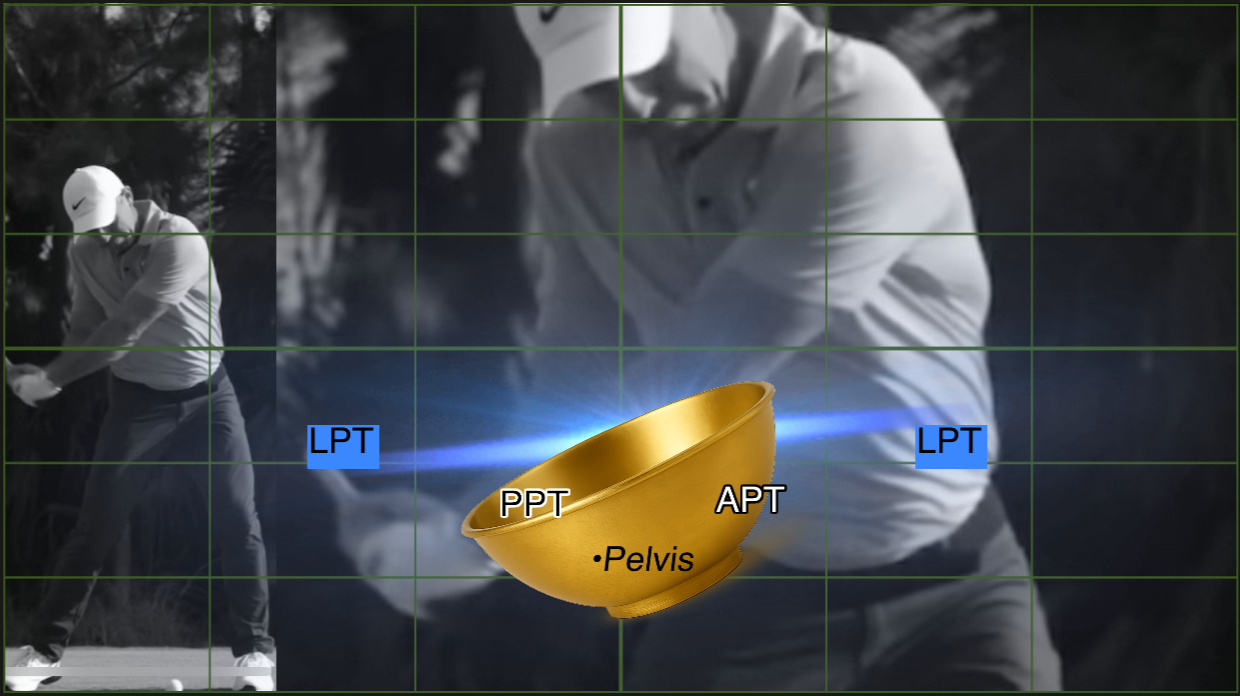
• ROTATIONAL DESCENT
The "Rotational Descent" is the most important test of your golf swing. It is the exact moment when gravity and speed meet. At this point, your body either stays strong or loses its form.
This phase shows how well you control your hips, ribs, and spine. There are two ways to move through it:
Core ON: Your muscles are braced and steady. You stay in control of the club's power.
Core OFF: Your muscles are relaxed or “passive.” This causes your body to collapse, forcing compensations just to hit the ball.
The Goal: Learn to feel the difference between a strong, braced downswing and a weak, unstable one.
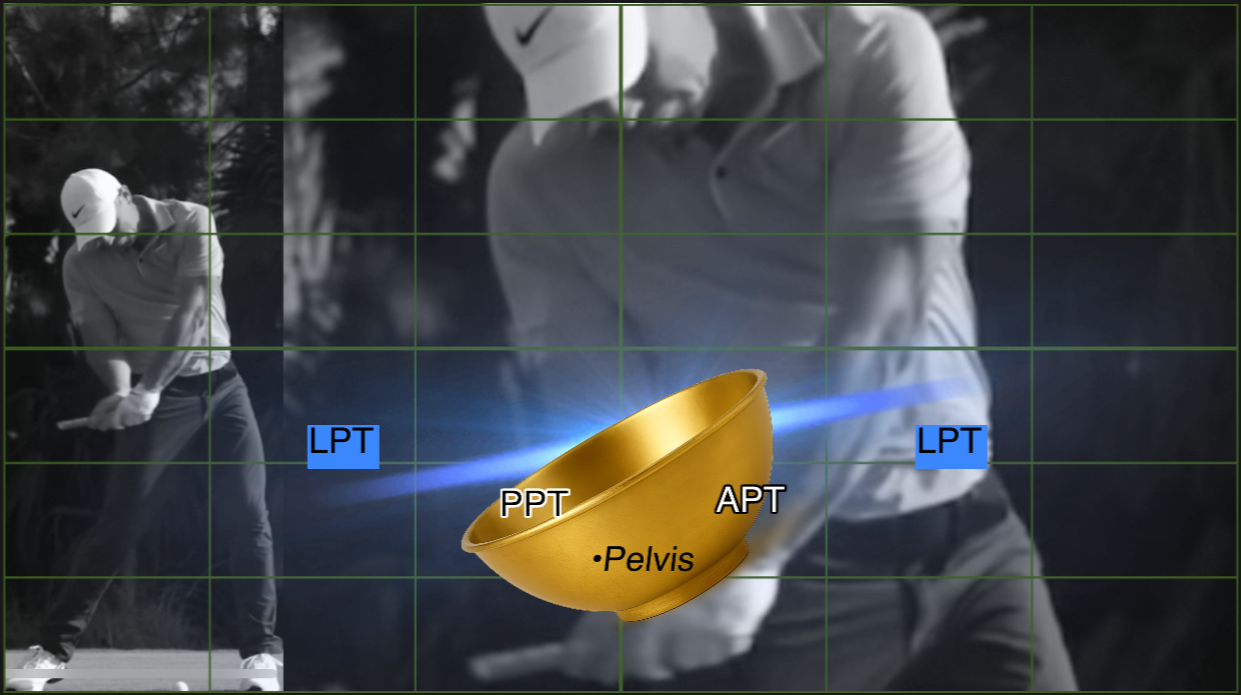
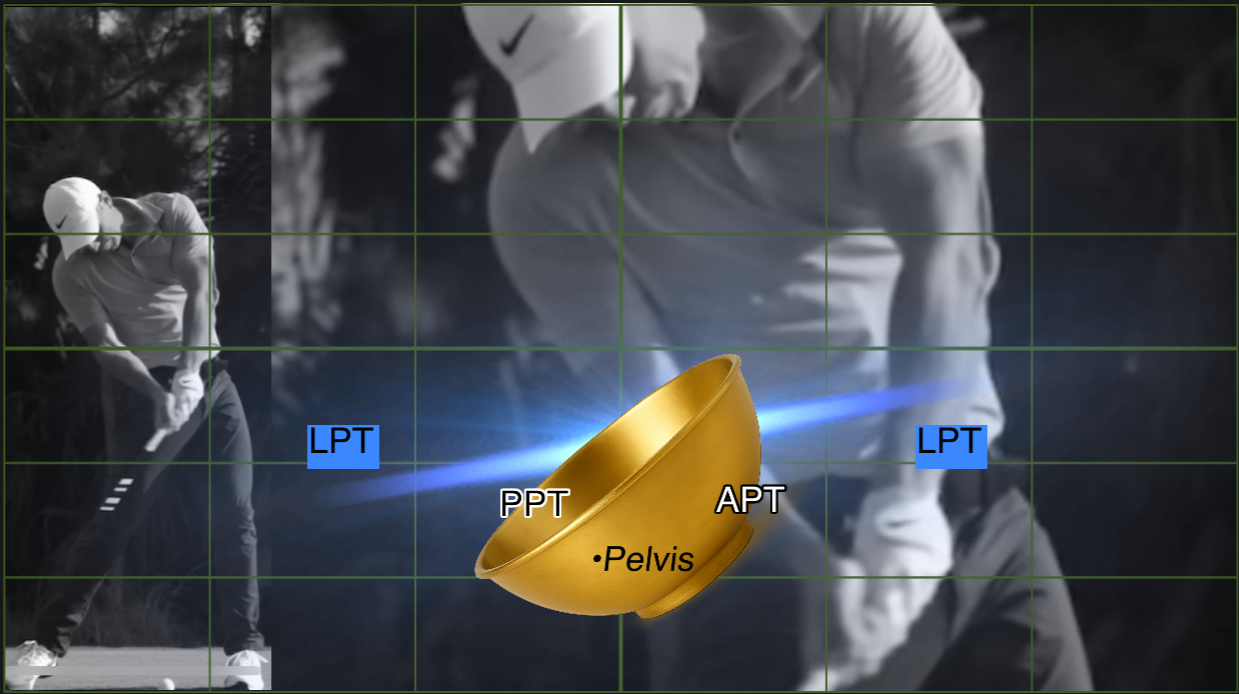
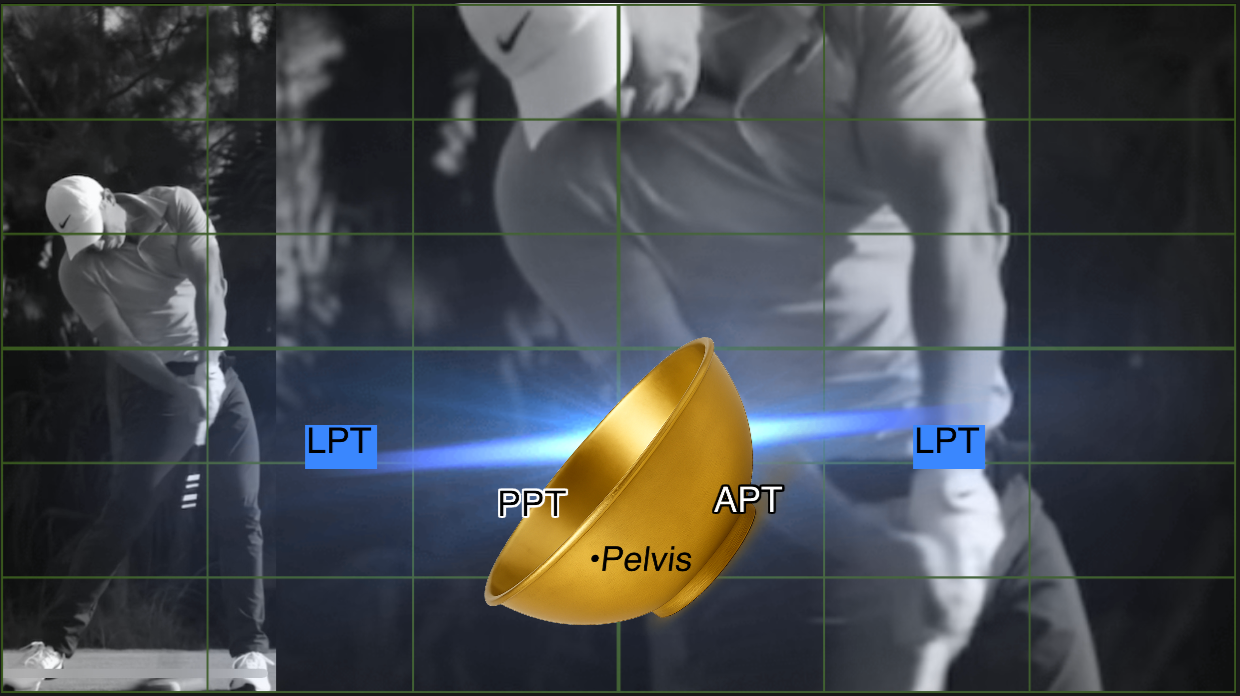
• ZONE OF IMPACT
The Zone of Impact is the mechanical moment of truth. It is the split second where your built‑up energy turns into pure speed. This isn’t about “hitting” the ball; it is about releasing your power through a body that stays rock‑solid. At this moment, your body faces its highest pressure.
This phase shows if you are using your whole engine or just your hands. There are two ways to move through it:
Core ON: Your internal “vacuum” is at its tightest, and your lead glute is locked like an anchor. Your ribs stay down and your tailbone stays tucked. This creates a rigid structure that lets the club explode through the ball while your spine stays completely protected.
Core OFF: Your core relaxes, causing your spine to buckle and your hips to “stand up” (Early Extension). Your power leaks into your arms, leading to weak contact and painful back strain.
The Goal: Learn to feel a strike that feels “heavy” and solid to the ball, but “light” and effortless to your body. You are rotating through the ball with your entire engine.
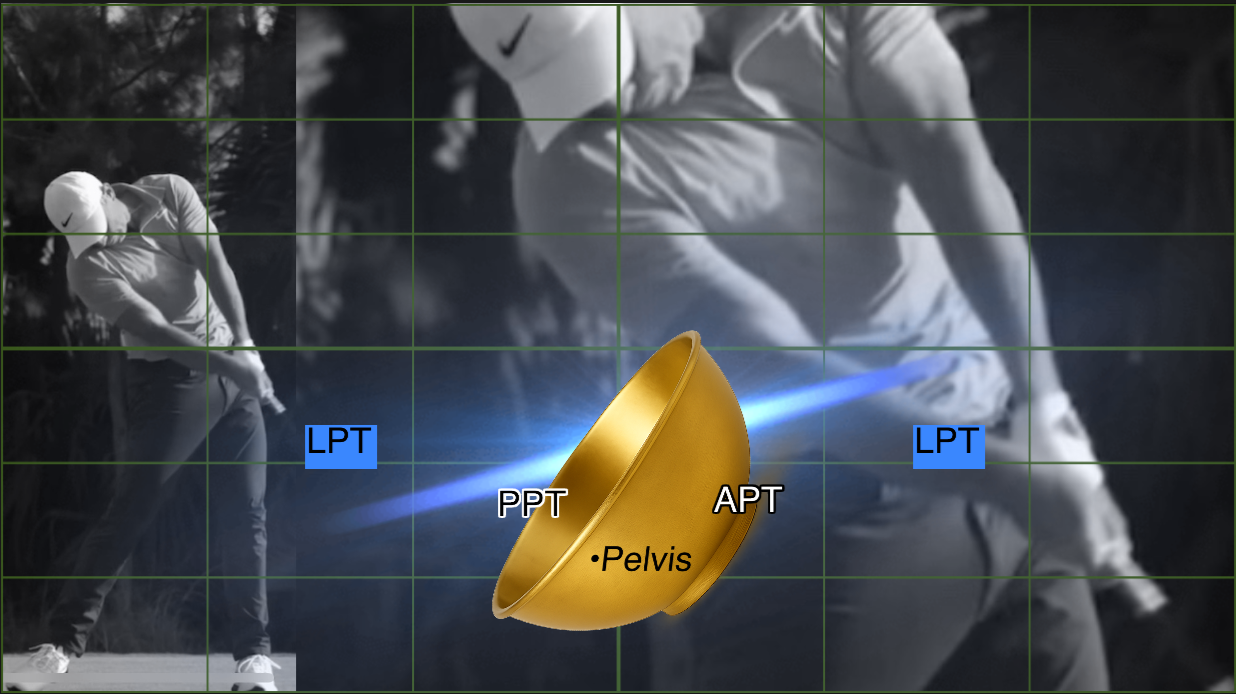
• POST‑IMPACT (INITIAL COMPRESSION)
Post‑Impact is the phase of Aftershock Management. Even though the ball is already gone, the massive force of the swing is still traveling through your body. This moment is about staying strong to protect your spine as your rotation starts to slow down.
This phase shows how well you protect your body from the “blast” of energy you just released. There are two ways to move through it:
Core ON: You intensify your brace and keep your tailbone tucked. This anchors your spine and prevents your joints from grinding together, absorbing the swing’s force safely.
Core OFF: Your core lets go too early. This leaves your spine unprotected against the high‑speed rotation, leading to “bone‑to‑bone” grinding and long‑term back pain.
The Goal: Learn to feel the difference between a braced, protected finish and a loose, dangerous collapse after the hit.
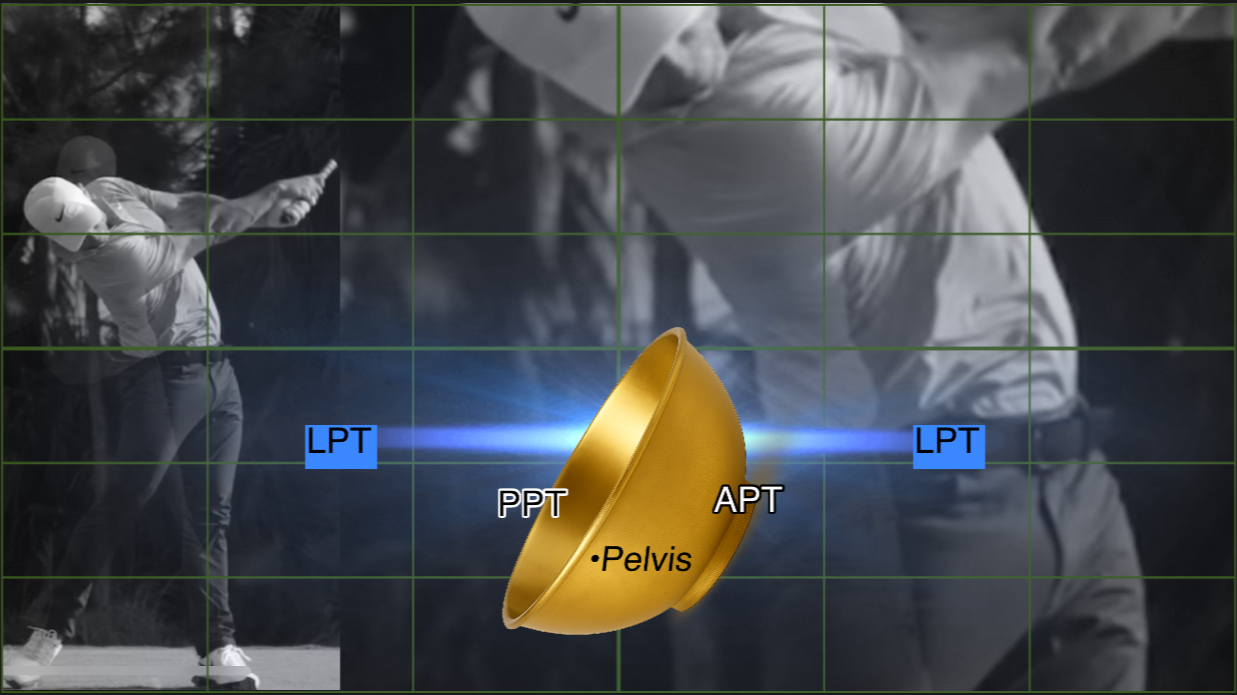
• POST‑IMPACT (SHOULDER & RIB CONTROL)
Post‑Impact Phase 2 is about “Shoulder and Rib Integrity”. As your arms swing through at high speeds, they want to pull your body out of alignment. This phase is about locking your shoulder blades down and keeping your ribs “stacked” to safely slow down the club’s momentum.
This phase shows how well you can stop the club’s power from pulling your spine apart. There are two ways to move through it:
Core ON: Your shoulder blades stay flat and flush against your back. Your ribs stay “stacked” over your hips, acting like a shield that prevents the force of your arms from hurting your spine.
Core OFF: Your shoulder blades flare out and your ribs “pop” or lift. This causes the club’s weight to yank on your upper back and neck, transferring destructive force directly into your spine.
The Goal: Learn to feel the difference between a stable, “stacked” chest and a flared, unprotected upper body as the swing finishes.
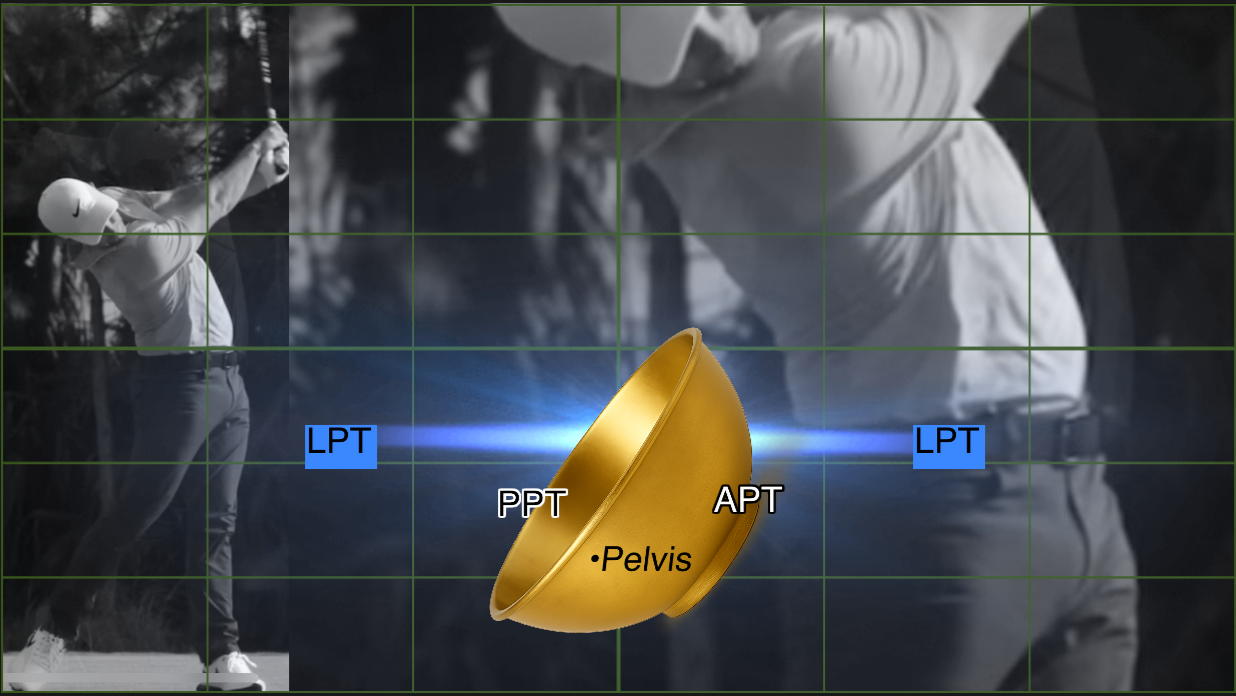
• POST‑IMPACT (DECELERATION)
Post‑Impact Phase 3 is the “Safeguard of Durability”. As your swing reaches its final rest, your spine is under peak pressure. This stage is about the discipline of staying tight until the very end, ensuring your body absorbs the remaining energy safely instead of snapping into a painful arch.
This phase shows how well you protect your back from the final “whiplash” of the swing. There are two ways to move through it:
Core ON: Your deep core and pelvic floor cinch tighter as you finish. Your glutes and legs stay active to stabilize your base, preventing your lower back from over‑arching and keeping your spine perfectly safe.
Core OFF: Your core relaxes too soon, thinking the job is done. This causes your back to “hyperextend” (curve too far), forcing your spine to take the full hit of the slowing club, which leads to long‑term wear and tear.
The Goal: Learn to feel the difference between a disciplined, braced finish and a loose, collapsing rest. Your core stays “on” until the club stops moving.
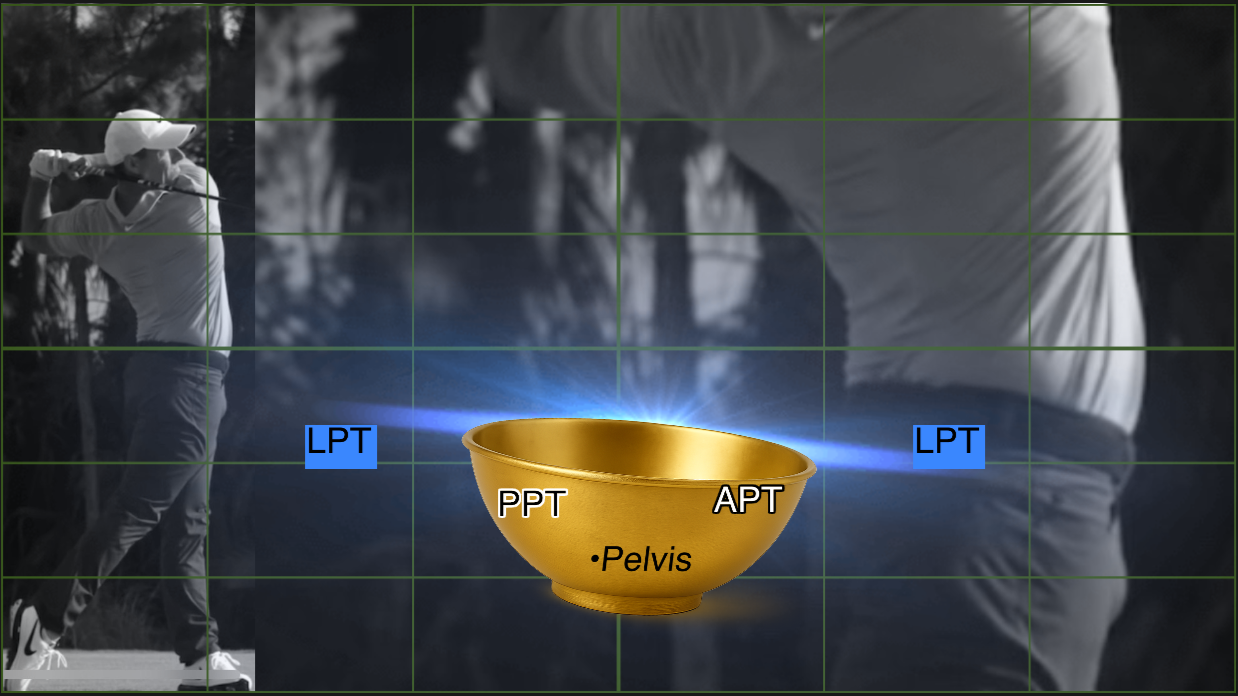
• RECOVERY AND STRUCTURAL INTEGRITY
Post‑Impact Phase 4 is your “Biomechanical Closure”. It is the very end of your swing where your body exits the rotation. The goal is to finish the move with full control, keeping your spine shielded and your structure strong until the club comes to a complete stop.
This phase shows if you can finish a swing without falling apart. There are two ways to move through it:
Core ON: Your brace holds steady until the motion is 100% finished. Your glutes stay active and your spine remains neutral, giving you a “Tour Pro” finish that looks and feels powerful and balanced.
Core OFF: You let your guard down before the motion stops. This causes your body to “spill” out of the finish, leaving your spine vulnerable and making your swing end in a weak, strained position.
The Goal: Learn to feel the difference between a strong, contained finish and a loose, unraveled recovery. You stay braced until the club is still.
III. UNDERSTANDING THE PROTOCOL: PHASE BY PHASE FOCUS
The "Ignition Protocol" suggests a focus on core engagement throughout the swing. Each phase places different demands on the spine, pelvis, and core, and understanding these demands helps maintain structure, stability, and energy transfer.
WHY THIS PROTOCOL MATTERS
Each phase of the swing requires a different level of core activation. When the core remains engaged, the spine stays protected, rotation stays connected, and energy moves through the chain without leaking. This protocol provides a structured way to maintain stability while generating rotational force.
THE CORE SECRET TRUTH
Core engagement acts as the stabilizing bridge between the upper and lower body. When this connection is active, the swing becomes more efficient, more powerful, and more structurally safe.
IV. DECELERATION SHIELD
The forces involved in a golf swing continue long after the ball has left the clubface. Focusing on core engagement during the follow‑through is discussed as potentially important for absorbing these forces and maintaining structural integrity as the body decelerates.
WHY DECELERATION MATTERS
After impact, the body must safely dissipate the rotational and linear forces generated during the swing. Proper containment during this phase may help protect the spine, shoulders, and ribcage from unnecessary stress while maintaining structural integrity through the finish.
THE CORE SECRET TRUTH
Core engagement during deceleration acts as a stabilizing shield. When maintained through the finish, it may help the body absorb force, maintain alignment, and complete the motion with control and durability. Strength in core engagement is important. When core engagement is reduced too early, the spine may become the primary absorber of force, which some sources suggest could contribute to chronic injury. Sustained core engagement until the motion is complete is discussed as important.
V. WHAT HAPPENS NEXT
The Ignition Protocol moves you from a passive participant in your swing to the Commander of your motion. This is the stage where feel meets physics. In golf, every action has a biological reaction. If you provide the correct command to your core, the body rewards you with speed and safety. If you withhold that command, the system collapses into compensatory chaos.
The following table serves as your Biomechanical Prediction Map. It outlines exactly what to do in each phase, the Win you achieve by doing it, and the Failure you risk by ignoring it. This is how you stop guessing and start executing with Intuitive Authority.
THE IGNITION BLUEPRINT: ACTION AND REACTION
THE MASTER’S EXPLANATION: WHY THE COMMAND MATTERS
We know that the brain operates on a Safety First principle. If your core is not braced, your brain will physically limit your swing speed to protect your spine.
The Chain Reaction: When you follow the What to Do column, you are sending a green light to your central nervous system. You are telling your brain, "The spine is protected; you are clear to launch."
The Rescue Operation: When you ignore the command, your body enters a Panic State. Because the base is broken, your hands and wrists have to perform a last-second rescue to find the ball. This is where inconsistency is born.
By mastering this table, you are no longer just swinging a club; you are managing a high-performance engine. You provide the stability, and the Core Secret provides the power.
THE MASTER CODE
This guide translates common swing faults into immediate, actionable solutions using your Core and Glute Ignition Cues.
THE CORE & GLUTE IGNITION MAP
>CODEX SOLUTIONS
What This Table Is About
The Master Code is a technical framework designed to bridge the gap between swing theory and physical execution. While many golf instructions focus on the movement of the club, this system focuses on the biometrics of the golfer. By categorizing the swing into five distinct phases, the table identifies specific rotational breakdowns and provides Ignition Cues: targeted internal commands that activate the core and glutes to stabilize and power the movement.
Core Rules
The Core Specific Action is defined by Core In and Hold. This is the foundation of all stability. For baseline control, maintain a vacuum inward and upward. If more force or speed is required, do not release; instead, squeeze and engage the core further inward. Always prioritize the inward upward vacuum to protect the spine and create a rigid axis for rotation.
Glute Rules
To effectively fire the core, you must have a stable gluteal base that tames the wobble and prevents lateral swaying. The primary glute action is to squeeze the lower glute and imagine driving that squeeze in an upward direction. This vertical engagement provides the ground force necessary to anchor your core rotations.
Rotation Rules
Rotational power is generated by the torso more than any other segment. The torso accounts for the vast majority of rotational degrees during the swing loading phase, typically 60% or more of the total rotation. Always rotate with your core on all forward rotations. By slinging the body around a braced core, you ensure the club stays on plane and the energy is transferred efficiently from the ground to the ball.
Save Your Back
To prevent long-term injury, you must shield your spine from rotational torque. Keep the core fully engaged and vacuumed inward until the swing is completely finished and no more force is felt at the finish. Never relax the core until the club has come to a total rest.
How To Use It
Analyze the Phase: Determine which part of the swing cycle is experiencing a breakdown.
Identify the Rotational Fault: Review the Rotation Problems column to understand the mechanical cause.
Apply the Ignition Cue: Choose the Core or Glute cue that addresses the fault. These are trigger words used to reset the body sequencing.
Refine Through Feedback: Use these cues to create a repeatable feel that aligns with professional swing standards.
THE CORE SOLUTIONS
The issues outlined in the Master Codex table are the most common and significant faults in golf performance. They persist because the body instinctively compensates to hit the ball, often creating pain and injury in the back, knees, shoulders, elbows, and wrists.
Why These Issues Keep Returning
Addressing only the surface problem without engaging the underlying core or glutes merely trades one fault for another. For example, restricting sway without activating the lead glute may cause under-rotation or reverse pivot. Until the root physical limitation is corrected, the original fault will likely reappear.
The Compensation Cascade and Injury Risk
The body is a kinetic chain. If the core and glutes fail to engage, stress shifts to weaker joints:
Lower Back: Without a stable core and supportive glutes, lumbar vertebrae absorb shearing forces, leading to chronic strain and disc issues.
Knees: Hip limitations transfer rotational stress to the lead knee.
Shoulders, Elbows, Wrists: Arms overcompensate for core weakness, causing tendonitis and impingement injuries.
Why the Master Codex Works
The Master Codex addresses the principle of Proximal Stability for Distal Mobility. It is the foundation of elite athletic movement. By prioritizing the core and glutes, you resolve the root cause of swing faults rather than merely patching symptoms.
Scientific Validation & Open Access Research
Prioritizing core and glute engagement is supported by biomechanical data and peer-reviewed, open-access studies:
Gluteal Dominance: The gluteus maximus generates peak power during the downswing. See the Journal of Physical Therapy Science.
X-Factor & Torso Rotation: Professional-level clubhead speed arises from the torso rotating approximately 60% more than the pelvis—only achievable with a braced core. Refer to the Journal of Sports Science & Medicine.
Spinal Protection: Engaging the deep core (Transverse Abdominis) provides inward-upward support that reduces lumbar shear forces. Read on NIH/PubMed Central.
Muscle Memory Permanence: Proximal muscles (core and glutes) retain neural pathways longer than distal joints, making these corrections more permanent. See Frontiers in Human Neuroscience.
🔗 Chapter 7 Research: Stability & Bracing
- Dr. Stuart McGill: Direct link to evidence on how abdominal bracing creates superior lumbar stability compared to other maneuvers, stabilizing the spine against rapid rotational loading.
- Chow et al.: Specific study on trunk rotation and weight transfer patterns that distinguish skilled golfers and support repeatable power mechanics.
- Okada et al.: Peer-reviewed research demonstrating the significant relationship between core stability and performance measures, including clubhead speed, in golfers.
- Hodges & Richardson: Direct research confirming that the central nervous system activates abdominal muscles in anticipation of limb movement to stabilize the spine.
⚖️ The Verdict: Sustained Ignition
The Evidence: The 1.5‑Second Reality proves the brain cannot process a technical lecture mid‑swing. Biomechanical data from 2026 confirms that the Vacuum and Squeeze protocol is the only legal defense against the massive rotational forces that cause structural collapse. An unbraced finish is a confession of power leakage and an invitation to chronic injury.
The Sentence: You are sentenced to Sustained Ignition. You are strictly forbidden from releasing the core vacuum or the gluteal grip until the club has reached a complete stop and you have held the finish for three full seconds.
The Ruling: You have traded the “Octopus” for the Hydraulic Anchor. By synchronizing the Shield (Core) and the Engine (Glutes) across all five phases, you have replaced compensatory chaos with mechanical authority. Precision is no longer a guess; it is an engineered result.
In the next section, explore the concept further. This knowledge can enhance understanding of the discussed principles.
CASE CLOSED