PART 6
THE ENGINE IN MOTION

▸▸▸ ENTERING PART 6
Part 5 revealed the truth about your swing. You learned how the hips and core compete for control, how posture either holds or collapses, and how your internal engine behaves when speed rises. The power struggle is no longer hidden. You now understand who tries to lead the swing and who should lead it.
Part 6 takes you into motion.
This is where the engine you discovered is applied to real clubs, real sequences, and real kinetic chains. Every club demands a different version of your engine. The driver stretches the chain. The irons compress it. The wedges refine it. The putter simplifies it. The body must adapt without losing its identity.
Part 6 shows you how your engine behaves when the geometry changes. You learn how core in and core out influence the driver, the irons, the wedges, and the putter. You learn how the kinetic chain organizes itself when the motion becomes longer, shorter, faster, or more precise. You learn what good mechanics feel like when the club is in motion, not just in posture.
Part 5 revealed the struggle. Part 6 activates the system.
▸▸ STATUS
If your internal engine is now clear and your tilt pattern stays consistent under speed, you are ready for this phase. If your posture still collapses when you accelerate or your engine switches patterns under pressure, return to Part 5 until your foundation becomes reliable.
Part 6 requires precision. You are about to learn how your engine moves through every club in the bag.
You may now proceed to Chapter 11.
|
PART 6: THE ENGINE IN MOTION
Specific Clubs and Kinetic Chains |
|
| Chapter | Title |
 11
11
|
What the Body Prefers
How Your Body Chooses the Natural Core Path
|
 12
12
|
Core Ignition in Every Club
Ignite Proper Core Activation in Every Swing
|
 13
13
|
The Kinetic Chain For Real
Learn the Feel of Proper Mechanics from Start to Finish
|
"Stop choking the club and start commanding the center."
CHAPTER 11
WHAT THE BODY PREFERS
Core In vs Core Out
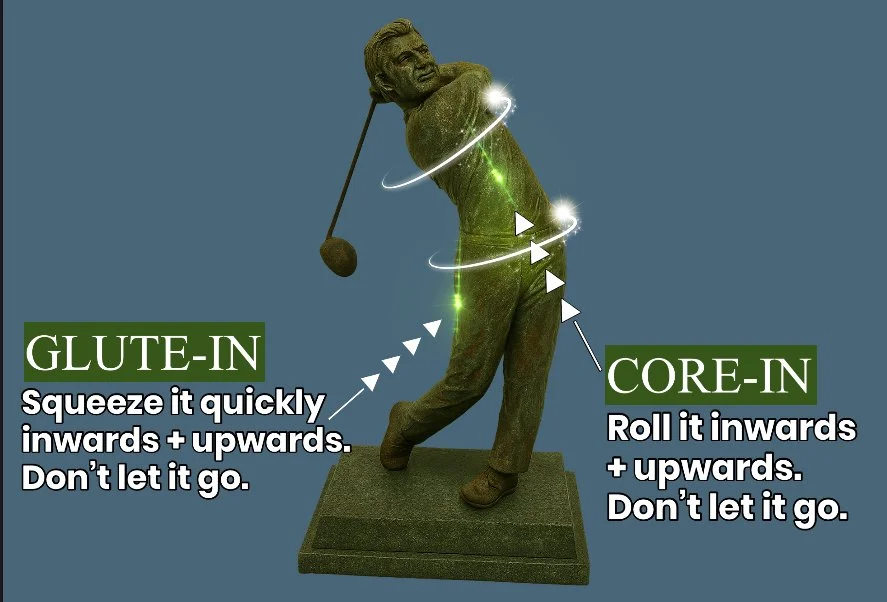
Every club in the bag asks your body a different question, but the body always has a preferred answer. This chapter reveals the Binary Switch of the golf swing. When the core is In, the body moves with clarity and purpose. When the core is Out, the swing becomes a desperate negotiation between compensation and timing.
I. OWN YOUR SWING, TRUST YOUR CORE
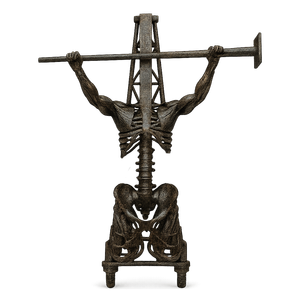
The Crane Metaphor
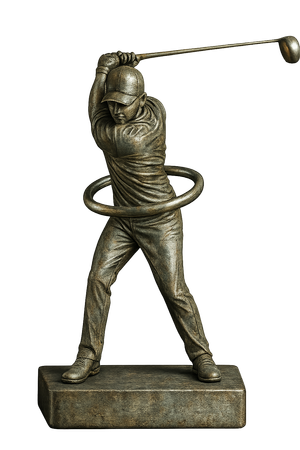
Built for heavy lifting. Anchored to endure. Designed to swing. Analyse the image above. Get critical with it and ask questions:
- Which part is unstable and needs strengthening?
- Which part provides the most stability?
- Which part requires extra help to carry the load?
Most golfers are "reactive." They start the swing and then immediately spend the next second desperately trying to fix a mistake they just made. Our goal is core dominance. This means your core commands the swing from the inside out. When the core leads, the joints follow. You stop "surviving" the swing and start owning it.
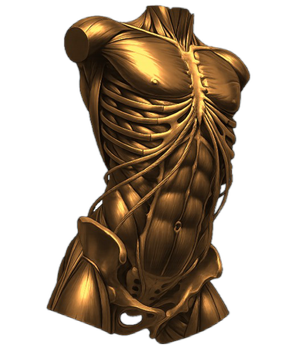
II. GET ENTANGLED AND YOU WILL BE IN TROUBLE
To find the "Chaos Generator" in your swing, we look for Core Out errors. This is where the movement becomes messy and the body begins to protect itself.
THE ERROR:
The Hip Hijack
The trouble starts when your hips surge toward the ball too early. We call this the Hip Hijack. It happens because your hip flexors, acting as the "Saboteur," pull your pelvis forward faster than your core can stabilize it. You aren't just out of position; you are mechanically entangled.
THE BIOMECHANICAL SAFETY LOCK:
Your body is smarter than your ego. When you move into a Core Out position with your belly out and ribs flared, your brain detects an immediate risk to your Lumbar Spine. It reacts by engaging a Biomechanical Safety Lock, acting like a speed limiter on a car. It will refuse to let your muscles fire at full power because it is afraid of snapping the unprotected spine.
III. THAT IS WHAT YOU GET!
There you go you ask for it. When you get entangled, the physical and mental toll follows a predictable, painful order:
- The Structural Shift: It will curve your back into an arch that leaves your vertebrae vulnerable and unprotected.
- The Internal Friction: It will grind your discs as the lower back is forced to absorb the heavy shock of the swing.
- The Path Error: It will make you slice the ball as your hands desperately fight to find the clubface at the last second.
- The Balance Break: It will make you wobble at the finish, stripping away the professional stability you’ve worked for.
- The Mental Weight: It will make you nervous over the ball because your brain senses the danger and no longer trusts your foundation.
- The Final Toll: Your accuracy gets jittery, leaving you fighting your own mechanics instead of the course.
Note: By untangling the hips, we don’t just fix the flight of the ball; we stop the grind on your body. Every swing you take while entangled is a withdrawal from your long-term physical bank account.
IV. THE CORE FIX: THREE STEPS TO COMMAND
To take control, you must teach your body that the core is the boss.
The Setup (The Shield):
Before you move, pull your midsection inward slightly. This "stacks" your ribs directly over your pelvis and prevents the "Belly Pop" before the swing even starts.
The Transition (The Anti-Extension Move):
As you start the downswing, maintain that inward pull. This stops the hip flexors from yanking your pelvis toward the ball. The Test: If you practiced with your glutes against a wall, they would stay touching the wall throughout this move.
The Impact (The Snap):
Keep the core braced through the strike. This turns a weak "shove" into powerful "torque." The swing feels quiet and heavy because you stayed in posture.
V. BREAKDOWN: CHAOS VS. THE ANCHOR
VI. THE TRAIL LEG BALANCE (THE “BACK POST” DRILL)
Single-Leg Drills are perfect. They force your core to fire “inward” because without that internal tension, you'll immediately tip over. This drill trains you to load your weight and rotate without swaying off the ball.
- The Set-up: Lift your lead foot entirely off the ground with the knee flexed. All weight is on your trail leg.
- The Action: Take a swing. To stay stable, you must pull your core inward and feel your trail hip “hinge” back.
- Note: Emphasize a core inward at all times as you swing.
- The Goal: VII is a full swing. If you wobble toward the target, you’ve lunged; if you fall backward, you haven't engaged your core. This forces a centered pivot that keeps you from sliding.
VII. THE LEAD LEG BALANCE (THE “IMPACT POST” DRILL)
Once you've mastered the backswing, switch focus to the strike. This drill shifts your stability test to the moment of impact.
- The Set-up: Balance entirely on your lead leg, pulling your trail foot back so only the toe touches lightly for balance.
- The Action: Perform a full swing. To stay stable, you must scoop your abs inward and sit your lead hip back as you strike.
- Note: Emphasize a core inward at all times as you swing.
- The Goal: This provides instant feedback on early extension. If your hips move toward the ball, you will lose your balance immediately.
VIII. THE BOTTOM LINE
Your kinetic chain is only as strong as its anchor. If you choose hip dominance, you choose a system built on luck and back pain. If you choose core dominance, you choose stability and a body that protects itself automatically.
⚖️ Verdict: The Judgment on the Chain
The Evidence: The “Negative Kinetic Chain” was found guilty of insubordination. By letting the “Soldiers” lead, the golfer was forced to “muscle” the ball, causing a Top‑Down collapse.
The Sentence: The hands are demoted. You are sentenced to use the Big Ben Anchor and start the fire at the feet.
The Ruling: Good mechanics are a Rhythm of Command. By trusting the Positive Kinetic Chain, you have moved from “Arm‑Swinging” to the Human Whip.
CASE CLOSED.
🔗 Research
Peer-reviewed studies showing how pelvic tilt, trunk coordination, and core activation influence golf swing mechanics, rotational power, and spinal protection.
- Kwon et al.: Pelvis motion during backswing and downswing directly affects swing efficiency and X-Factor separation.
- Sauret et al.: Summarizes how pelvis and trunk rotation patterns, joint motion, and sequencing relate to golf performance.
- Horan et al.: Imbalanced trunk and pelvic rotation patterns correlate with higher risk of lower back pain in golfers.
- Sells et al.: Pelvic rotation and lower body rotation capability significantly predict golfer skill and performance outcomes.
- Sells et al.: Hip rotation leads lumbar rotation; initiating swing from hips improves timing, reduces hand takeover, and increases clubhead speed.
- Tinmark et al.: Fatigue from prolonged putting alters pelvis and torso orientation, affecting swing mechanics.
"Align your center first, or the club will just scream over your mechanics."
CHAPTER 12
CORE IGNITION IN EVERY CLUB
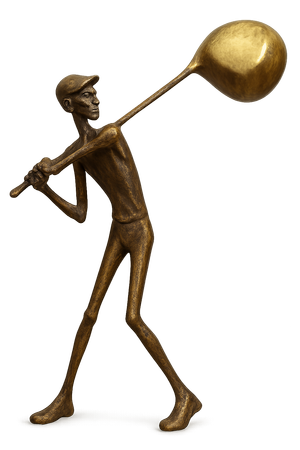
Driver to Putter
Every club in the bag demands a different shape of motion, but the source of that motion never changes. When the core initiates the movement, the club behaves with stability and clarity. When the arms jump ahead, each club becomes a different problem to solve. This chapter shows you how to ignite every club from driver to putter, giving your bag a unified engine instead of fourteen competing swings.
I. CORE LEADS
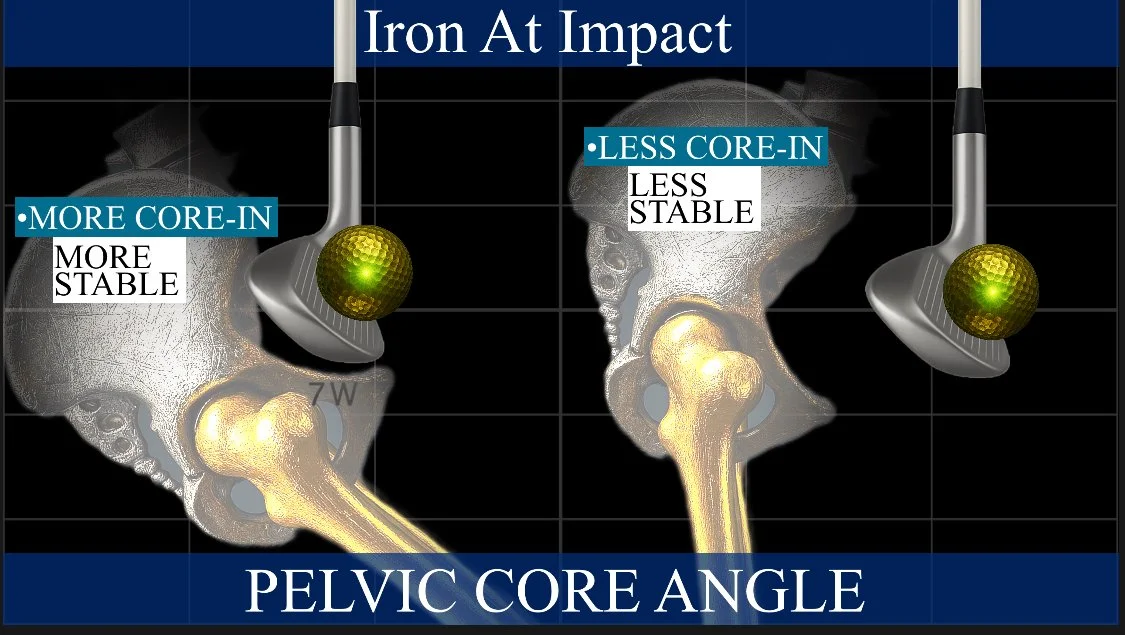
To synchronize the three regions of your core with the unique lofts of your clubs. Your goal is to transform a bag of different tools into one predictable system by letting the Epicenter lead the strike.
II. CLUBS DEMAND CORE SEGMENT
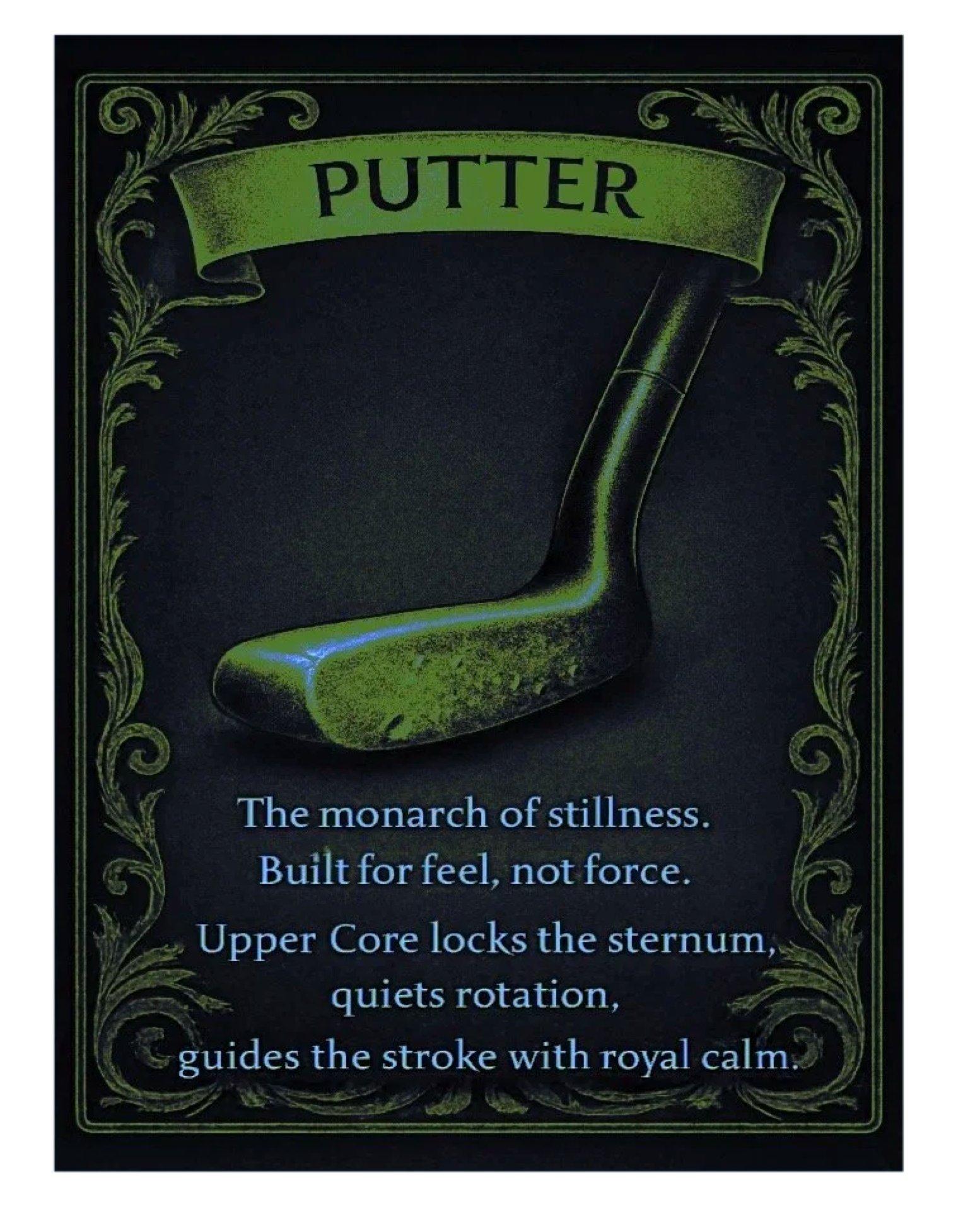
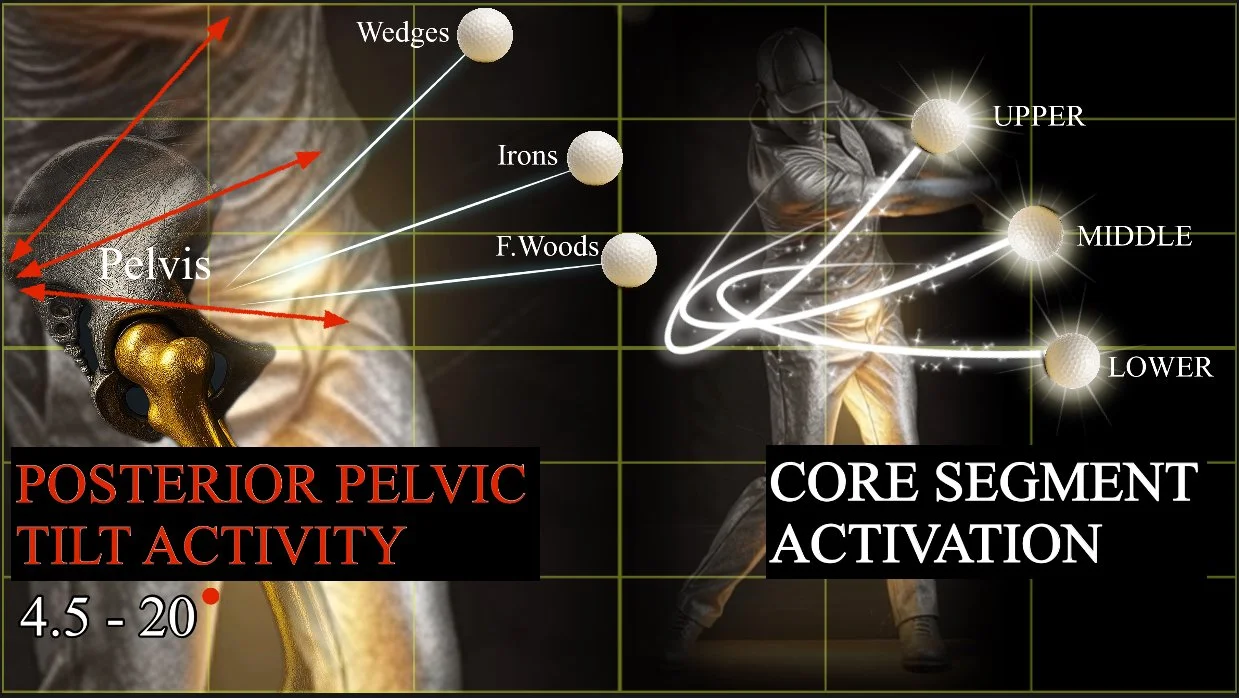
Regional Mapping. You must match the Core Zone to the club’s mission. Drivers demand deep lower-core stability. Irons require middle-core rotation. Putters rely on upper-core posture to keep the stroke quiet.
Every golf club has its own size, shape, and purpose, grouped by how they function across the course. On the tee box, the driver launches with low loft and demands deep lower core stability. On the fairway, woods and irons compress the ball with rhythm and timing, guided by the middle core. In the bunker, wedges with steep loft angles cut through sand, requiring lower core anchoring and upper core finesse. On the green, the putter rolls the ball with minimal loft, relying on upper core posture to keep the stroke quiet. Each club has a specific function, timing, and purpose. Understanding when to use them and how to let the right segment of your core fire is the essence of Tilt Golf.
III. SPOTTING THE LEAK: THE GUESSWORK SWING
Using the Inward and Outward Protocol, we identify why specific clubs fail when the wrong segment of the core is engaged.
The Wood/Driver Leak: If the Lower Core is soft, the massive speed of the driver pulls the spine out of alignment. You lose your ground and the launch becomes erratic because you cannot control the high horizontal ground reaction forces.
The Long Iron/Hybrid Leak: If the Middle Core fails to drive rotation, you lose rhythm and timing. The strike feels weak because you cannot generate the necessary descending blow and forward shaft lean required to compress the ball.
The Mid/Short Iron Leak: Research shows that mid‑irons produce significant vertical forces. If the core cannot stabilize the posture through impact, these repetitive forces “grind” the lead‑side hip and lower back.
The Wedge/Chip Leak: Wedges require a steep angle of attack and precise distance control. If the Upper Core is loose, the hands and wrists “speak” too loudly, destroying the quiet command needed for a consistent strike and predictable trajectory.
The Putter Leak: If the entire Core Brace is lost, the hands and wrists take over. This leads to a breakdown in posture and a lack of consistency in the putting stroke, destroying the quiet command needed to roll the ball smoothly.
IV. THE CORE FIX: CORE‑TO‑CLUB MAPPING
To achieve Core Ignition, fire the specific region designed for that club’s personality.
V. MASTERING THE MISSION: THE “SHOVEL UP” METHOD
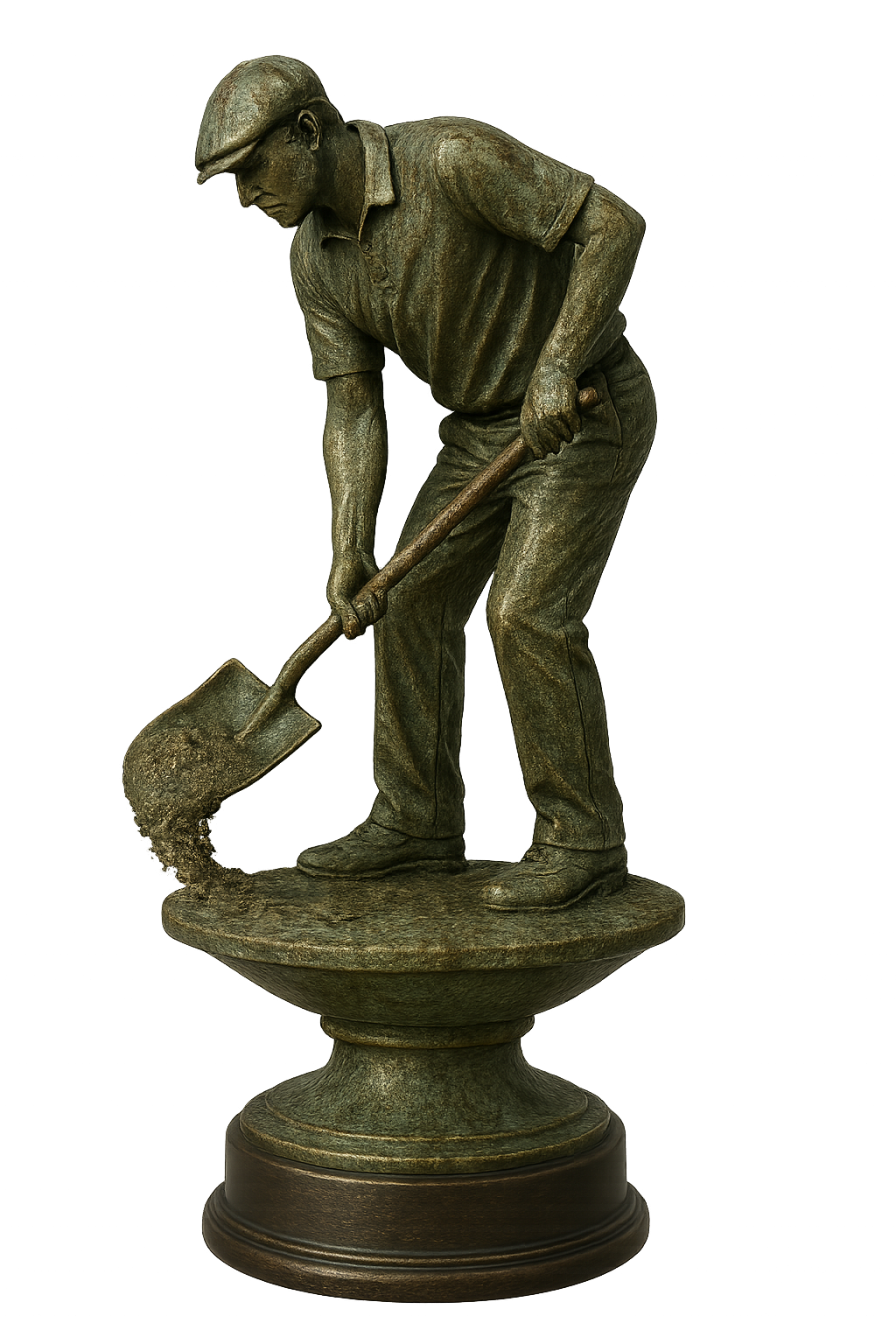
To “lace up” your internal corset for every club, use the Shovel Up metaphor. It makes the invisible action of the core visible and actionable.
The Meaning: Imagine holding a shovel and digging into the ground. If your core is loose, the shovel wobbles and the dirt scatters. When your core braces, the shovel drives straight and the dirt lifts clean. In this mission, the shovel is your club, the dirt is the ball, and the bracing is your Core Ignition.
1. The Angle (The Shovel Base): Use the Lower Core (TVA) to set the tilt of the pelvis. This “digs” your foundation into the ground, preventing the swing from collapsing like a shovel slipping in loose soil.
2. The Drive (The Lift): As you rotate, use your core to “lift” the strike. A golf swing is not about arms alone; it is about the body bracing like it would to move a heavy load.
3. The Launch (The Strike): Instead of swinging harder with your hands, brace smarter with your center. When the core fires, the shovel digs clean and the ball launches with total clarity.
The Action Cue:
“Hit that ball and imagine using your pelvis to shovel it up using your core. Use your core and lift it. Shovel it up with that core!”
The Result: Total command across the bag. By letting the right segment of your core fire at the right time, your swing remains strong, stable, and repeatable. You have moved from fourteen different swings to one unified engine.
🔗 Research
Peer-reviewed research showing how core activation drives all golf clubs, affecting swing mechanics, sequencing, and energy transfer from driver to putter.
- Kwon & Han: Biomechanical characteristics of swing techniques using different clubs; core initiation governs torque, rotation, and stability across all clubs.
- Tinmark & Hellström: Rotational biomechanics of the elite golf swing; pelvis‑to‑trunk sequencing maximizes power transfer for every club.
- Sauret & Rouch: Systematic review confirming core‑driven X‑factor separation and prevention of early arm dominance across club types.
- Sells & Voight: Golf‑specific functional movement screen predicts performance; trunk‑pelvic control correlates with skill from driver to putter.
⚖️ The Verdict: The Core Map of Tilt Golf
The Evidence: Every club in the bag demands a different expression of core ignition. Drivers rely on deep lower core stability to launch with speed. Woods and irons depend on middle core rhythm to compress the ball. Wedges require lower core anchoring and upper core finesse to cut through sand and control trajectory. Putters rely on upper core posture to keep the stroke quiet. Understanding which segment of your core fires with each club is the essence of Tilt Golf.
The Sentence: Loft determines the relationship. Shallow lofts call for deep stability. Steep lofts require precise anchoring. When the right core segment fires at the right time, the swing becomes stable, powerful, and repeatable.
The Ruling: Mastery of Tilt Golf is the mastery of ignition sequencing. When the club’s loft and the body’s core segment operate in perfect partnership, the swing stops guessing and starts governing. Power becomes organized. Trajectory becomes intentional. Consistency becomes engineered.
CASE CLOSED.
“Before you whip your chains. Don't forget to anchor your epicenter."
CHAPTER 13
THE KINETIC CHAIN FOR REAL
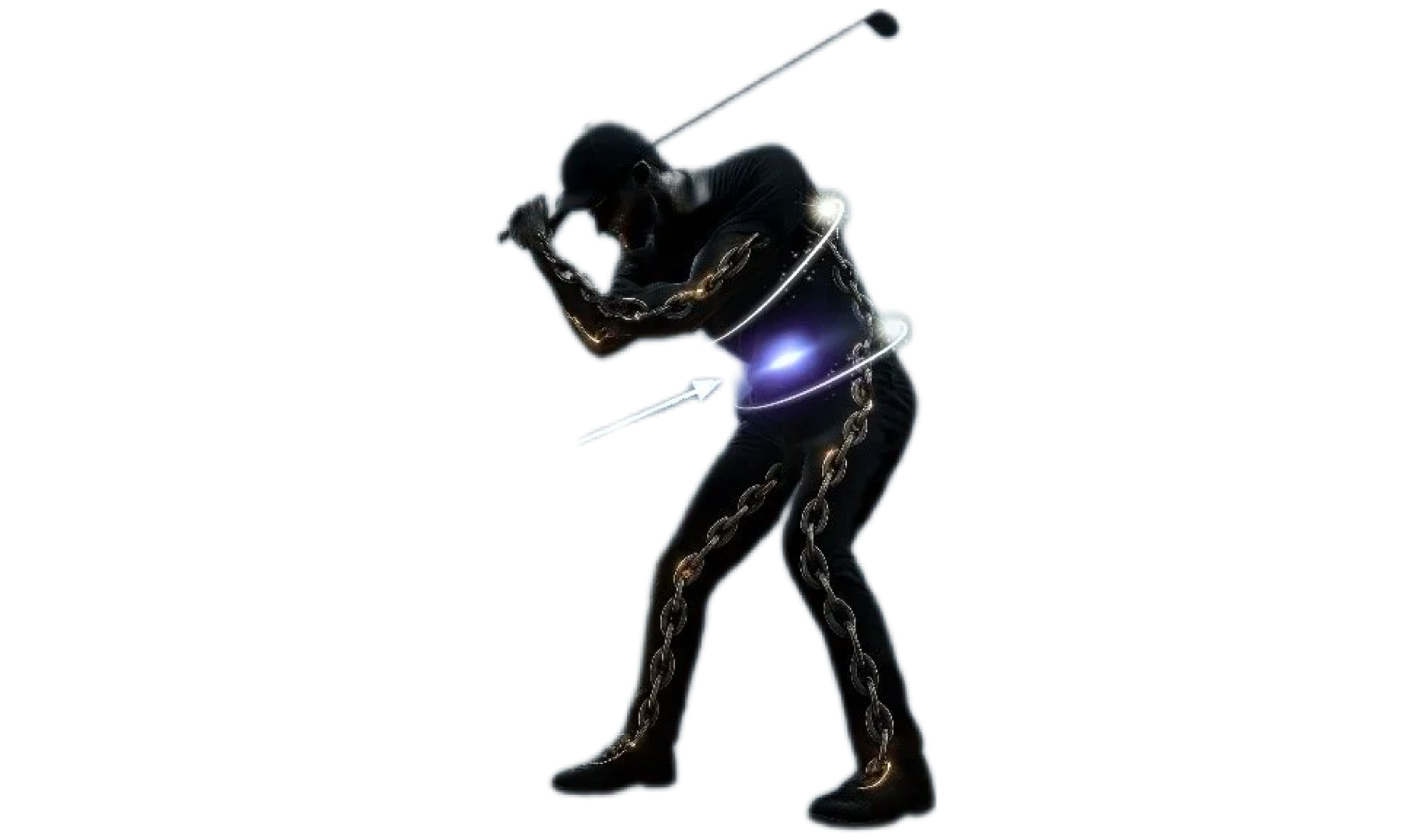
What Good Mechanics Feel Like
Most golfers chase positions, but great players chase sensations. The kinetic chain is not a checklist of body parts; it is a sequence of forces that move through you like a wave. When the chain fires correctly, the swing feels effortless, connected, and powerful. When it breaks, the body scrambles to compensate and the "Saboteur" takes command.
I. KINETIC PATHWAY
To transition from “muscling” the ball with your arms to acting like a human whip. Your goal is to master proximal to distal sequencing: movement begins at the epicenter (the trunk) and travels outward to the clubhead (the extremities).
II. WHAT IS REQUIRED
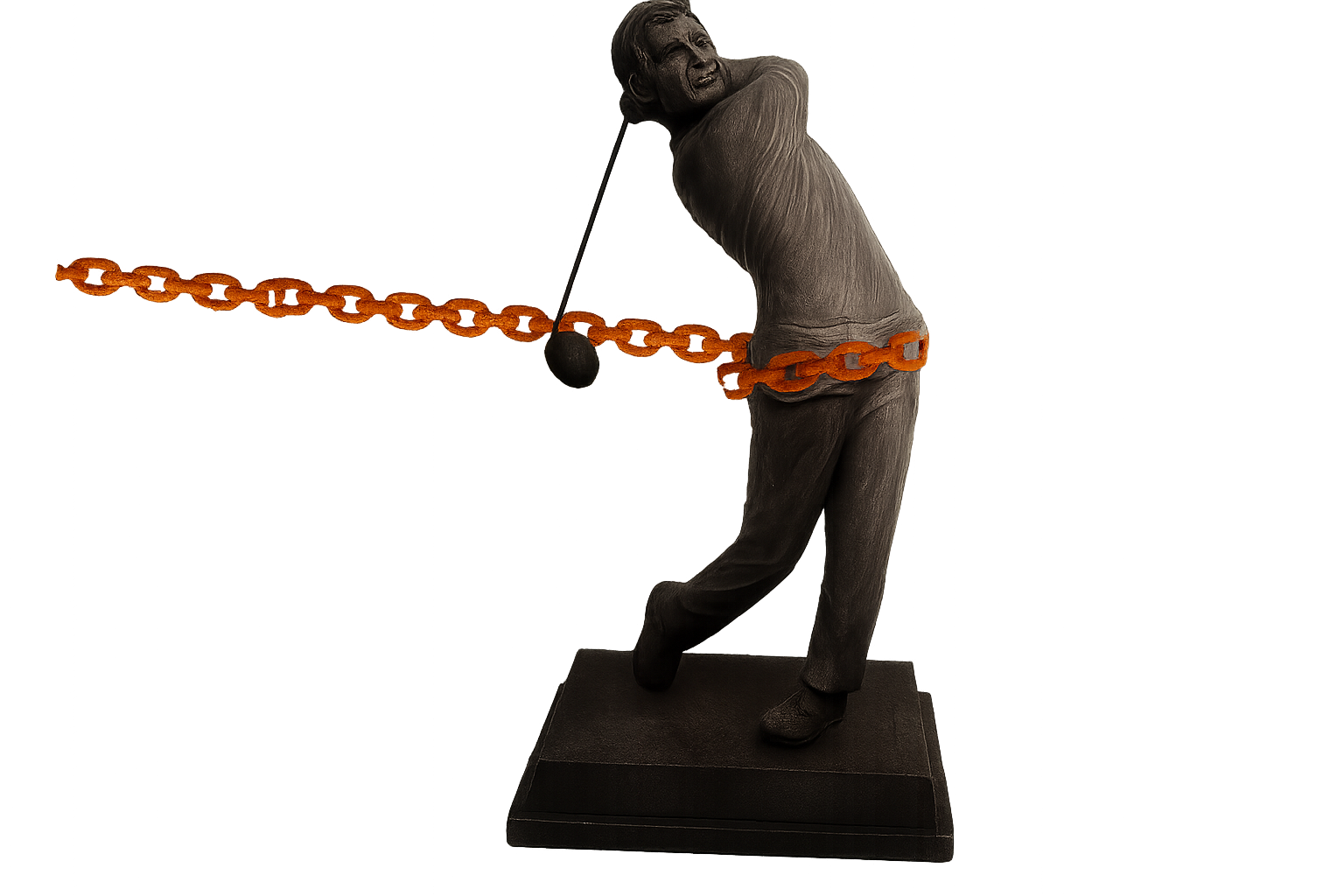
The Doctrine of Command. You must establish a military-grade chain of command. If the soldiers (hands) try to lead, the chain collapses into Arm Takeover.
The Commander (Core): Initiates the "Smooth Start" from the ground up.
The Officers (Hips / Spine): Relay the order, creating a wringing sensation as they shift first.
The Soldiers (Hands / Wrists): Execute the order only after the trunk has initiated the move.
The Supply Lines (Ground / Breathing): Support the motion with pressure and rhythmic, deep breathing.
III. SPOT THE LEAK: THE NEGATIVE KINETIC CHAIN
In a biomechanical mutiny, the extremities stop listening to the core. Using the Inward and Outward Protocol, we identify how these two groups fail when they stop reporting to the Epicenter.
GROUP 1: THE LEAD SIDE (The Guidance System)
When the lead side fails to report to the core, the swing loses its “Track” and direction.
Lead Head/Neck: The “Lookout”: Head turns toward the target too early. This breaks the cervical‑to‑spine alignment and causes the body to stand up.
Lead Shoulder: The “Shrug”: The shoulder lifts toward the ear, blocking ribcage rotation and trapping energy in the trap muscles.
Lead Elbow: The “Chicken Wing”: The elbow pulls outward and bends, shrinking the swing arc and leading to thin strikes and a loss of width.
Lead Hand: The “Grip Butcher”: The wrist rolls or opens, making the clubface unstable and destroying sniper‑arc precision.
Lead Hip: The “Slide”: The hip drives laterally toward the target, losing the pivot point and creating a “Wet Noodle” spine that cannot rotate.
Lead Foot/Ankle: The “Roll”: Weight falls to the outside of the shoe, collapsing the base and leaking ground reaction force into the dirt.
GROUP 2: THE TRAIL SIDE (The Power Delivery)
When the trail side fails to report to the core, the swing loses its “Push” and timing.
Trail Head/Eye: The “Dip”: The head drops or tilts toward the trail side. This destroys the vertical axis, leading to fat shots and a broken spine angle.
Trail Shoulder: The “Dip and Drive”: The shoulder collapses downward, tilting the spine away from the target and preventing a clean rotation.
Trail Elbow: The “Flying Elbow”: The elbow flares out at the top, pushing the club “Over the Top" the primary source of the slice.
Trail Hand: The “Slapper”: The palm pushes the club early (Casting), dumping the power before impact and robbing the swing of lag and speed.
Trail Hip: The “Sway”: The hip drifts away from the target, preventing the Coiled Spring from loading. Rotation is replaced by a leaning motion.
Trail Foot/Ankle: The “Static Toes”: The foot stays flat or frozen, preventing the trail engine from igniting. Energy fails to spiral up into the core.
⚖️ Verdict: All Roads Lead to the Epicenter
The Ruling: The investigation proves a singular truth: The extremities are “Soldiers” that cannot think for themselves. If the Lead Side is sliding or the Trail Side is flying, it is because the Epicenter (Core) has failed to issue the Buttocks Command or engage the Living Corset.
The Correction: Every part of the Lead and Trail groups must be “Cinch‑Locked” to the core. The hands do not move the club; the core moves the torso, which carries the arms. When you restore the Big Ben Anchor, the mutiny ends, and the Human Whip is reinstated.
CASE CLOSED.
IV. THE CORE FIX: THE POSITIVE KINETIC CHAIN
To restore the chain, you must stop outthinking biomechanics and start feeling the Classic Sequence used by elite players: Hips → Torso → Arms → Club. By establishing the Big Ben Anchor, you ensure that the core remains the central mechanism moving the extremities.
GROUP 1: THE LEAD SIDE (The Anchor and Guide)
When the lead side reports to the core, it provides the “Wall” against which the swing can release its power.
Lead Head/Neck: Steady and soft, looking through the ball. This maintains the cervical‑to‑spine axis for perfect rotation.
Lead Shoulder: Down and relaxed, “tucked” into the ribs. This clears the path for the torso to rotate without friction.
Lead Elbow: is fully extended. It is the “Straight Arm” through impact. This maintains maximum swing radius for consistent strikes.
Lead Hand: Firm but quiet, acting as a direct extension of the oblique. This stabilizes the clubface and ensures sniper‑arc precision.
Lead Hip: The “Lead Post” is firm and rotating backward. This provides the solid anchor for the Human Whip to snap.
Lead Foot/Ankle: Solid pressure on the heel and inside arch. This converts ground reaction force into rotational speed.
GROUP 2: THE TRAIL SIDE (The Engine and Delivery)
When the trail side reports to the core, it acts as the pressurized delivery system for the strike.
Trail Head/Eye: Level and focused “staying behind” the ball. This prevents the Head Dip and preserves the spine angle.
Trail Shoulder: Under and through, following the core’s turn. This keeps the club on plane and prevents an Over‑the‑Top path.
Trail Elbow: The “Waiter’s Tray” tucked near the trail hip. This preserves the Lag for maximum energy release at impact.
Trail Hand: Supporting only, following the wrist‑hinge law. This prevents Casting and allows the torso to drive the speed.
Trail Hip: The “Power Hinge” deep and loaded with tension. This stores potential energy like a coiled industrial spring.
Trail Foot/Ankle: The “Push” driving from the inside ball of the foot. This ignites the Ground‑Up Spiral of energy to the Epicenter.
⚖️ Verdict: The Correction
The Correction: Every part of the Lead and Trail groups must be “Cinch‑Locked” to the core. The hands do not move the club; the core moves the torso, which carries the arms. When you restore the Big Ben Anchor, the mutiny ends, and the Human Whip is reinstated.
CASE CLOSED.

V. MASTERING THE MISSION: THE OCTOPUS STRIKE
Do not try to outsmart nature by being the Octopus. It has eight limbs and no trunk. You cannot replace a functioning torso with sheer intelligence.
The Correction: Sync your rotation so the hips, torso, and arms move as one connected chain.
The Action: Adjust your posture until the club feels weightless. Even a tiny change in alignment can completely reshape how force travels through the chain.
The Action Cue: “Start from the ground and hips; let the torso and arms follow. Center first, club last.”
The Result: Effortless speed. When the sequence fires correctly, the club feels lighter and the strike explodes off the face. You are no longer fighting your anatomy; you are commanding it from the Epicenter.
⚖️ Verdict: The Judgment on the Chain
The Evidence: The “Negative Kinetic Chain” was found guilty of insubordination. By letting the “Soldiers” lead, the golfer was forced to “muscle” the ball, causing a Top‑Down collapse.
The Sentence: The hands are demoted. You are sentenced to use the Big Ben Anchor and start the fire at the feet.
The Ruling: Good mechanics are a Rhythm of Command. By trusting the Positive Kinetic Chain, you have moved from “Arm‑Swinging” to the Human Whip.
CASE CLOSED.
🔗 Research
Peer-reviewed studies showing how pelvic, trunk, and core sequencing drive efficient golf swings, enhance clubhead speed, and reduce injury risk.
- Tinmark et al.: Pelvis initiates motion followed by trunk, arms, and club; clean sequence increases speed and reduces effort.
- Han et al.: Coordinated hip-trunk timing improves kinetic chain efficiency and reduces strain.
- Horan et al.: Proper pelvis rotation before torso enhances power transfer and stability.
- Sells et al.: Hip rotation leads lumbar rotation; initiating swing from the ground up increases clubhead speed.
- Sauret et al.: Trunk and pelvis leading the swing prevents early hand takeover and reduces inconsistency.
- Sells et al.: Top players move hips first, torso second, arms third, club last; producing effortless speed.
- Quinn et al.: Strong core engagement reduces stress and improves timing, confirming coordinated sequencing importance.
- Kwon et al.: Small adjustments in pelvic or trunk posture dramatically influence energy flow and reduce injury risk.