THE CORE SECRET
One Simple Move for Massive Distance and Dead Aim-Putting.
ENTERING PART 9
You are now entering the part of the doctrine where simplicity becomes strength. Part 9 is where the habits that make your swing work are refined, clarified, and made repeatable under any condition.
This is not about adding more information. It is about removing the noise that slows you down. The body performs best when the mind is quiet, and the engine fires best when the cue is simple.
Part 9 teaches you how to trust that simplicity.
You learn how to give the body a single clear instruction, how to avoid overloading the brain, and how to let the core and pelvis take over without interference. You learn how to move fast without rushing, how to think less without losing awareness, and how to swing better by doing less.
This is where the golfer becomes efficient. This is where the engine becomes automatic. This is where the swing becomes yours.
STATUS
If your swing improves when you simplify, if your body responds better to one cue than many, and if your motion feels cleaner when you stop thinking, you are ready for this phase.
If your swing slows down when you analyze or breaks down when you overthink, Part 9 will show you how to remove the friction that holds you back.
In Chapter 23, you learn how a single cue unlocks speed and clarity. In Chapter 24, you learn how to protect the brain so the swing can breathe.
This is where simplicity becomes mastery. This is where clarity becomes confidence. This is where Part 9 begins.
"A simple cue frees the athlete to move with speed and certainty."
CHAPTER 24
JUST SAY THE CUE
Move Fast, Think Less, Swing Better
A cue gives the body one clear instruction and frees the athlete from overthinking. When the cue is simple, the motion becomes fast, connected, and confident. The core stays engaged, the hands stay quiet, and the swing moves as one piece. When the mind fills with extra thoughts, the motion slows down and the athlete loses feel. This chapter shows you how to use cues to move fast, think less, and swing better with every club in the bag.
|
PART 10: THE MASTER KEYS
Simple Habits That Make Your Swing Work |
|
| Chapter | Title |
25
|
Just Say the Cue: Move Fast, Think Less, Swing Better |
26
|
Don’t Fry Thy Golfer’s Mind: Say It Simple So the Swing Can Breathe |
Standing over the ball with nerves rising, your swing feels heavy. Talk less and achieve better results. This cue system stuns and sequences with ease. Golf does not wait for analysis, it waits for ignition. You have 900 to 1500 milliseconds to swing, and in that window your body does not want a lecture, it wants a command. Every cue here is built for instinct, not discussion. When you shadow your pre‑shot, do not just rehearse positions, speak to your core. When stability, speed, distance, direction, or altitude fade, trust your core.
THE SPEED TRAP: YOUR BRAIN IS TOO SLOW FOR YOUR SWING
The 300 Millisecond Reality: Why You Can’t "Think" Mid-Swing
Your downswing happens in about 300 milliseconds. To put that in perspective, a single human eye-blink takes about 300 to 400 milliseconds. Your swing is literally faster than the blink of an eye. The biological limit is simple: By the time you think about a move, the swing is already over. Your brain cannot send a new message to your muscles fast enough to change a downswing once it has started. If you try to process mechanics while the club is moving down, you are just creating a mental traffic jam that leads to a "heavy" or "stiff" swing.
THE BALLISTIC MISSILE
Think of your downswing like a ballistic missile launch. Once you press the "Fire" button at the top of your backswing, the flight path is locked in.
The Problem: If you realize the missile is off-course halfway to the target, you can't run out and push it back on track with your hands.
The Hack: You have to program the coordinates before you press the button. This is why a single, sharp cue like “brace the belly” is so powerful. It sets the coordinates for your entire body so that when you pull the trigger, the Commander has already given the only order that matters. You don't have to manage the flight, you just watch the detonation.
THE BRAIN’S FAST LANE TO THE SWING
Your brain does not build a golf swing through slow analysis. It builds it through speed. Every cue you hear and every target you see enters a fast lane that turns information into motion. Professionals ride this lane with clarity and confidence. Amateurs often get stuck in the slow lane where overthinking blocks the body from moving freely.
1. THE AUDIO HOOK
When you hear a cue like Brace the Belly, the sound does not stay in your ears. It jumps straight into your movement center and prepares your body to act. Professionals use sound as a trigger, not a discussion. They hear the cue and the swing begins.
Golf Scenario: You stand over the ball and your mind starts filling with instructions. Your swing tightens. Your tempo collapses. But when you hear a short cue like Brace the Belly, your brain locks onto one simple action and your body responds with clarity.
What To Do: Use short cues that feel like commands. Let the sound start the motion instead of letting your thoughts slow it down.
2. THE VISUAL BLUEPRINT
While your ears take in the cue, your eyes draw the map. Elite players do not just look at the ball. They preview the entire shot in their mind. This blueprint must be locked in before the swing begins because the downswing is too fast for the brain to adjust once it starts.
Golf Scenario: You stand behind the ball and picture a soft draw. You see the start line, the curve, and the landing. When you step in, the picture stays with you. The swing feels guided instead of forced.
What To Do: Build the shot in your mind before you move. Let the target shape the motion instead of trying to control your body parts.
3. THE IGNITION
Once the cue is heard and the picture is drawn, the brain hits the Fire button. This is the moment where the Commander takes over and the swing launches. Professionals have trained this ignition to be smooth and efficient. Amateurs often fire too hard or too late, which makes the swing feel stiff or rushed.
Golf Scenario: You have your cue. You have your picture. You step in and feel a calm readiness. When you pull the trigger, the swing flows without strain. Nothing feels forced because the brain is not fighting itself.
What To Do: Trust the cue and trust the picture. Let the ignition feel like a release, not a push.
THE IGNITION BLUEPRINT OF THE SWING
PART 1: FOCUS AND MOTOR TIMING
When your focus narrows, your swing sharpens. The brain thrives on precise timing, and the golf swing depends on signals that fire faster than conscious thought. When attention locks onto one simple idea, the body organizes itself with surprising speed. This is why professionals look calm even when the shot demands everything they have.
Golf Scenario: You stand on the range and your mind is scattered. Every swing feels different. Then you choose one focus point, such as bracing the core. Suddenly the motion feels cleaner and the strike becomes more predictable.
What To Do: Narrow your attention to one clear intention before you move. Let the brain fire the sequence without interference.
During takeaway, the brain fires signals in less than 300 milliseconds. This is pure ignition. The analysis must be complete before the swing begins because the body moves too fast for mid swing corrections. When the command is ready, the body responds instantly.
PART 2: CONCISE VERBAL COMMANDS AND PART TASK ISOLATION
Short cues create clean movement. A phrase like brace the belly or stack the ribs gives the brain a simple instruction that guides the body without clutter. Professionals rely on these cues to keep the swing organized under pressure.
Golf Scenario: You are in the fairway with a long iron. You feel tension rising. A short cue like brace the belly settles your body and gives the swing a stable foundation.
What To Do: Use short, precise cues that feel like switches. Let the cue shape the motion instead of trying to control every part of the body.
Isolating one body part before layering others builds a stronger swing. When the pelvis is mastered first, the shoulders and arms fall into place with less effort. This creates a stable, repeatable motion that holds up under pressure.
Golf Scenario: You work on pelvis rotation alone for a few minutes. When you add the shoulders and arms back in, the swing feels more connected and less chaotic.
What To Do: Build the swing in layers. Master one piece before adding the next.
PART 3: PROGRESSIVE ATTENTION SHIFTING AND SPINAL PROTECTION
Shifting attention step by step strengthens recall. Moving your awareness from pelvis to ribs to shoulders builds a swing that feels grounded today and remembered tomorrow. This is how the brain stores movement for long term use.
Golf Scenario: You rehearse the sequence slowly. Pelvis first, then ribs, then shoulders. When you swing, the motion feels organized and the strike feels centered.
What To Do: Move your attention through the sequence in order. Let the brain store the pattern one layer at a time.
The modern golf swing places significant stress on the lumbar spine. Well timed cues protect the back by distributing force through the chain. A stable core and controlled rotation reduce overload and keep the golfer healthy through repetition.
Golf Scenario: You finish a round with a tight lower back. The next day you focus on bracing the core before rotating. The swing feels smoother and the back feels protected.
What To Do: Use cues that stabilize the spine before you rotate. Protect the body as you build power.
THE SWITCHBOARD OF POWER
Every cue you use on the course acts like a switch. When you activate the right one, the body responds instantly. These switches are not just for performance. They help you train, recover, and protect your spine through repetition. When you feel vulnerable, bracing the core gives you stability. When mechanics feel uncertain, bracing the core gives you direction. Each phrase becomes a physical command the body can follow without hesitation.
Each cue works like a control panel you can access at any moment. Say core in and the spine decompresses, the pelvis stabilizes, and the wrists stop compensating. Say fight inward and the body tightens its structure, power becomes easier to manage, and discomfort fades. These switches give you control when the swing feels unpredictable and confidence when the moment feels heavy.
These cues matter because they are anatomical, precise, and built for milliseconds. You do not need to memorize every muscle. Command one thing: brace the core. The rest follows.The brain links to the body through clarity, the body to the arms through timing, and the arms to the ball through trust. When instruction stays clear, ignition turns automatic. Swing with command, protect with strength, perform with confidence. Let these cues shape your motion.
This table acts as a biomechanical ignition map. Each cue works like a physical switch you can feel instantly. Use them now. Apply them in your next swing. Say core in and the spine decompresses, the pelvis locks, the wrists stop compensating, and the swing begins to sequence. Fight inward and you stop grinding, stop leaking power, and stop hurting.
These cues matter because they are anatomical, repeatable, and precise. They were built for milliseconds, not minutes. You do not need to memorize every muscle. Command one thing: brace the core. Apply it immediately. The rest follows.
The brain connects to the body through clarity, the body connects to the arms through timing, and the arms connect to the ball through trust. When the instruction stays clear, ignition turns automatic. Swing with command, protect with strength, perform with confidence. Use these cues now and let them shape your motion.
THE CUE DEBRIEF
If your swing feels like a constant mental argument, it is because you are trying to out-think a process that happens faster than an eye-blink.
Remember:
Complexity is the Enemy: The brain cannot process a lecture in 900 milliseconds.
Cues are Shortcuts: A two-word phrase is a "chunk" of data that activates an entire physical sequence.
Ignition Over Analysis: You don't think a swing into existence, you detonate it.
Your Mission: Stop the 18-hole lecture. Pick your cue, program the missile, and press fire. Trust your training to handle the speed, and use your cues to handle the command.
🔗Research
Research demonstrating how simplified cues, attention focus, and part-task training improve golf swing accuracy, timing, and consistent energy transfer while protecting the lumbar spine.
- Yamada & Raisbeck (2020): Short, direct verbal cues reduce cognitive load; golfers perform swings with greater precision when instructions are simplified.
- Song et al. (2017): External focus on the target accelerates golf motor learning and produces more consistent clubhead speed and accuracy.
- Nijmeijer et al. (2018): Part-task isolation trains one segment at a time; mastering hips, torso, or arms separately improves full-swing coordination.
- Song (2017): Precise motor timing exercises accelerate coordinated swing development, enhancing repeatability and shot accuracy.
- Yamada & Raisbeck (2020): Concise verbal cues enhance movement precision; simplified instructions lead to efficient execution under pressure.
- Nijmeijer et al. (2018): Part-task isolation strengthens motor control; mastering one segment improves full-sequence golf swing coordination.
- Shan et al. (2019): Progressive attention shifting enhances swing stability; stepwise focus improves long-term motor retention in golfers.
- Sports Medicine & Spine Journal (2020): Modern golf swings impose high lumbar stress; stabilizing cues reduce overload and protect spinal structures.
⚓ Summary
The swing is too fast for analysis. You have 900 to 1500 milliseconds to move and only 300 milliseconds to deliver the downswing. That is faster than a blink. The brain cannot process a lecture in that window. It can only respond to ignition. Short cues bypass thought and trigger movement instantly. They program the missile before launch, stabilize the pelvis, protect the spine, and sequence the chain. When the cue is clear, the Commander fires without hesitation.
Audio hooks, visual blueprints, and ignition timing form a sensory highway that turns a cue into action. Concise commands sharpen execution, protect the lumbar spine, and prevent overload. When the core leads, the body follows. When the cue is simple, the swing becomes automatic. Talk less. Cue more. Ignite the system.
IGNITION DRILL
- Stand in your setup and speak one cue out loud. Keep it short. Let the sound trigger the brace inward.
- Shadow a slow takeaway while repeating the cue. Let the audio hook guide the pelvis and ribs.
- Pause at the top and lock the visual blueprint. See the shot before you fire.
- Start the downswing with the same cue. Do not add words. Let the Commander detonate the sequence.
- Finish tall and hold the brace. Let the cue carry you through the follow through without collapse.
NEXT
- The next chapter explores how to prevent brain fry and why simple cues cut through noise when golfers are overloaded, tired, or under pressure.
"A calm mind lets the swing breathe and move with natural rhythm."
CHAPTER 25
DON’T FRY THY GOLFER’S MIND
Say It Simple so the Swing Can Breathe
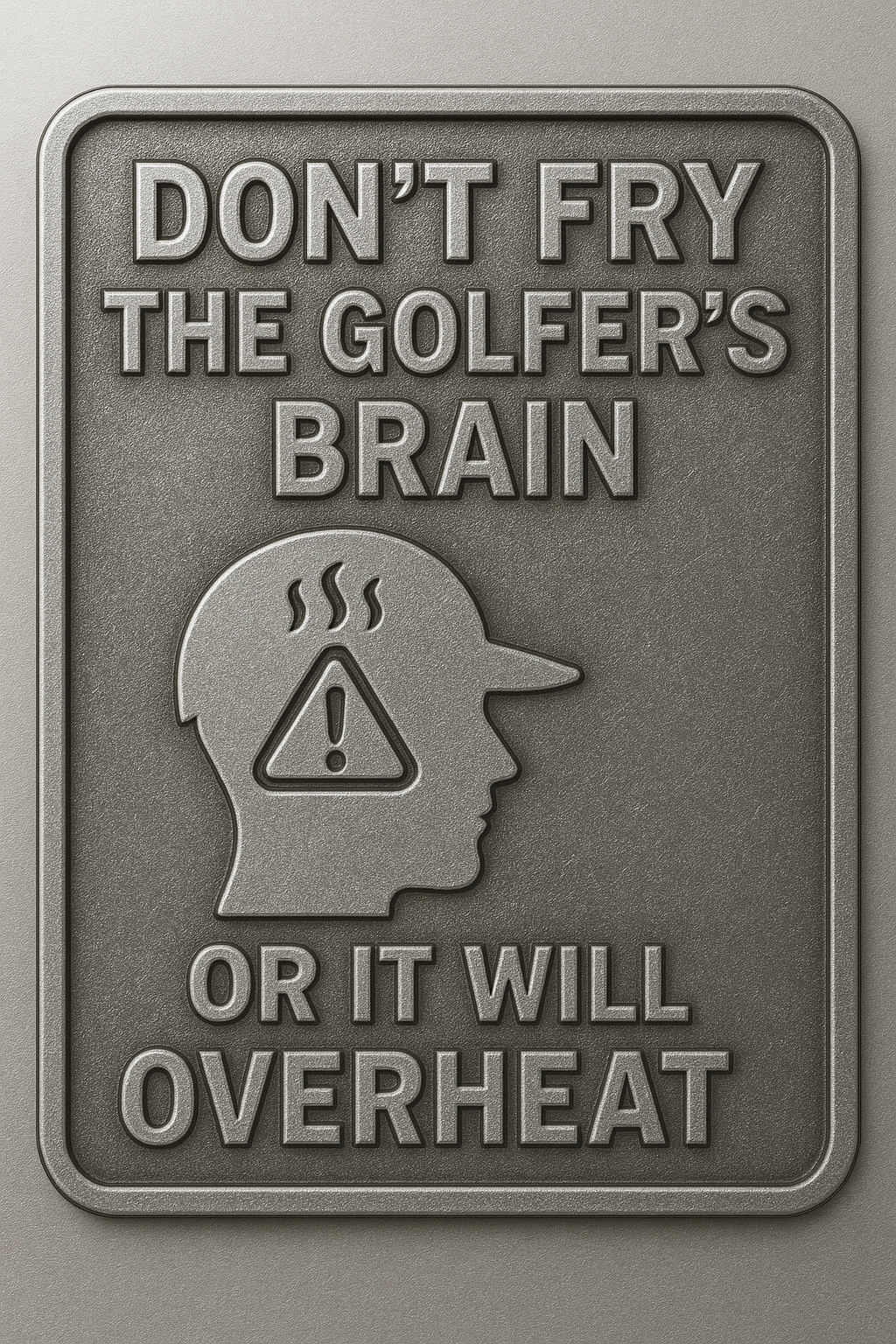
When the golfer’s mind overheats the swing loses its natural flow. The body begins to guide the club instead of letting the motion unfold. Tension rises, speed drops, and the athlete loses the feel that keeps the swing alive. The answer is not more thoughts but fewer. A simple mind creates a simple motion. This chapter shows you how to keep the mind calm so the body can move with freedom, rhythm, and confidence.
When The Brain Overheats
A golfer’s brain can overheat long before the swing begins. They arrive from meetings, deadlines, travel, or stress, and their mind is already running hot. Add too many mechanics and the system locks up. The brain stops processing cleanly and the swing loses rhythm. When the brain cooks, frustration rises and confidence drops.
Golf Scenario: A player rushes to the range after work. Their head is full, their energy low, and their patience thin. You give them five technical steps. They freeze. The swing falls apart. Their brain is not resisting you. It is overloaded.
What To Do: Cool the brain with one simple idea. Give them clarity, not complexity.
Why Simple Cues Cut Through The Noise
The brain loves clarity. One short cue slices through the noise and gives the body a clean command. Simple phrases like core in or brace for impact travel fast and land with force. They do not overload memory. They do not confuse the sequence. They give the golfer something they can repeat under pressure.
Golf Scenario: A player is struggling with contact. You give them one cue. Suddenly the strike improves because the brain finally has something it can use.
What To Do: Use cues that are short, sharp, and easy to repeat.
When Words Become Bad Code
Complicated language is bad code. Load it into a golfer’s brain and the program crashes mid swing. The body hesitates, the rhythm breaks, and the motion becomes jerky. The brain cannot run long sentences during a fast athletic movement.
Golf Scenario: You explain a complex mechanical fix. The golfer nods, steps in, and immediately forgets half of it. The swing collapses because the brain cannot hold the code.
What To Do: Replace complex language with simple commands the brain can run instantly.
The Power Of Minimal Instruction
Minimal instruction keeps the brain cool. Short cues run clean, hit fast, and stick in memory. They survive pressure and guide the swing without clutter. This is the language the brain prefers when the moment matters.
Golf Scenario: A player is nervous on the first tee. You give them one cue. They swing with confidence because the brain is not overloaded.
What To Do: Strip the message down to the essential action.
Let The Brain Do Its Job
The brain learns through prediction and reinforcement. Too much conscious detail interferes with these systems. Simple corrections let the brain operate the way it was designed. When you give the brain space, it organizes the movement for you.
Golf Scenario: You stop micromanaging the swing and give one clean correction. The golfer improves because the brain finally has room to work.
What To Do: Trust the brain’s natural learning systems. Guide them, do not overload them.
"Lightning Fast, Stupid Simple, Core Smart "
The 1.5‑Second Reality
The golf swing happens in a blink: roughly 1.5 seconds from setup to finish. It is too fast to chase and too fast to measure mid‑flight. Under a microscope, it is pure chaos: fourteen joint groups firing, hips shifting, ribs spiraling, wrists snapping, and ankles bracing. You cannot track every piece consciously. You build rhythm by breaking the swing into sections, mastering the parts, and then letting the “Commander” connect the whole move.
Think of it like music. Nobody learns a complex track by blasting through the entire song at full speed. You grind the individual bars, stitch them together, and only then does the beat flow. The swing works the same way.
When Control Goes Sideways
If control feels off, do not chase the symptoms; chase the source back to the core.
"Low back arching? Reset the core."
"Core spilling out? Pull it in."
"Want more yards? Lock “core in."
"Awkward motion? Hunt the source fast."
Is the move back‑driven or core‑driven? Trace the chain from the pain back to the epicenter:
Hands/Wrists hurting? Wrist → Elbow → Shoulder → Neck → Spine → Chest → Core.
Ankles/Knees hurting? Ankle → Knee → Hip → Pelvic Base → Lower Back → Core.
The core is the epicenter. That is where the fix lives.
No Brain Fry, Just Action
Golfers do not need a lecture when they are standing over the ball. They need words that hit quick and ignite the system.
"Core in"
"Brace for impact"
Short, sharp, and impossible to forget. These cues fire the system without frying the brain. Hear it, act on it, and repeat it.
Straight Talk on Rhythm
The swing is too fast to chase perfect timing. Rhythm comes from mastering sections. Corrections come from the core. Instructions come in simple words.
When the core leads, the body follows.
When the core braces, the strike holds.
When the core organizes, the swing hits harder, faster, and safer.
"You Can Slow Motion The Swing"
The Partition Strategy: Breaking The Speed Limit
This table is not here to make you chase milliseconds. It is here to show you how a lightning fast swing can be broken into simple phases. Setup, takeaway, top, transition, impact, and follow through are not just positions, they are partitions. By practicing these sections individually, you teach the body to recognize the pattern before the Commander stitches them together into one fluid move.
Ignition Switches For Instant Action
The cues in this system are your ignition switches. They are designed to activate the right muscles, protect your spine, and stabilize your hips at the exact moment they are needed. You do not need to memorize a library of mechanics, you need to feel ignition.
Simple cues are powerful because they are authoritative and instantly executable. When a golfer hears them, they do not have to think, they respond instinctively. This table transforms a lecture into an action plan, making the swing feel natural, repeatable, and safe.
Coaching In Unison: Seeing The Image
Mastering these cues allows the golfer and the coach to finally jive together. When you use this system, you learn to slow time with your eyes. You can capture a mental image of each phase, spot the breakdown, and diagnose the issue in a heartbeat.
Because the language is so clear, the coach can deliver the cue instantly and the golfer feels it right away. No hesitation, no hassle, and no brain fry. You move in unison, with clarity, rhythm, and trust flowing as one.
🔗 Research
Verified research showing how simplified coaching instructions, reduced verbal load, and attention management improve golf swing precision, timing, and learning speed.
- Philosophy of Coaching Journal (2025): Fast predictions guide movement; flooding the golfer with detail slows performance and disrupts swing rhythm.
- Song (2017): Attention is limited; dividing focus across too many swing details reduces accuracy and timing.
- Taylor & Ivry (2019): Excess verbal instruction overloads working memory, disrupting golf swing rhythm and consistency.
- Hillman et al. (2020): Minimal instruction accelerates learning; golfers retain swing patterns better when cues are concise.
- Spampinato & Celnik (2020): Multiple learning systems are disrupted by excessive detail; simplified coaching enhances motor skill acquisition and accuracy in golf.
⚓ Summary
Golfers do not need lectures. They need ignition. Your mission is not to explain every joint and angle. Your mission is to deliver the one cue that stabilizes the chain. Speak less. Cue sharper. Protect the spine. Command the pelvis. Ignite the core. When the golfer is tired, stressed, or overloaded, your cue becomes their anchor. When they are confident, your cue becomes their weapon.
You are not teaching positions. You are teaching command. You are not reciting theory. You are arming a body to survive torque and pressure. Every word either fries the brain or frees the swing. Choose the words that free.
IGNITION DRILL
- Review your current coaching language and circle three phrases that are too long or too vague.
- Replace each with one short anatomical cue that targets the core or pelvis.
- In your next lesson, limit yourself to one primary cue per phase of practice.
- Watch how the golfer responds when you say less and cue sharper.
- Write down which cue had the biggest impact on their swing and their body language.
NEXT
- The next step is to coach in alignment with the doctrine. Let your language match the biomechanics you now understand.
Doctrine Ends Here
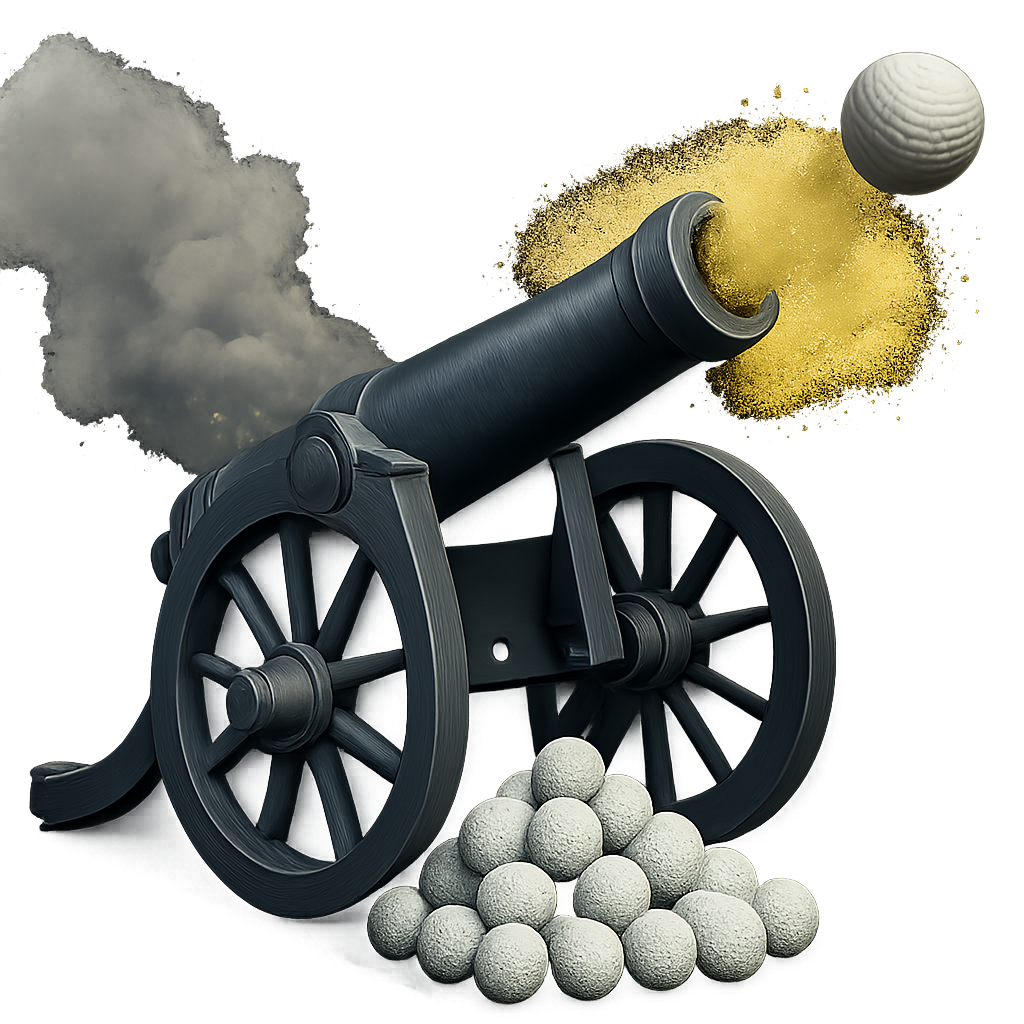
You entered this doctrine with questions and you leave with a system. A system that stabilizes the spine, commands the pelvis, and fires the cannon. A system that survives pressure and repeats when the mind wants to panic. The Core Secret is not a trick. It is the truth that the body wants clarity, the brain wants simplicity, and the swing wants ignition.
Carry this doctrine to the range and the course. Use it when you are confident and when you doubt. Let the core lead. Let the King obey. Let the cannon fire. Let the cue ignite. Your swing is now governed by a clear chain of command.
Dedication
This doctrine is dedicated to every golfer who felt lost in mechanics and chased positions instead of power. To every athlete who wondered why their back hurt, why their swing collapsed, or why their confidence faded. To every coach who cared enough to protect a spine, not just fix a ball flight. This is for the bodies that try, the spines that suffer, and the cores that save them.
It is also dedicated to the ones who believe that clarity beats complexity, that simplicity beats overload, and that the core is the Commander. This book exists because you refused to accept confusion as the price of playing this game.
THE HIERARCHY OF THE STRIKE
You have completed the Doctrine. You no longer see the swing as scattered parts; you see a chain of command. The King leads. The Commander drives. The Cannon fires. Every rotation, every strike, and every ounce of power flows through a system you trust implicitly. The lemon is squeezed. Ignition is engaged.
The Math of Mastery (1 + 1 is Not 11)
In your hands, movement can no longer be ignored as science. It is like mathematics: numbers do not lie. To the uninitiated, 1 + 1 might look like 11, but you know the truth. The Core Secret was written to arm you with proofs, not the gossipy chatter found in coffee shops or the unsolicited "granny goose" advice that haunts the driving range. Think of this as Engineering and Mathematics in motion, but simplified for the soul.
The Captain of the Cockpit
You made it! And you didn’t need to burn your eyebrows off trying to be a doctor and an engineer at the same time. You were born with this body; you built it, you moved with it, and now you strike with it. You are the captain of your own aircraft. You fly it, and you land it safely. In the past, you may have crash landed, stalled by confusion, but those days are over. You own the cockpit now.

Restoring the Queen’s Honor
For you, the core is no longer a myth, and the pelvis is no longer just jargon. The hips are no longer left alone; they are supported. She did no wrong; she was simply misguided for centuries. Now, you have restored her true purpose. Remember that there is deep meaning to this motion keeping the back flat.
The Core In Beast Mode
When you learn to vacuum that strong core we all possess, making it soft and pulling it "inward," you become the beast. This is the "Core in" method: hold it, keep it, and never let it go. This soft core reacts with agile precision, tightening exactly upon strike. From your transversus abdominis to your mind and into your clubs, the power is real, accurate, and precise, protecting your spine while channeling raw energy into the ball.
Alphabet of Momentum: The Letter U
How can you forget the flow of it? You must respect the Letter U principle. This is the core pathway in every swing, which is the geometry of momentum. Unless you choose an alphabet that does not respect physics, this specific arc is your guide. It ensures the flow is never broken, moving from the descent to the strike in one continuous, beautiful arc of power.
The Regal Spine: Don't Let the Queen Slap You
And let us not forget the Queen. She is the silent sentinel watching over your posture, checking your alignment to ensure it is regal and your spine stays flat. But the Queen must never forget that your pelvis is the King. Her job is to tame that power and, at the precise moment of impact, unleash you. Together, they rule the motion.
Terminology: Terms Other Books Are Afraid Of
What the h€ll are these principles? You won’t find the Queen’s Watch, the Banana Rules, the Octopus Philosophy, or Squeezing the Lemons in any other manual. You won't find Grandpa’s Putting Principles, the 19th Hole, or Man vs. Machine either. To the traditionalists, these terms are like a bad curse word; they don't even exist in standard golf texts! You won't find the Octopus elsewhere, that vital reminder that you need a trunk with a core spine to command the motion. These concepts are yours alone.
The Physio’s Confession: Cutting the Mumbo Jumbo
Behind the making of this book, there was a raw energy that kept us moving. The ultimate cue was born: Move Fast, Think Less, Swing Better. To make this stick, I utilized the mnemonic style of studying I used in medical school, which relies on vivid, unforgettable triggers. Originally, the cues were raw: "Core In and Queen is happy... core out she slaps you." I purposefully cut that raw tone for this book, choosing a royal, semi professional language with metaphoric analogies so we can understand each other without getting lost in the weeds. I moved away from dry jargon like: "On the anatomical transverse plane where you observe the action of the core as it rotates horizontally, it will establish a co contraction of transversus abdominis..." Even lawyers, doctors, and the gods of power and intelligence would have to sit and analyze such jargon, and it would only create confusion. All you want is the fundamental truth to teach biomechanics anatomically made ridiculously simple: play well, protect your back, find distance, and lower your handicap. If that’s your pursuit, you cannot be boring. I translated the science into power you can actually use.
X Ray Vision: Imagining the Hidden Engine
This is why I gave you X Ray Vision. I taught you to look past the skin and clothes to see the skeletal mechanics and the firing of the muscles in real time. I taught you to imagine the internal blueprint of mastery. You don't just see a swing anymore; you see the hidden engine. You can now recall movement in slow motion and view it with your new vision.
The Honest Truth: I’m no god from Olympus
What about techniques and strategies? Look, I am no god from Olympus, and I am not from Krypton either. I cannot play the game for you. I cannot control the wind, I cannot redesign golf courses, and I cannot cut the grass to a perfect length on the green so that your golf ball rolls on a red carpet like a monarch. But I have given you the blueprint to see what others miss. And for sure, I can sit and drink a beer with you and snap my fingers for your success.
The Bestowal of Mastery
When you watch yourself on video or step onto the tee to coach, the transformation will be undeniable. You deliver results that are spot on. You no longer offer guesses; you provide certainties. You inspire confidence because you are trusted. Your clients will recognize that you understand the game in your marrow. You can diagnose in an instant, correct with surgical precision, and design exercises that carry your signature. Distance, control, altitude, stability; anything under the sun regarding golf mechanics is now yours to bestow.
The Final Ignition: Dominate
The Cannon is primed. The core is engaged. The King waits. The course is no longer a challenge to be feared, but a landscape to be navigated. Every swing, every drive for massive distance, and every dead aim putt is a testament to the Fundamental Golf Ignition System you have built. This is your game. This is your mastery.
Ignite. Fire. Dominate.
Haka haka is dead. You are in command.
The Bridge Builder
Neil Alvarez is a performance trainer and movement specialist with over two decades of experience at the intersection of physical therapy and sports biomechanics. While much of the golf world was lost in haka haka (the Filipino term for pure speculation) Neil focused on building the bridges between separated theories. He connects the hard science of the rehabilitation room with the intuitive feel of the high performance athlete.
The Discovery: Core Ignition
Through his extensive work in sports specific movement, Neil identified a critical gap in traditional golf instruction and modern swing. While most players were taught to swing from their hips, elite ball strikers fired from their pelvis. He identified that the core as the true ignition point of every rotation of the swing. This is the specific move that locks the spine and loads the torso to protect the back from the violence of the swing. However, you found out that their were details to having a good core ignition.
The Innovation: Hyperstryk Golf RMi
Frustrated that no technology could measure this ignition live, Neil moved from trainer to inventor. He engineered the Hyperstryk Golf RMi, the first pelvic tilt physio trainer in the world. This device was built to trap the exact moment of pelvic core activity and provide real time biofeedback. It does not just explain the movement; it forces the golfer to feel the difference between a collapsing structure and a solid strike.
The Mission
Based in Europe and drawing from a global network of medical and coaching insights, Neil is dedicated to moving golf instruction past the noise. Through The Core Ignition Doctrine and the Hyperstryk system, he provides golfers with a safe, repeatable, and explosive path to mastery. His work is built on a single professional principle: you must train the source, not the symptom, and the rest will follow.
Hyperstryk Golf RMI
The Hyperstryk Golf RMI with reactive motor intelligence. It is preset for core ignition angle. It is designed to build rotational power, stability, and precision in your swing while protecting your body.
By connecting your body mass to the motion of the club, the device trains you to generate speed from the ground up without putting unnecessary strain on your spine. It respects automatic impact timing. It obeys the fundamentals of core ignition in golf performance.
All features of the Hyperstryk Golf RMI are designed to integrate seamlessly with your Core Secret system, ensuring consistent results and long-term improvement.