

Golf Biomechanics: The Physio Way
Duration: 3 Hours • Format: Pure Practical Demonstration & Workshop
The ultra-rich are in pain and need your expertise. Command high fees for your craft and master advanced golf physio coaching today.
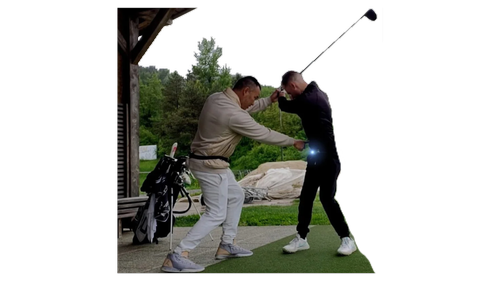
“The core is the engine of a golf swing. Love it, hate it, or ignore it, you have to use it. It is called posterior pelvic tilt, and if you do not control it, you pay the price.”
Be Specific With That Core!
- Injury Rehabilitation: Integrate the essential role of the physio coach in treating existing golf-related injuries to restore pain-free motion.
- Alignment, Activation & Strength: Focus on proper bone alignment, targeted muscle activation, and comprehensive strength preparation to build a resilient kinetic foundation.
- Kinetic Sequencing: Employ specific biomechanics strategies to correctly sequence the kinetic chain and maximize power transfer.
- Engine Control: Master posterior pelvic tilt mechanics to stabilize the player's core engine during the swing.
Timetable & Module Breakdown
Neil Alvarez, PT | Practical Golf Specifics
- 1. Introduction to Golf Kinetics: Study the shifting industry dynamics between traditional instructors and physical therapists, highlighting how practical golf-specific kinetics bridges the gap in modern player development.
- 2. Anatomy and Phases of a Golf Swing: Study the functional anatomy, kinetic chain, and practical golf-specific kinetics milestones across every stage of the swing from address to follow-through.
- 3. Technical Analysis of a Golf Swing: Study how to visually and clinically spot physical compensations, swing faults, and common technical problems (such as early extension, loss of posture, and reverse spine angle) that a PT must resolve.
- 4. Physio Golf Coaching: Study how to translate clinical physical findings into actionable, hands-on coaching interventions and movement cues on the lesson tee using practical golf-specific kinetics.
- 5. Mobility & Activation: Study targeted pre-round warm-ups, soft-tissue protocols, and activation drills rooted in practical golf-specific kinetics to optimize rotational power and joint range.
- 6. Golf Pain & Ball Flight Mechanics: Study the primary mechanical drivers of golf injuries alongside major ball-flight flaws (slices, hooks, pushes, and pulls) and how they directly stem from a lack of core and torso stability.
Common Swing & Ball-Flight Problems Linked to Torso Stability
Neil Alvarez, PT | Biomechanical Fault Analysis
- The Slice (Open Clubface / Out-to-In Path): Caused by poor thoracic and core rotational control during the downswing, preventing proper sequencing and forcing the arms to throw the club across the target line.
- The Hook (Closed Clubface / In-to-Out Path): Stemming from uncontrolled torso rotation or core collapse, leading to an over-active release and a severely closed face at impact.
- Early Extension ("The Goat Hump"): The pelvis thrusts toward the ball due to weak core stabilizers and poor glute activation, forcing the torso upright and causing inconsistent strikes, pushes, or pulls.
- Loss of Posture: Spine angle changes mid-swing resulting from insufficient core endurance and lumbar-pelvic control, causing fat or thin shots.
- Reverse Spine Angle: Excessive lateral bending of the spine toward the target during the backswing, driven by restricted hip rotation and inadequate core separation.
“Golf has always been a luxury and a lifelong pursuit, but using the core in a common sense genuinely shortens that journey. Maybe it’s because of physiotherapy background, but the way a core is taught is so clear and specific that everything finally made sense. My back and wrist aren’t hurting anymore, my swing feels more connected, and I’m enjoying the game again. Many thanks for the guidance, the company, and the friendship. Now you will take care of my family and friends”
Research Sources & Lead Researchers
Neil Alvarez, PT | Evidence-Based Biomechanics
- • Biomechanical parameters of the golf swing associated with lower back pain: Researchers: M. Watson, D. Coughlan, N. D. Clement, I. R. Murray, A. D. Murray, and S. C. Miller Findings: Mapped extreme spinal forces and showed that altered lumbar velocities and poor sequencing drive injury, highlighting the need for physio interventions.
- • Kinematic relationship between rotation of lumbar spine and hip joints during golf swing in professional golfers: Researchers: Frederick Mun, Seung Woo Suh, Hyun-Joon Park, and Ahnryul Choi Findings: Uncovered a strong link between hip and spine rotation; restricted hip mobility forces dangerous lumbar compensation.
- • Electromyographic analyses of the erector spinae muscles during golf swings using four different clubs: Researchers: Graeme G. Sorbie, Fergal M. Grace, Yaodong Gu, Julien S. Baker, and Ukadike C. Ugbolue Findings: Confirmed that core and back muscles experience extreme activation (up to 100%+ MVC) during acceleration, serving as crucial high-load stabilizers.
- • The Effects of Core Strength and Stability Exercises on Club Swing Speed in Male Golfers: Researchers: Teesside University Research Group Findings: Proved that targeted core stability routines significantly improve club-head speed and swing consistency.
Bridge the gap between clinical rehabilitation and elite golf performance.
Equip your clinical practice with advanced golf physio coaching frameworks. Translate physical findings into actionable movement interventions on the lesson tee and protect your clients from recurring spinal loads.
Master precise kinetic sequencing to resolve swing faults, eliminate low back pain, and elevate your clinical expertise.
THE ULTRA-ELITE LIFESTYLE INDIVIDUALS ARE DISCREET & HURTING. THEY ARE UNABLE TO FIX IT.
Step in, solve the issue, earn what your expertise is truly worth, and master elite golf physio technicalities.