
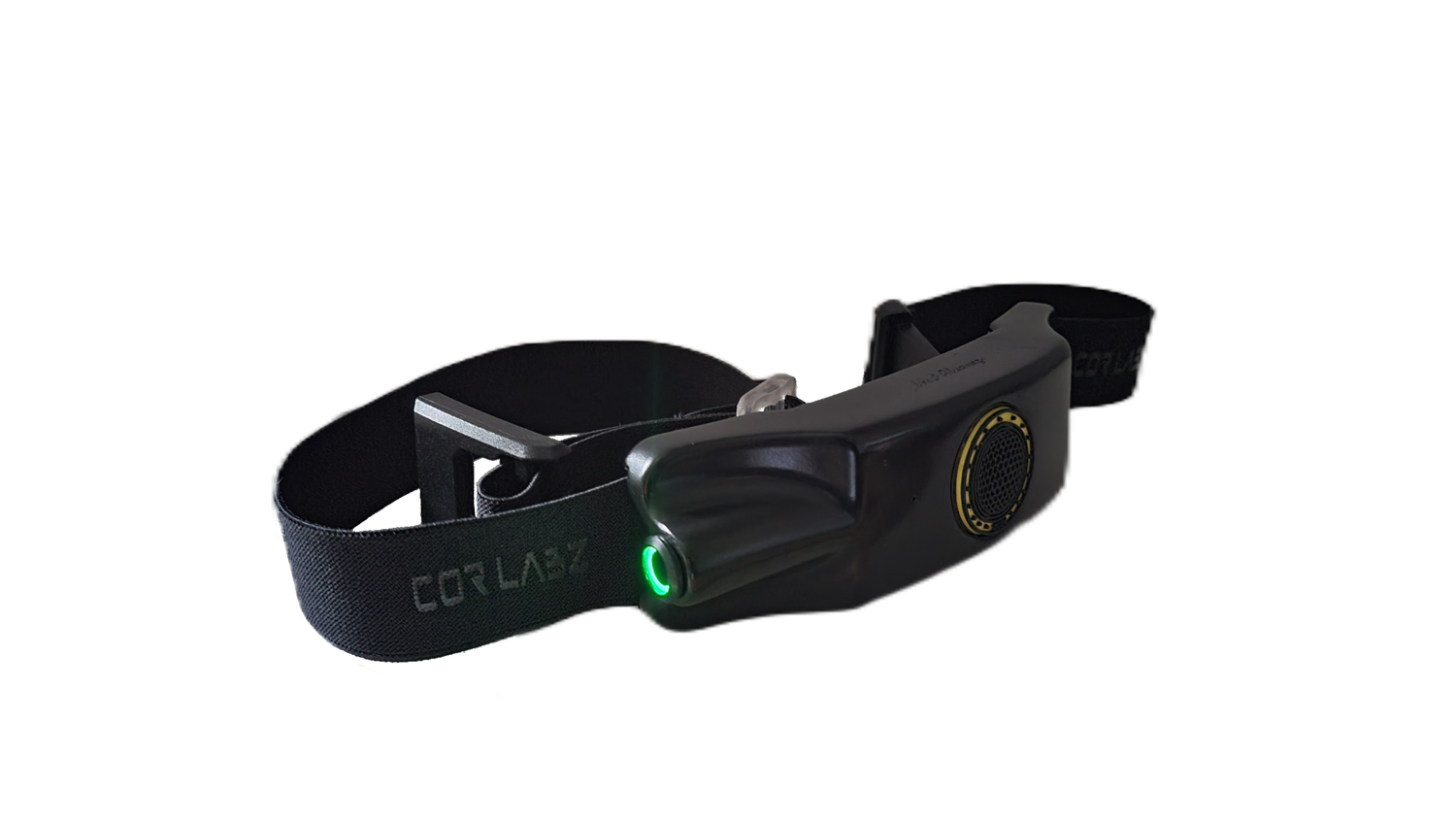
“You don’t need to think about Core Ignition anymore. It’s a wear‑and‑feel device built for testing and training your golf swing instinctively.”
|
THE PRO-LAB TRAINING HUB Professional Screening, Evaluation, and Client Training |
|
| Purpose | Teach coaches and trainers how to evaluate clients using the Hyperstryk RMI device and integrate the device into professional training programs. |
| What You Will Learn |
• Client screening for tilt, brace, and decompression • Running the full Hyperstryk Battery Test • Identifying biomechanical strengths and weaknesses • Teaching clients how to use the device • Integrating device feedback into lessons and programs |
| Professional Outcome | A complete evaluation system you can use with clients to deliver measurable, repeatable, and professional results. |
This module is designed for pro coaches who use the Hyperstryk RMI device to evaluate and train their clients. It can also be used for personal training if you are not a coach.
Core Ignition Testing Module
This test series exposes the truth of your core across all phases of the golf motion. Most diagnostic tools are expensive and difficult to access. The Hyperstryk RMI device is inexpensive, portable, and simple to use. You must activate your core strongly enough to make the device buzz. When it buzzes, ignition is real. When it stays silent, your core is late, weak, or leaking.
The device is preset to the core ignition angle, so you don’t need to chase numbers or calculations. Golf is about performance, not data overload. Your goal is to lower your handicap, protect your back, and build a swing that holds up under pressure. This module gives you the test and the tool you need.
You will complete ten evaluation modules that challenge your ability to control tilt, retain brace, and synchronize decompression across swing phases. Each test activates the Hyperstryk RMI device (except where noted), and your performance is scored with precision.
Your total score from 0 to 24 places you into one of four biomechanical tiers: Rehab, Intermediate, Amateur, or PRO. Your tier reveals your strengths and weaknesses, showing whether your brace is unstable, your decompression leaks, or your tilt transitions are clean and powerful. Based on your tier, you receive targeted guidance to rebuild, reinforce, or elevate your performance.
This module teaches you how to evaluate proprioception, flexibility, and setup-phase control using the Hyperstryk RMI device. Coaches may use these tests to screen clients. Golfers may use them for personal training.
This section continues the Hyperstryk Battery Test lineup, focusing on proprioception, flexibility, and setup-phase swing control. These tests reveal how well an athlete can stabilize, sequence, and maintain tilt under dynamic conditions.
This module teaches you how to validate swing-phase mechanics and test elite decompression endurance using the Hyperstryk RMI device. Coaches may use these tests to evaluate clients. Golfers may use them for personal training.
This section completes the Hyperstryk Battery Test with advanced swing-phase validation and elite decompression endurance. These tests reveal how well an athlete can maintain tilt, brace, and sequencing under full-speed conditions.
Use this scoring guide to classify your client’s biomechanical tier after completing all ten Hyperstryk Battery Tests. Golfers training personally may also use this to understand their performance level.
Your score is your biomechanical truth. After completing all ten tests, your total score (0–24) places you in a biomechanical tier. This tier reflects your core phase control, tilt synchrony, and brace integrity across decompression and compression transitions.
Use this advisory grid after completing all ten Hyperstryk Battery Tests. Coaches may use it to prescribe training paths for clients. Golfers training personally may use it to guide their next phase of development.
Your score reveals your next move. Your next move builds your legacy. After completing the full Hyperstryk Battery Test, your score places you in one of four biomechanical tiers. Each tier comes with a prescribed training focus, combining flexibility, strengthening, and neuromotor refinement to restore or elevate your tilt control.
This grid is your post-test compass. It tells you where you are and exactly how to move forward. Every drill, every cue, every decompression breath is now part of your legacy path.
This section summarises the professional benefits of controlled lateral pelvic tilt. Coaches may use it to explain the role of LPT to clients. Golfers may use it to understand why tilt training is a performance priority.
Professional Benefits of Lateral Pelvic Tilt
Lateral pelvic tilt provides structural, rotational, and neuromuscular advantages that directly influence swing efficiency, power generation, and movement integrity. When trained and controlled, LPT becomes a measurable performance asset that supports both consistency and long term durability.
Improved Load Distribution
LPT organises how the body accepts and transfers force. By elevating the trail hip and stabilising the spine, the golfer creates a predictable loading pattern that supports efficient rotation without excessive sway.
Enhanced Rotational Access
A controlled tilt allows the torso to rotate around a stable axis. This reduces compensatory movements, maintains trunk alignment, and improves the quality of the backswing coil.
Increased Core Engagement
LPT positions the pelvis in a way that activates the deep core musculature. This improves brace integrity, supports decompression timing, and reduces the likelihood of early extension or collapse.
Cleaner Downswing Sequencing
Maintaining tilt during transition allows the lead hip to clear without obstruction. This preserves space for the arms, stabilises the spine, and supports a neutral club path.
More Stable Impact Conditions
A consistent tilt at impact reduces lateral shifting of the spine. This promotes centred contact, predictable launch conditions, and improved strike quality across the face.
Reduced Injury Risk
Balanced tilt reduces excessive lumbar shear and minimises rotational stress on the lower back. This supports long term spinal health and decreases the likelihood of overuse injuries.
Greater Shot Consistency
When tilt is stable, the golfer experiences fewer variations in low point, face orientation, and path. This leads to more reliable ball flight and improved directional control.
Enhanced Power Transfer
LPT supports the kinetic chain by aligning the pelvis and trunk for efficient energy transfer. This improves clubhead speed without requiring additional muscular effort.
Lateral Pelvic Tilt Compliance
Lateral pelvic tilt is the quiet force that shapes how a golfer loads, stabilizes, and transfers energy. Most golfers never feel it, never train it, and never realize how much it influences direction, compression, and consistency. In the Pro Lab, we treat LPT as a measurable skill, not a mystery. When you understand how it behaves across phases, you gain the ability to correct patterns instantly and teach clients with clarity.
LPT is not about leaning or swaying. It is the controlled rise and drop of the hips that organizes the spine, anchors the core, and sets the stage for clean rotation. When the tilt is balanced, the swing feels effortless. When it is off, everything feels like a fight.
Below is the full breakdown of how LPT behaves across the swing and how to coach or self train each phase.
Setup Phase
LPT establishes the foundation. The trail hip sits slightly higher, the spine angles subtly toward the target side, and the lower core engages to stabilize the pelvis. This creates a predictable launch point for rotation.
Coaching cues:
- Flatten the low back with core engagement
- Tailbone points forward
- Feel the triangle of heel, big toe, and pinky toe
Purpose: Build a stable, neutralized base that prevents early sway and prepares the core for ignition.
Backswing Phase
The trail hip hikes while the lead hip compresses. This creates the side bend that allows the torso to spiral without collapsing. When done correctly, the golfer feels coiled, not twisted.
Coaching cues:
- Spiral, do not collapse
- Shorten the core inward
- Scoop the air in front of the core
- Let the flexed elbow connect to the core
Purpose: Maintain structure while loading the trail side for a powerful transition.
Downswing Phase
The pelvis stays tilted, but the core must now stabilize the shift. If the lead hip cannot rise and clear, the club path narrows and the golfer loses space. Proper LPT here keeps the spine steady and the rotation clean.
Coaching cues:
- Lead hip up, trail hip down
- Grind the core inward and stay strong
- Zip the belly and lift from the base
- Rotate with a steady spine supported by the core
Purpose: Create space, maintain tilt, and allow the torso to rotate without stalling.
Impact Phase
Impact is where LPT either holds or collapses. When the pelvis remains tilted and the core stays braced, the strike becomes predictable. When the tilt collapses, the spine shifts off center and contact becomes inconsistent.
Coaching cues:
- Brace the lead hip and compress the core
- Keep the core engaged without release
- Trust the inward brace
- Feel the weight of the flexed elbow
Purpose: Deliver a stable, compressed strike with minimal leakage.
Lateral pelvic tilt is not a position. It is a rhythm. It adapts to the shot, the club, and the intention. When a golfer learns to feel and control this rhythm, they gain the ability to shape shots, stabilize rotation, and unlock effortless power. In the Pro Lab, LPT becomes a teachable, repeatable skill that elevates both performance and coaching precision.
This module explains how different tilt combinations influence ball flight and control. Coaches may use it to guide club specific and player specific planning. Golfers may use it to understand how tilt choices affect distance, height, and direction.
Tilt Combo Effects
Lateral pelvic tilt acts as the hidden diagonal of the swing. A subtle lift of the trail hip and compression of the lead hip sets the spine on a slant, loading the trail side and anchoring the core. To the eye, the belt line tilts, one hip rises, and the spine leans slightly toward the target. This tilt channels rhythm, balance, and power. Without it the swing feels flat and unanchored. With it the swing gains depth, coil, and precision.
LPT shapes whether the golfer plays with towering distance or piercing accuracy. Paired with anterior tilt it encourages acceleration and height. Paired with posterior tilt it favours stability and control. The golfer must learn to spot LPT in posture and cue it into motion. Once mastered, LPT becomes instinct. The body tilts, the core engages, and the swing ignites.
Internal Conclusion: Consistent pelvic tilt control supports cleaner sequencing, more efficient power transfer, and more predictable ball flight.
| Tilt Combo | Swing Effect |
|---|---|
| LPT + APT | High distance, high apex, directional drift risk |
| LPT + PPT | Efficient load, mid to low apex, tight direction |
| No LPT | Low power, inconsistent apex, unstable direction |
LPT with Anterior Tilt
If you chase towering distance and see the ball drifting off line, this reflects the influence of LPT combined with anterior tilt. The adjustment is to coil deep into the trail hip, hold tilt steady, and match this with precise aim and start line awareness.
LPT with Posterior Tilt
If you enjoy tight direction but feel limited in height, this reflects the trade off of pairing LPT with posterior tilt. The focus is to tuck the pelvis, brace the core, and rotate with precision so accuracy remains high while you choose when to add height.
No LPT Present
If you struggle with low power and scattered strikes, this reflects a breakdown when LPT is missing. The correction is to restore tilt, engage the core, and re establish rhythm so the swing regains both power and direction.
Cueing turns LPT from posture into rhythm. It makes tilt instinctive, repeatable, and durable under pressure. The golfer who commands tilt combinations can choose distance or control with intention and can adapt the swing to any club or shot. Tilt compliance drives ignition.